Artificial intelligence has been a global focus in recent years. How exactly does artificial intelligence interact with art?
The Paper learned that the Wanlin Art Museum of Wuhan University recently launched a major international exhibition, "Spanning Sixty Years: The Creative Fire of Artificial Intelligence," to celebrate the 132nd anniversary of Wuhan University and the 10th anniversary of its opening. This major exhibition, focusing on artificial intelligence, robotics, computer art, and creativity, brings together works by 29 artists/groups from around the world, covering diverse fields such as artificial intelligence, generative art, robotics, and virtual reality, and observing the development of artificial intelligence and digital art from a global perspective.
A visitor stood in front of a portrait drawn by a robot in the exhibition hall of Wanlin Art Museum, carefully observing himself in the painting. He felt both familiar and unfamiliar with himself – it was the image of a human being as seen by the machine. At the opening ceremony of the exhibition, there was also a "human-machine dance" performance, in which the precision of the robot and the agility of the dancer complemented each other, creating a beautiful interweaving of technology and art. This large-scale exhibition about the relationship between artificial intelligence and art at the foot of Luojia Mountain in Wuhan has attracted a large number of visitors in recent days.
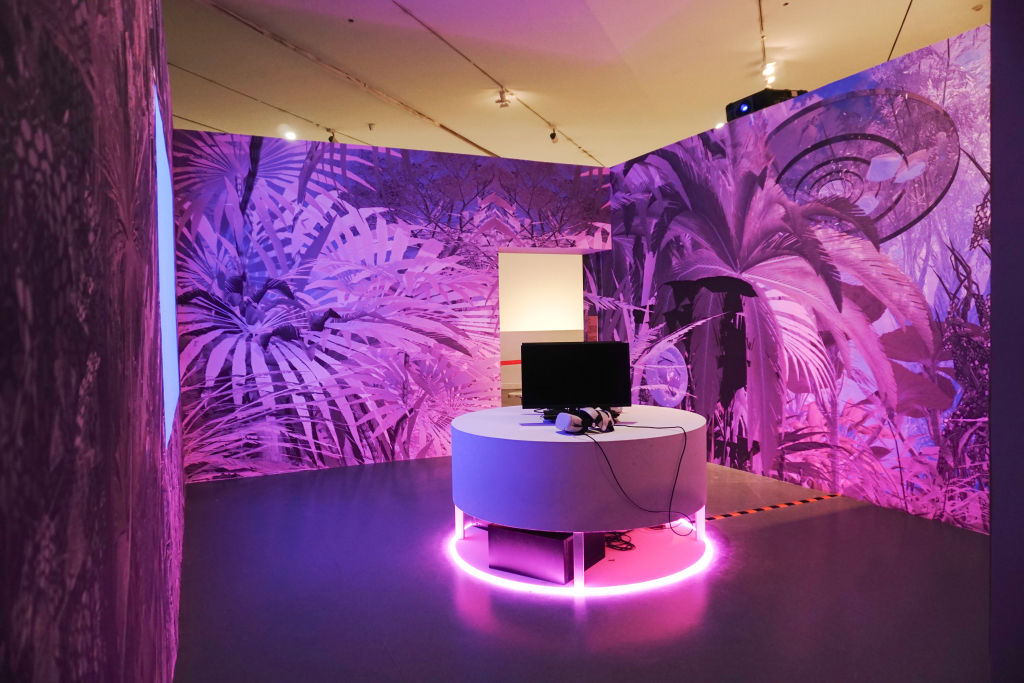
Exhibition site
A miniature history of the evolution of digital art
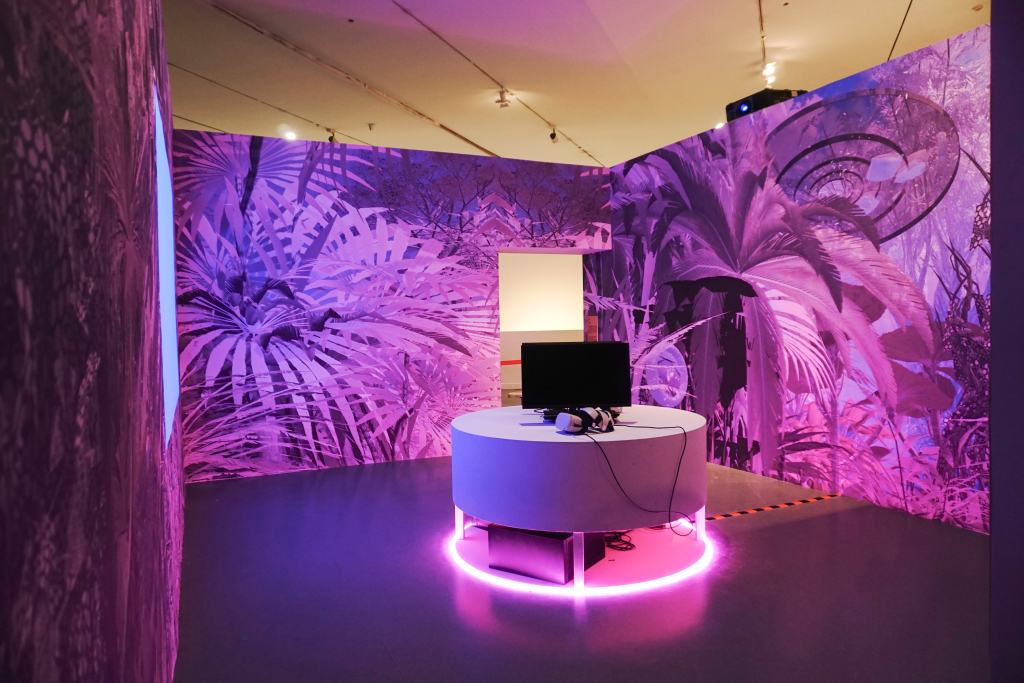
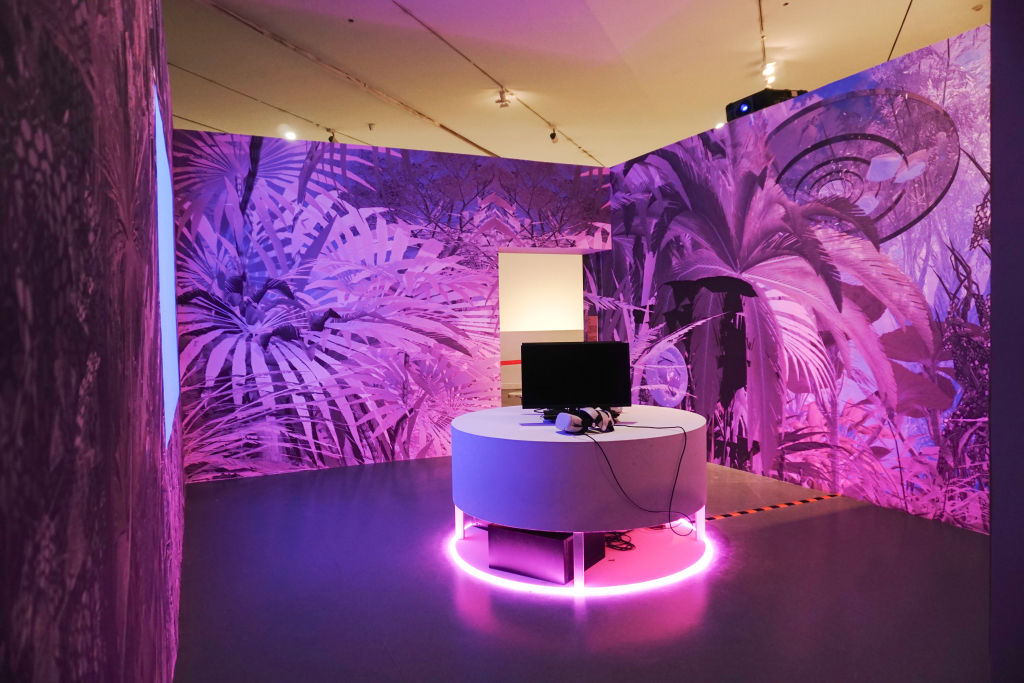
The Paper learned that this exhibition, while presenting the latest developments in AI art, also weaves together a miniature history of digital art evolution from the perspective of media archaeology. The exhibition is divided into three independent narrative sections: "History," "Education," and "Contemporary." The "History" section showcases works by pioneers in the fields of art and technology from the 1950s to the late 1990s. The "Contemporary" section displays large-scale projections and installations of robotics, interactive artificial intelligence, computer visual art, and generative art by renowned international and Chinese artists. The "Education" section provides background information on the history and technologies involved in digital art for viewers new to the field.
"This special exhibition stems from the vision of Taikang Art Museum and the London Geometry team, focusing on the cutting-edge developments in global AI art," said Frederick Fore Lemarie, the exhibition's academic director and professor at the University of London. In his view, the three sections of the exhibition build upon each other, showcasing not only the development of digital art but also highlighting the potential of artificial intelligence to empower creativity.
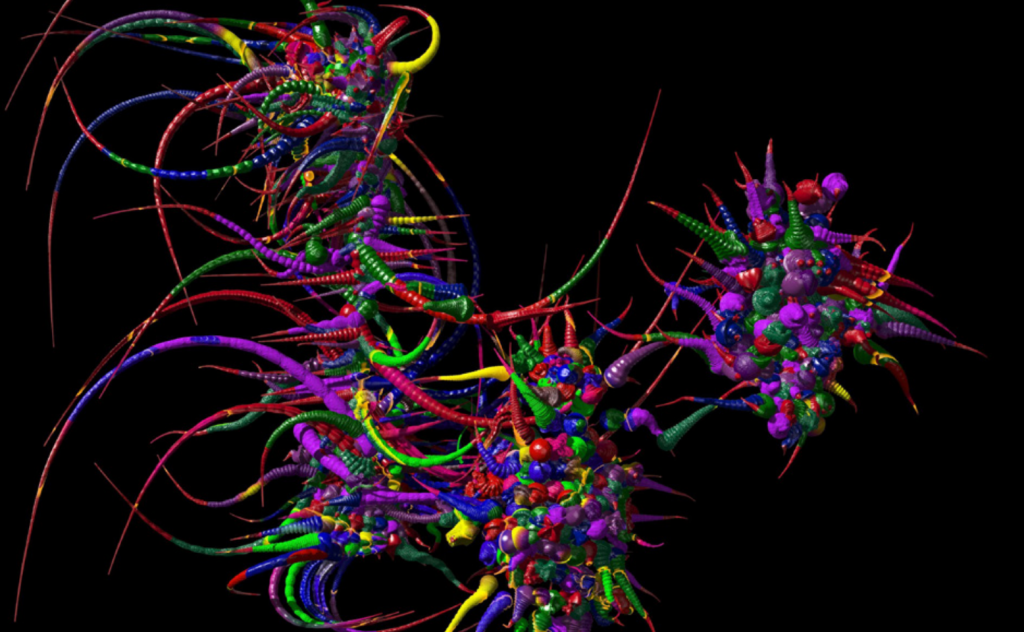
William Rayson and Stephen Todd, *Azure* (Human Mutants)
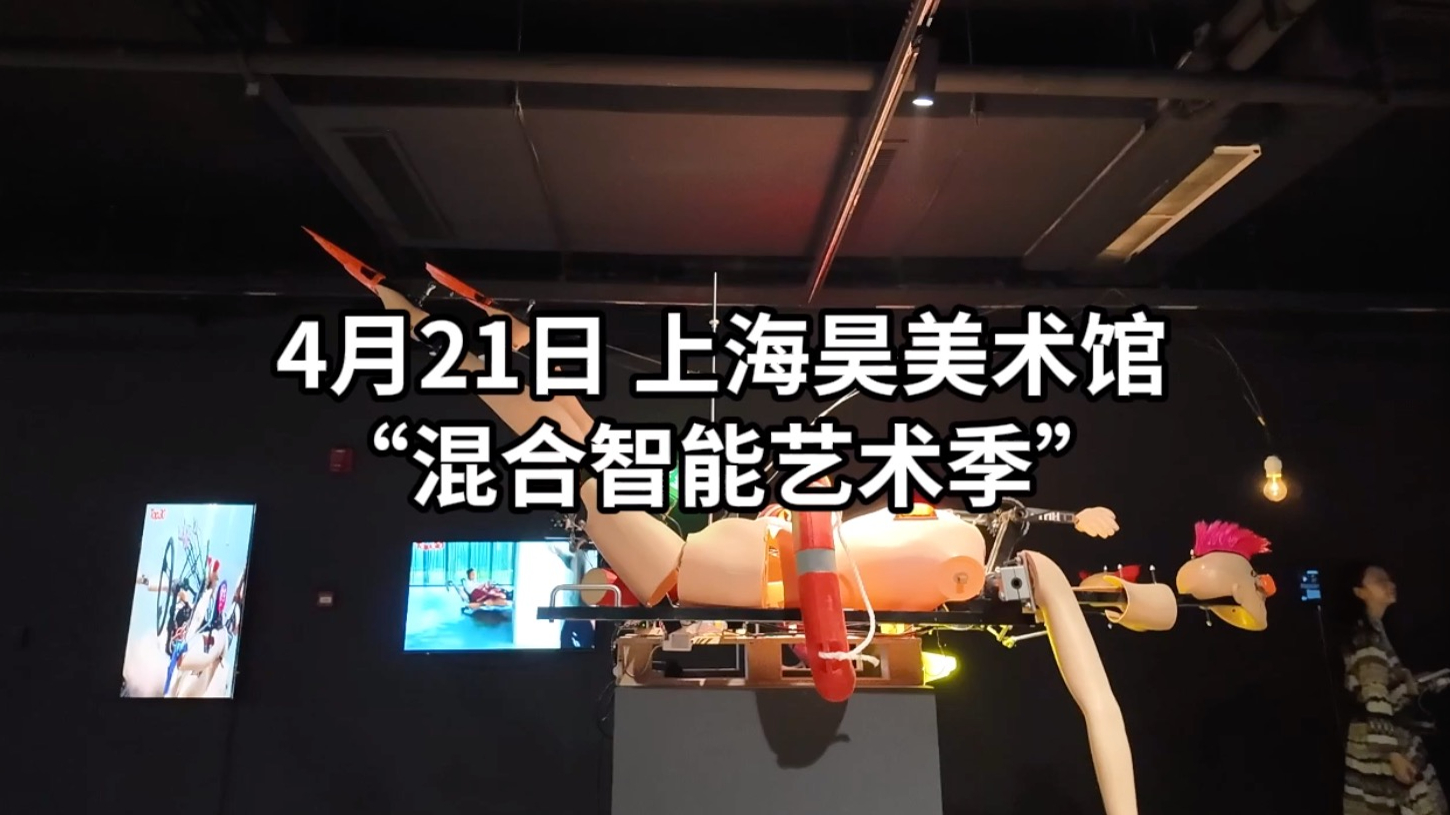
The exhibited work, *Azure: Human Mutant*, is one of the most interactive pieces. Created by William Resson and Stephen Todd, this work uses Azure's real-time cameras to capture the viewer's body movements, generating a large-scale 3D dynamic organic art form in real time. Ao Qianli's *I Am a Fish* constructs a unique human-machine symbiotic system—a fish tank robot that can move freely on land, with each movement of the fish directly affecting the direction of the tank's movement. Memo Arcten's *Learning to See: A Melancholy Sunday* uses machine learning algorithms to explore how humans perceive the world, reflecting on how the images in our consciousness are reconstructed based on our own expectations and prior beliefs.
The exhibition's history section features landmark works of computer art from the 1960s. Friedel Nach's 1965 work, *Homage to Paul Klee*, marks a significant milestone in digital art. Vera Molner's 1971 work, *The Grid*, is one of her earliest computer-generated pieces, showcasing the nascent form of algorithmic art. She viewed computers as a tool to accelerate artistic creation while simultaneously breaking down traditional art concepts. Harold Cohen's AARON program is one of the earliest and most complex software programs in computer-generated art; Cohen began developing this system in 1973, pioneering AI-generated art.
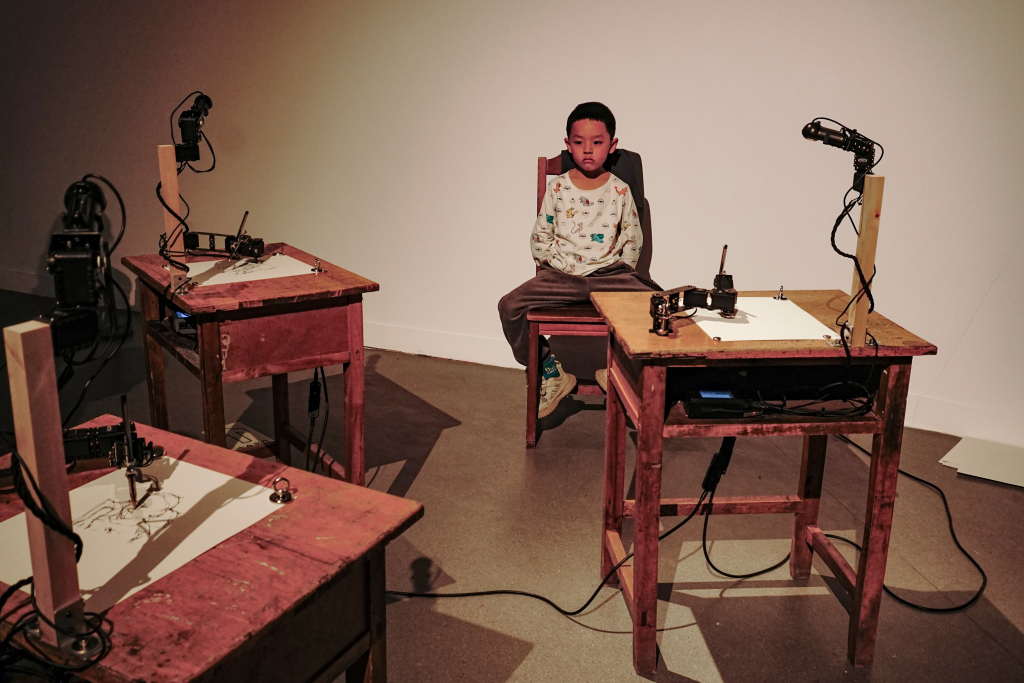
Machine-drawn scenes in Patrick Therese's Human Learning #1
The contemporary section showcased cutting-edge works by several internationally renowned artists. Among them, Patrick Tresset's "Human Learning #1" presented a unique "life drawing class," attracting a large audience.
At the site, the robot observed the participating models through low-resolution "eyes" and then precisely painted portraits with its robotic arm, attracting many visitors to queue up for the experience. The robot Paul's painting method is based on artistic techniques, but its style is still influenced by mechanical characteristics. A Wuhan University student commented on the portrait creation installation: "It balances interactivity, technological sophistication, and visual appeal. It allows us to intuitively experience the ingenuity of robotic arm control technology while also having our own personalized artwork. This sense of participation is truly impressive."
Parashkev Nachev's "Normative Portraits Series - All the Great Philosophers" explores the creative potential of machines' non-subjectivity by training self-organizing mathematical entities to extract normative, essential, and ideal forms from thousands of instances. Lou Nengbin's exhibited works focus on the realm of pure sound; the core of his creation is to convert blood glucose meter data implanted in the body into sound, and then refine these sounds into classical music works in standard formats.
The essence of art has never changed; AI is merely a tool.
Currently, the changes brought about by technology are not only happening at a rapid pace but also beyond imagination. The future human-machine life is coming in an unstoppable wave from all aspects. "Can AI art be as creative as humans?" Will artists be replaced by machines?
In an interview with The Paper, participating artist Lou Nengbin said, “Whether it’s a painting exhibition, a contemporary art exhibition, or any other type of exhibition, the core interest always lies in ‘humanity’—as fellow human beings, we naturally resonate with human creation and expression. We are exposed to a large amount of AI-generated content every day, but we don’t develop a deeper interest in AI itself than in humans. In my view, AI is like the fire or bone tools that primitive humans first discovered and used in ‘2001: A Space Odyssey.’ The work of an artist has always been about learning to use new tools, integrating them into creation, and ultimately presenting works that reflect human thoughts and emotions. Therefore, I am not worried at all that AI will subvert or replace traditional creation.”
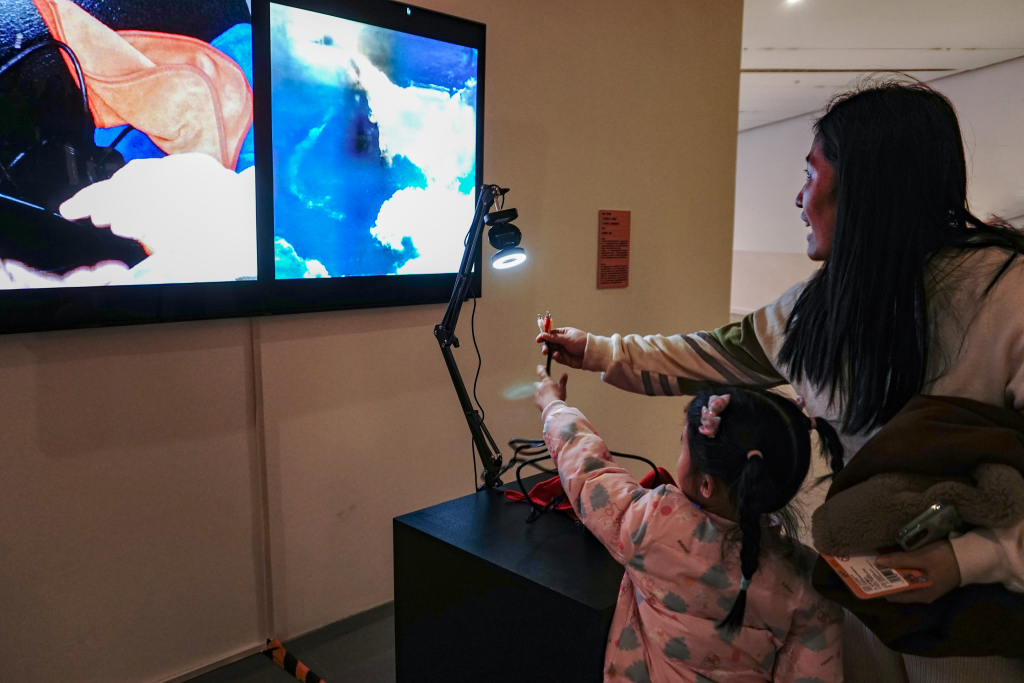
Exhibition site
“The essence of art has never changed; AI is merely a tool,” said curator Zhou Yi. “Like the fire and bones used by primitive humans in ‘2001: A Space Odyssey,’ the core of art remains ‘creating illusions,’ evoking emotional fluctuations and reflections in the audience. This remains unchanged in the AI era. Subjectivity is projected in two directions; AI itself has no true subjectivity. Its ‘consciousness’ is endowed by human training and also projected by the audience while viewing. This two-way projection reflects both the poetic qualities of humanity and reminds us that different people may have different subjective perceptions of the same thing, which is precisely the source of the world’s diversity.”
Curator Tang Xin believes that this exhibition shows that when computer technology is used to produce simulacrums, becoming a new technological means of simulacrum production, the creative process involves an interaction between the artist and the technology. Simulacrum creation is completed jointly by humans and machines in this interaction. This is an epoch-making change in art creation and production, unprecedented! He believes that the ancient "art" will still exist in the AI era.
“I’m not actually anxious about whether humans or machines will replace each other, because it’s all preordained that a balance between humans and machines is necessary for coexistence. The coexistence of humans, machines, and things is an unstoppable future trend, and the process of balancing the evolution of humans and machines is even more noteworthy. Changes in machine interaction capabilities have led to iterations in human-machine relationships. In the past few years, the iteration of machine interaction capabilities has been visible to the naked eye. In the future, as larger and stronger interaction capabilities continue to change the relationship with humans, they will inevitably affect the human condition, but humans are not prepared. The exhibition only provides a historical perspective: from the perspective of artistic creation, human-machine interaction and coexistence is already a fact,” Tang Xin said.
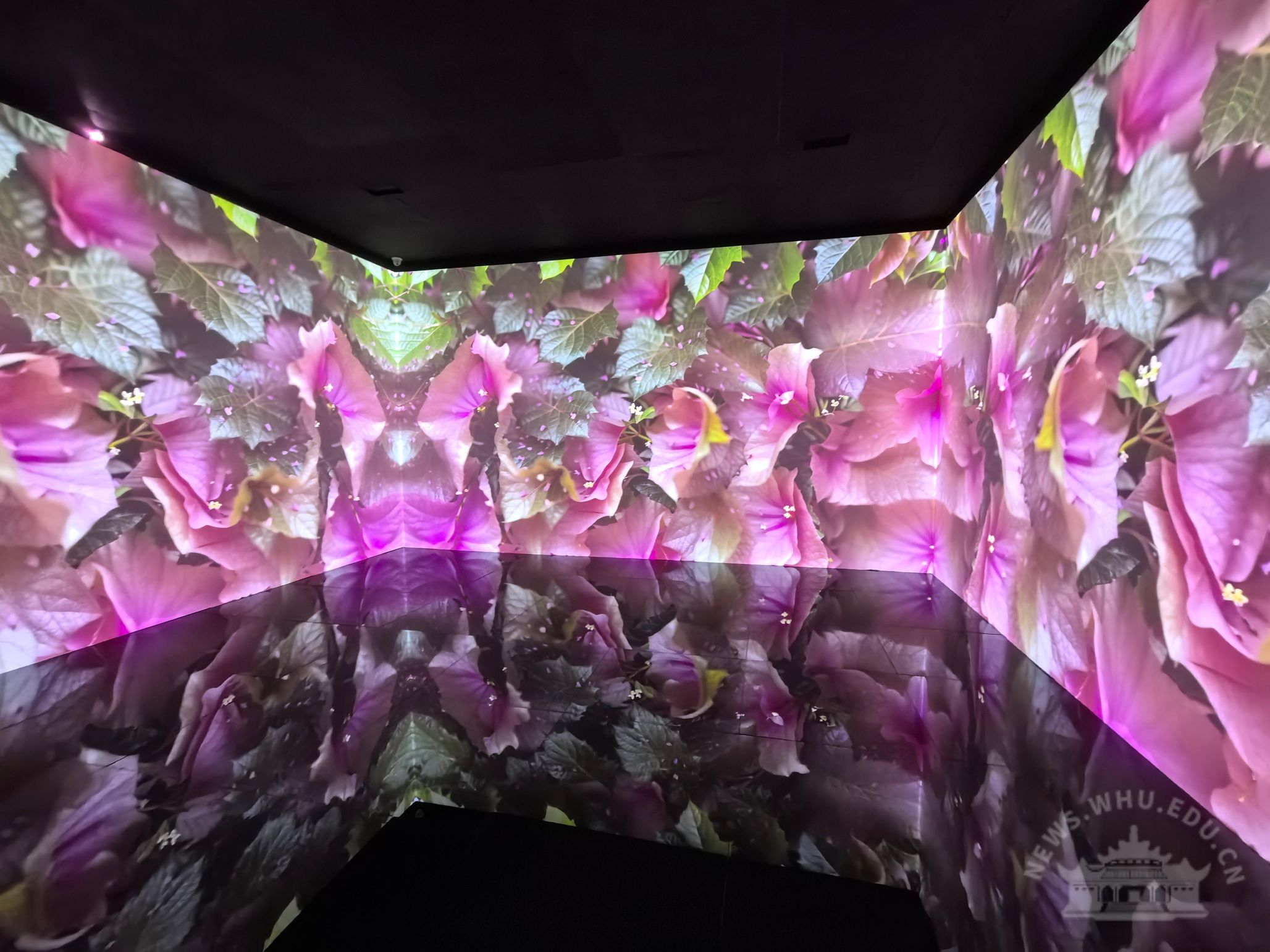
Exhibition site
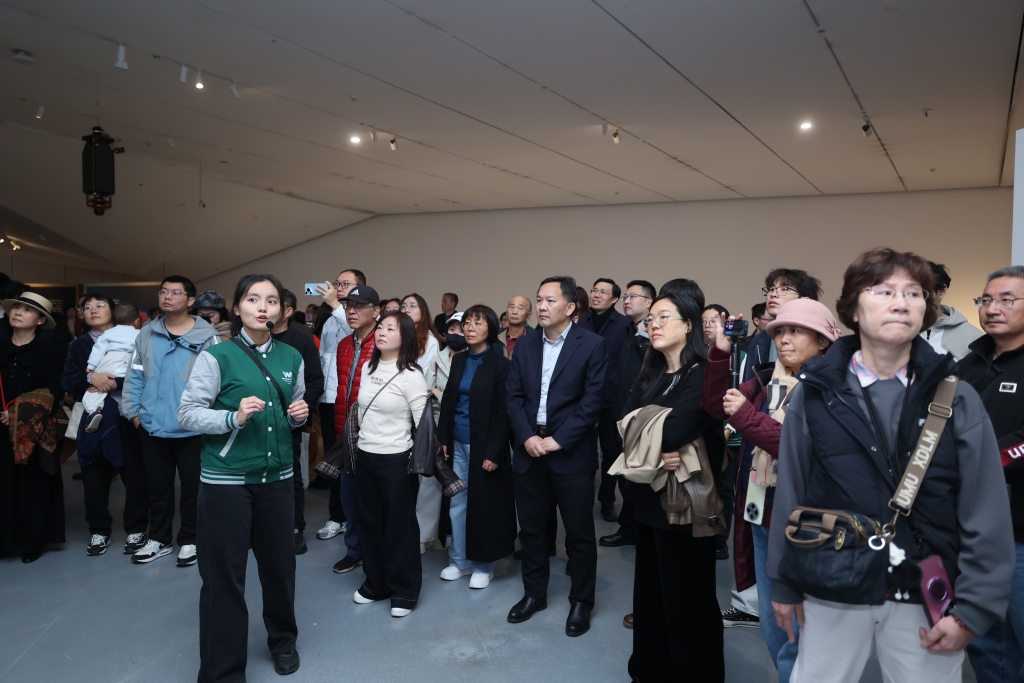
Visitors tour the site
It is reported that during the exhibition, the organizers will also hold a series of academic forums and public experience activities. Many internationally influential experts, contemporary artists, and senior curators will be present to engage in face-to-face dialogues with teachers and students. This exhibition is jointly organized by Wanlin Art Museum, Taikang Art Museum, and London Geometry, and will run until January 29, 2026.