Calligraphy is inherently an elegant pursuit for scholars to cultivate their character, express their feelings, and aspire to great things. Calligraphy competitions should naturally be refined gatherings for calligraphers to hone their skills. However, recent calligraphy competitions have been plagued by scandals . Some competitions that claimed high prize money and "transparent judging" have actually manipulated scores under live broadcast cameras. There are also some youth calligraphy competitions where the winners' lists highly overlap with "lists of names" in online documents. These seemingly absurd cases are not isolated scandals, but reflect the current chaos in the calligraphy field caused by the influx of capital, rampant utilitarianism, and lack of supervision.
The "China Calligraphy Building Cup" Competition and the Noise of Capital
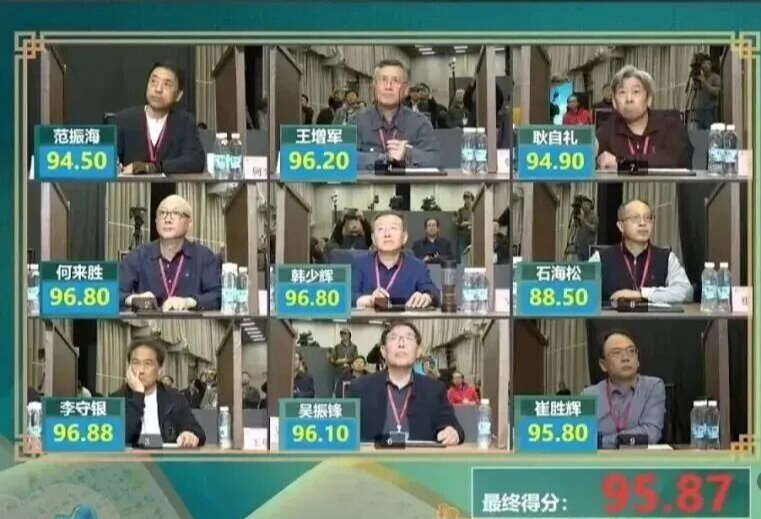
The second "China Calligraphy Building Cup" calligraphy competition, recently held in Anhui, has sparked considerable controversy. Initially, the organizers claimed the competition was "transparent, fair, and impartial," with a total prize pool exceeding 6 million yuan and a single grand prize of 500,000 yuan, attracting attention from both within and outside the calligraphy community. Subsequently, the organizing committee announced a live online broadcast to broadcast the entire process of judges' scoring and deliberations. However, after the competition, netizens provided clues alleging that in the cursive script category, "individual judges" colluded with other judges to solicit votes, and there was direct evidence that the original paper scoring sheets showed traces of multiple judges altering scores.
The organizing committee confirmed the above actions upon review. Ultimately, the 500,000 yuan grand prize winner's award was revoked, and the organizers claimed they would no longer invite the judges involved to participate in future judging. However, the announcement regarding the specific information of the cheating judges and the beneficiary works was vague, only mentioning "individual judges" and "a certain work" in a perfunctory manner.
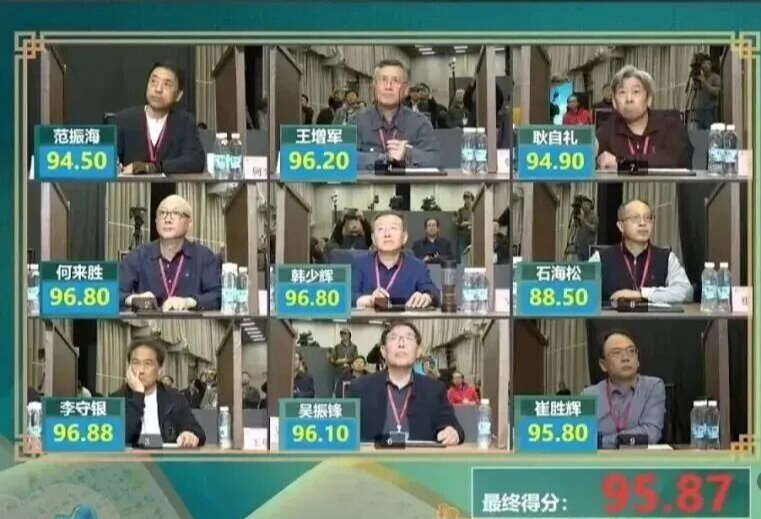
Live broadcast of the judging session for the 2nd Calligraphy Building Cup in 2025
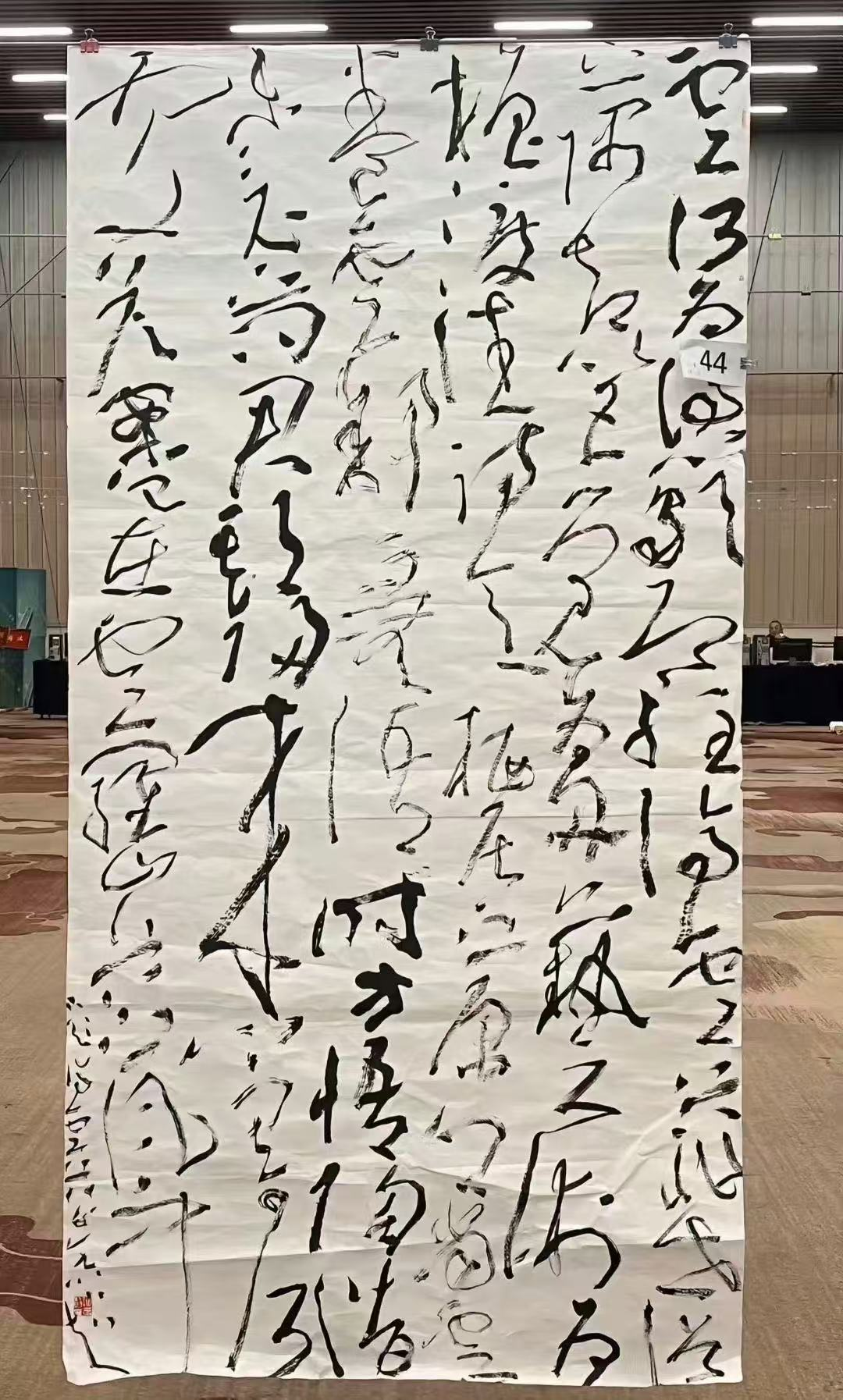
Cursive script works disqualified from the 2nd "China Calligraphy Building Cup" Calligraphy Grand Prix in 2025
During its interviews, *ArtSurge* magazine discovered that the "China Calligraphy Building Cup" competition and its founder, Li Shijie, have been a controversial figure throughout the two competitions. Li Shijie has business experience in the coal industry, is financially well-off, and previously served as the chairman of the Anhui Provincial Calligraphers Association. According to previous reports, a well-known calligrapher publicly accused Li Shijie of bribery during the association's leadership transition in 2017, leading to a defamation lawsuit. In 2019, when Zhao Changqing, the former Party Secretary and Vice Chairman of the China Calligraphers Association, was investigated for bribery, Li Shijie was temporarily out of contact.
The "China Calligraphy Building Cup" competition began in 2019. At the awards ceremony, winners were presented with neatly stacked, mountain-like piles of 100-yuan bills. This was criticized by the media at the time as "overwhelmingly extravagant" and "vulgar like a supermarket." The Beijing Evening News criticized it for "alienating" calligraphy art and giving it a "streetwise" feel, arguing that capital was "directly crushing" the sentiments of calligraphers.
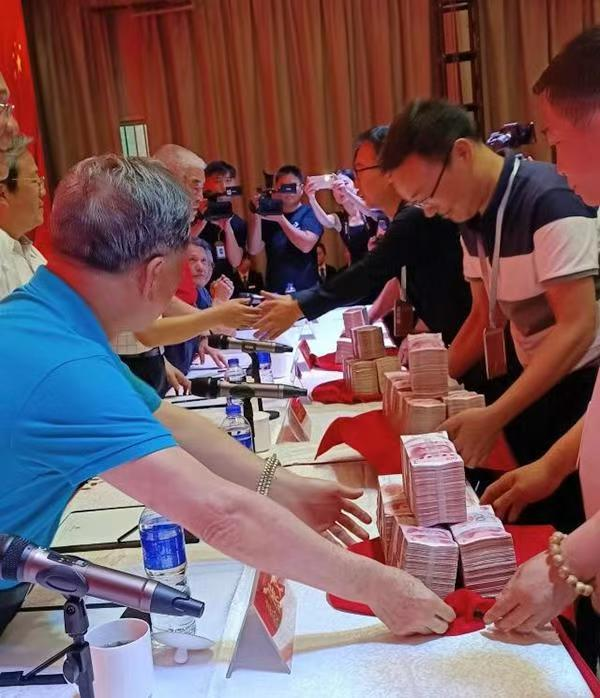
The award ceremony for the inaugural "China Calligraphy Building Cup" in 2019.
The motivation behind founding the "China Calligraphy Building" and operating high-prize competitions has been publicly questioned by industry experts, who believe that the money show, which appears to be a grand reward for art, is actually more like a "demonstration" of capital and a high-profile declaration of personal influence.
The spread of chaos: from opaque review processes to the misuse of names on Baidu Wenku.
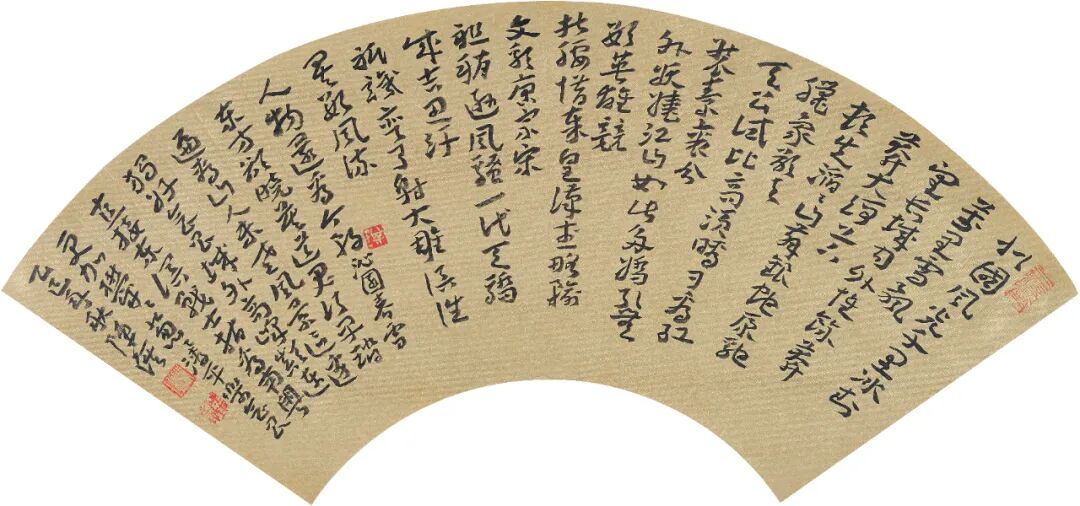
In recent years, calligraphy competitions organized by some local calligraphy associations have exposed numerous problems. For example, the "Lingqiao Cup" Second Zhejiang Provincial Clerical Script Exhibition, recently organized by the Zhejiang Provincial Calligraphers Association, is a case in point. One of the exhibited works, a five-character couplet titled "Qianhe Yonghe," not only had highly similar content but also a signature that was strikingly similar to a previously published work. It was ultimately deemed plagiarism, the author's exhibition qualification was revoked, and he was banned from competitions for three years. While the Zhejiang Provincial Calligraphers Association's "zero-tolerance" approach is commendable, the incident reveals that even on a professional platform like a provincial calligraphy association, plagiarism can still pass the initial review and only be corrected after public complaints. This exposes a widespread deficiency in the professionalism of judging and plagiarism detection mechanisms in local competitions.
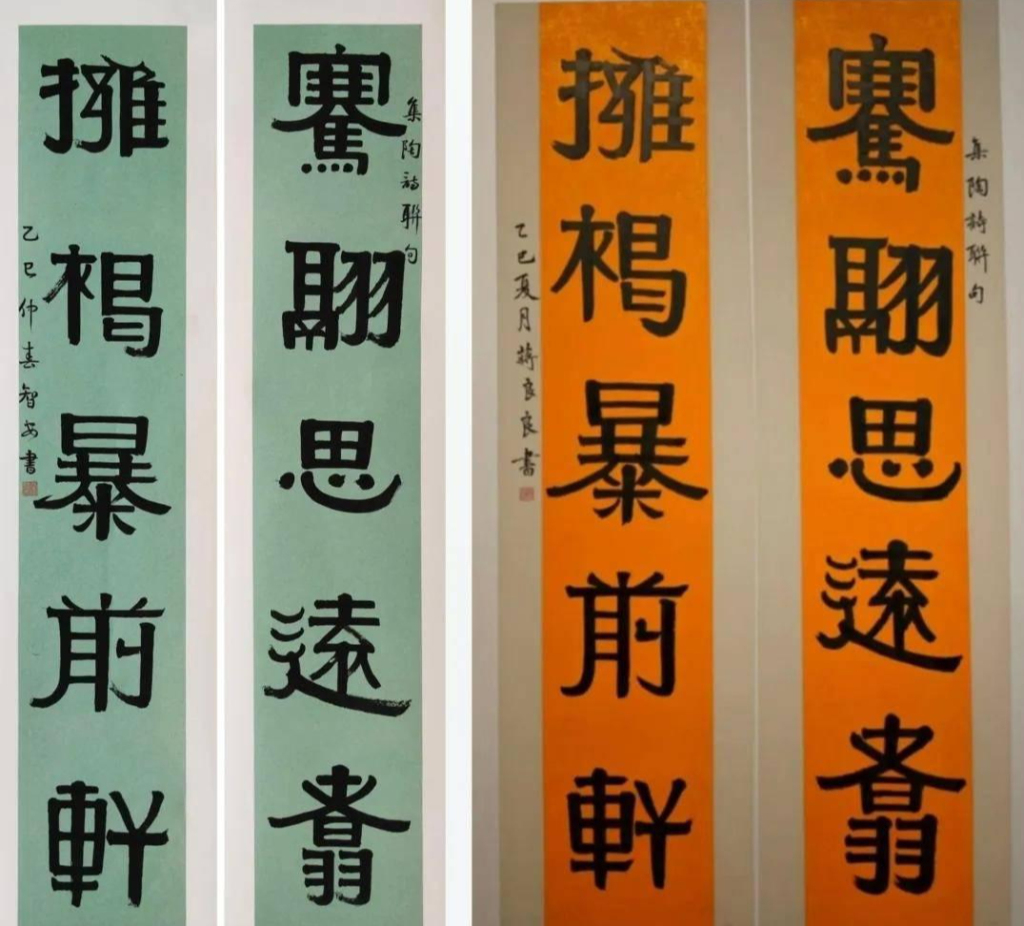
A calligraphy work signed "Zhi'an" (left) and the work judged to be plagiarized (right).
When even provincial-level professional exhibitions have such loopholes, the chaos surrounding commercial competitions that claim to be "guided" or "supported" by local calligraphy associations is even more shocking. Some private calligraphy training institutions also brazenly hold various calligraphy competitions, yet their practices are shockingly low-level and perfunctory. A recent report by The Paper on the 4th Fujian Provincial "Xingmotang Cup" Youth On-site Calligraphy and Painting Competition, organized by a private calligraphy training institution and claiming support from provincial calligraphy associations, revealed that several names and their order in the gold and silver award lists for the children's hard-pen calligraphy category perfectly matched a document titled "Ten Thousand Names" uploaded to Baidu Wenku as early as 2019. For example, the names starting from second place in the gold award list—"Yang Yiling, Lin Yarong, Li Jiawei, Chen Haoqian, Yang Yuting"—are the first five names in "Ten Thousand Names."

Partial list of winners of the "Xingmotang Cup" Youth On-site Calligraphy and Painting Competition, hosted by a private calligraphy education and training institution.
In response to the allegations, the organizer, Xingmotang Education Consulting Co., Ltd., explained that due to the low number of participants in the preschool group, staff were instructed to contact teaching centers to recommend students who did not participate for awards in order to encourage participation. However, one staff member, for convenience, directly generated a fake list from the internet. The company has already reassigned the staff member and imposed penalties.
According to an investigation by ArtSurge, the practice of "borrowing" names from online databases to inflate entries is not an isolated case. The inaugural "Huaxia Cup" National Calligraphy Competition was also exposed for having its winners' list copied and pasted from the internet, with the organizers even claiming that their "partners had absconded." These irregularities, especially in competitions targeting teenagers, have far-reaching consequences. It is not merely a deception of the sincere efforts of participating children and their parents, but also an extremely irresponsible act that distorts young people's understanding of competition, honor, and the art of calligraphy itself.
How to address the underlying utilitarianism, cliques, and oversight issues that contribute to the chaos?
These various irregularities in competitions, whether high-level "technical cheating" or low-level "mechanical perfunctory work," all point to the utilitarian erosion and clique-based problems facing the current calligraphy art ecosystem. The purposes of some organizations organizing competitions have gradually become distorted, profiting by charging registration fees, processing fees, mandatory subscriptions to newspapers or the purchase of collections, turning competitions into businesses. On the other hand, as some commentators have pointed out, the judging process in some cases may not be based on public rules but rather on private "favors," with "insiders" and "family members" mutually promoting each other and sharing the competition's profits, leading to the marginalization of truly talented but unconnected calligraphy enthusiasts. Furthermore, as seen in the "Calligraphy Building Cup" incident, even with live streaming and disciplinary promises, substantive and comprehensive supervision of the judging process remains lacking. For numerous competitions organized by private or commercial organizations, there is an even greater lack of effective registration, supervision, and punishment mechanisms.
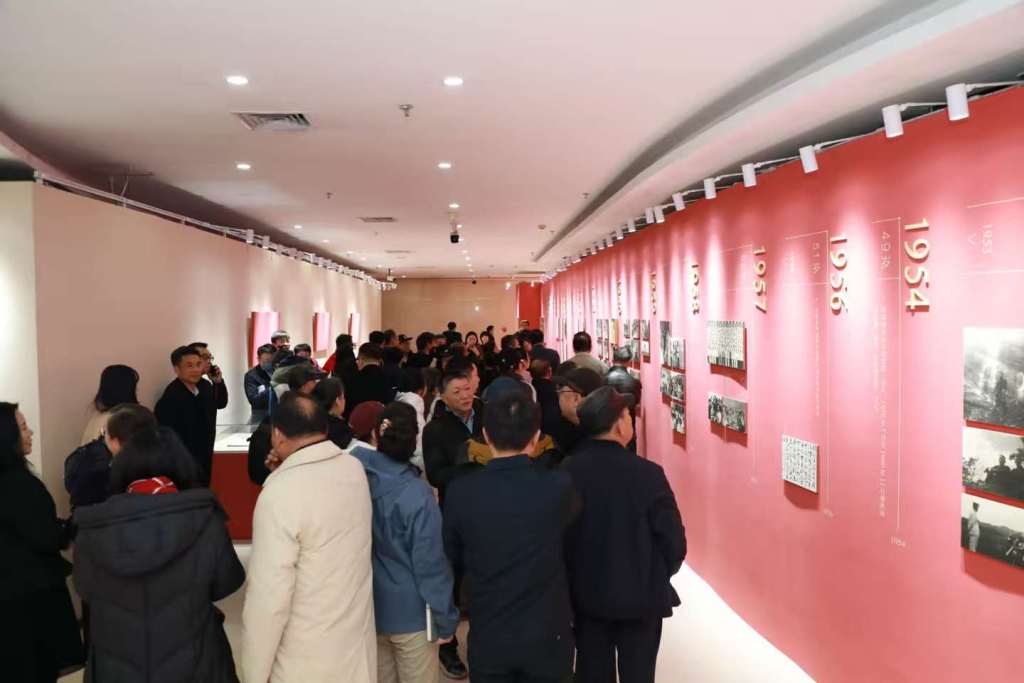
Undeniably, while many calligraphy competitions suffer from irregularities, some professional events and platforms strive to uphold the purity of art and the seriousness of judging, bringing a breath of fresh air to the chaotic calligraphy world. For example, the "Top 100 Young and Middle-Aged Calligraphers in China" list, organized by the magazine *Calligraphy*, founded in 1978, builds its credibility on an authoritative, diverse, and supervised judging mechanism. A representative from *Calligraphy* magazine stated that, to ensure effective oversight, a supervisory committee and an academic observation committee were specifically established for the eighth selection process, conducting full-process inspections and supervision, with significant results.
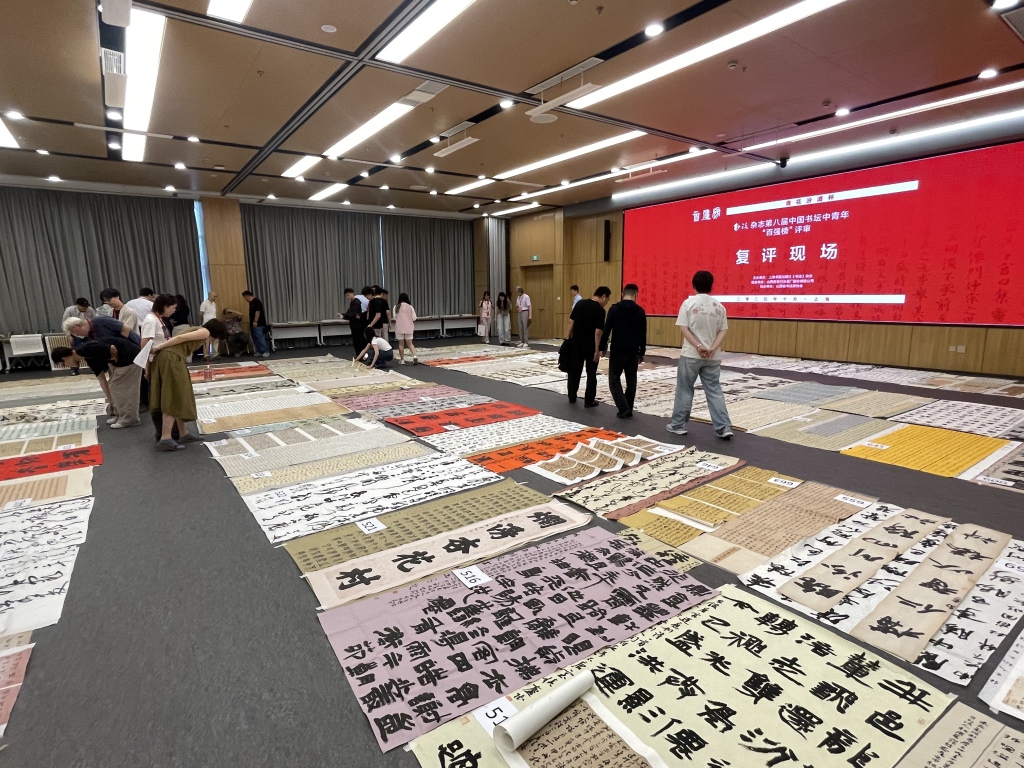
Judging Ceremony for the "Top 100 Young and Middle-Aged Calligraphers" in China
A seasoned critic told ArtPaper that rectifying the chaos in calligraphy competitions is not something that can be accomplished overnight, nor can it be done by a single party. It may require a systematic approach involving both inside and outside the industry to "get to the root of the problem." "First, we must strengthen external supervision and tighten the institutional framework. Cultural, educational, and market supervision departments should establish a joint mechanism to implement registration management or qualification certification for art competitions held in public, especially those involving fees and high prize money."
For event organizers, the core issue is establishing a rigid system that prevents corruption, promoting full video recording and archiving of the judging process for future reference, rather than simply broadcasting a "performance" live; including judges' records in their academic credibility files; and for industry associations and authoritative institutions, they should proactively assume the responsibility of leading and regulating, setting benchmarks and clarifying boundaries by issuing industry-wide notices about seriously irregular events and responsible individuals. More importantly, the events organized by the associations themselves must become models of fairness and impartiality.
"Calligraphy competitions should not be misplaced. They are not for capital speculation or profit-making. Their ultimate purpose should be to discover talent, encourage creation, lead trends, and inherit culture. Any competition that deviates from this original intention and becomes a means of transferring benefits, commercial hype, or perfunctory work is harmful to the art of calligraphy," said a member of the academic observation committee who participated in the "Top 100 Young and Middle-aged Calligraphers" list in China.