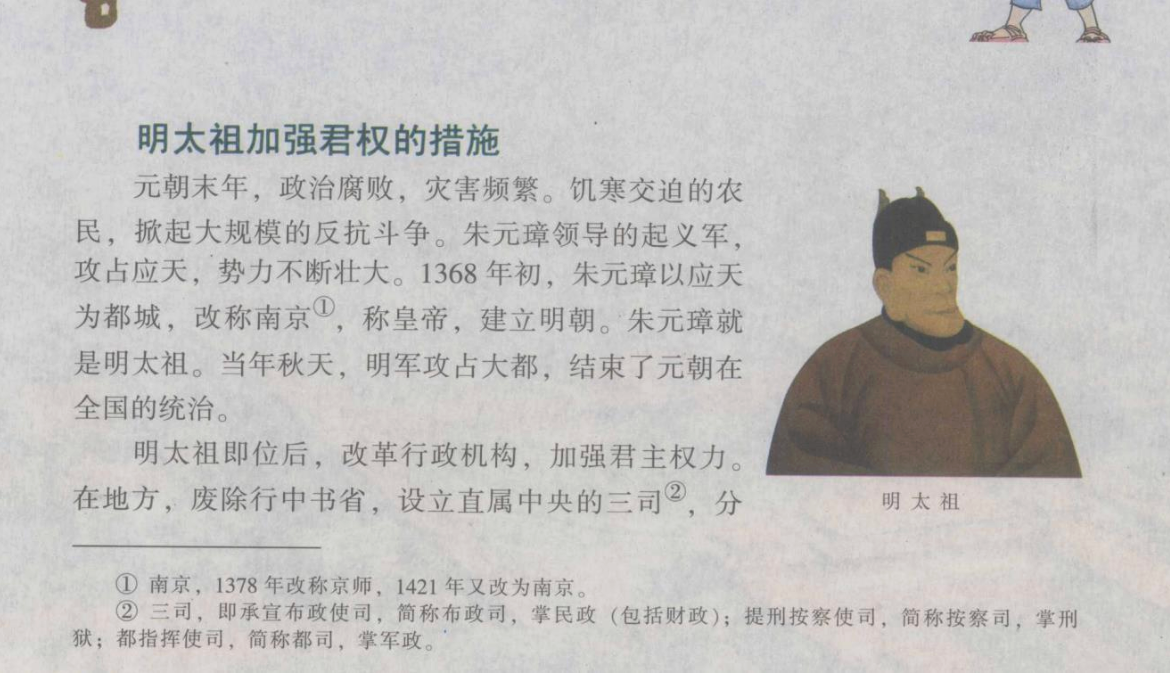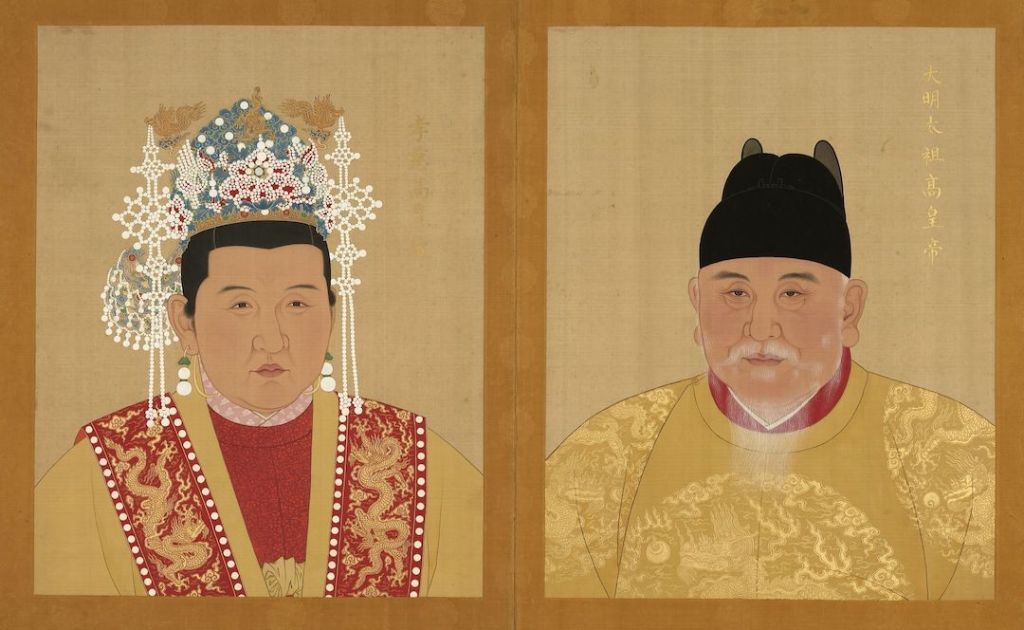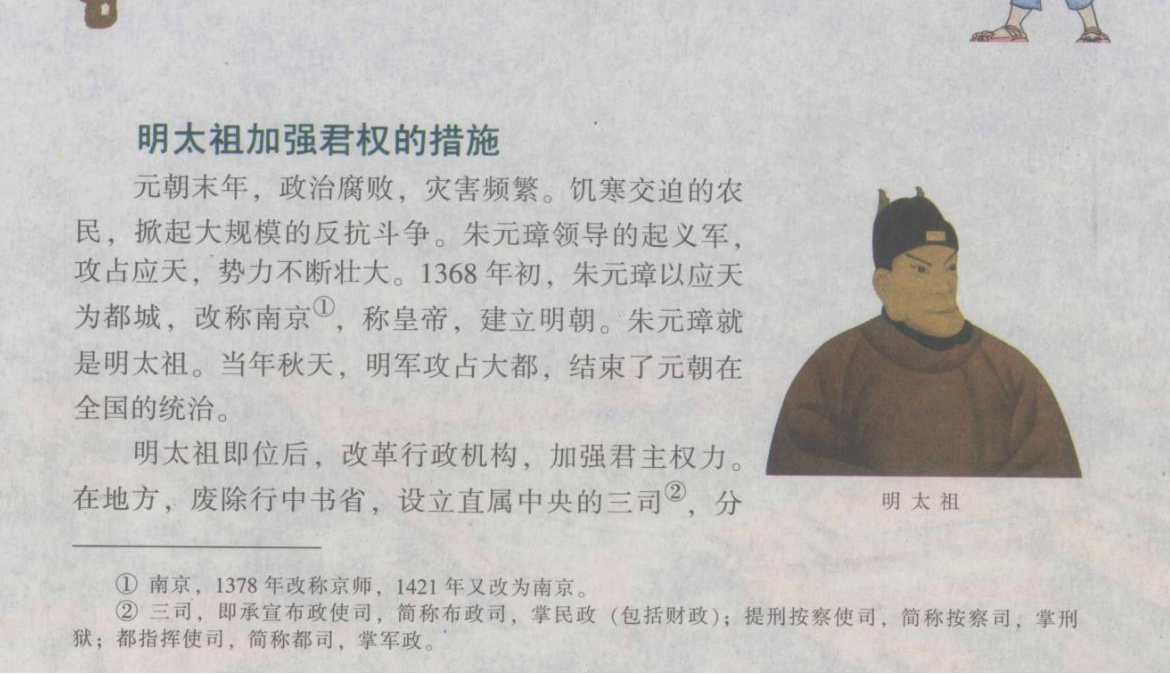
Recently, the topic of "the portrait of Emperor Taizu of Ming in history textbooks has been changed" has become a hot topic. The public noticed that the familiar "shoehorn face" of Zhu Yuanzhang, with his prominent forehead and protruding chin, is gone, replaced by an image of an emperor with a full face and a solemn expression. What did Zhu Yuanzhang actually look like?
According to historical records, the unusual appearance of Emperor Taizu of Ming originated from the praise and mythology promoted by Emperor Yongle (Zhu Di) to consolidate his power, becoming the mainstream popular narrative. Emperor Taizu's true appearance, known as the "official portrait," was a hidden, authentic image used in the imperial palace to commemorate him, and is now mostly housed in institutions such as the Palace Museum and the National Museum of China. The recent replacement of the portrait of Emperor Taizu in textbooks with the "official portrait" may be more in line with historical facts. According to professional articles written by several scholars, the widespread circulation of Zhu Yuanzhang's unusual appearance among the people was due to the combined effects of political propaganda and popular psychology at the time.
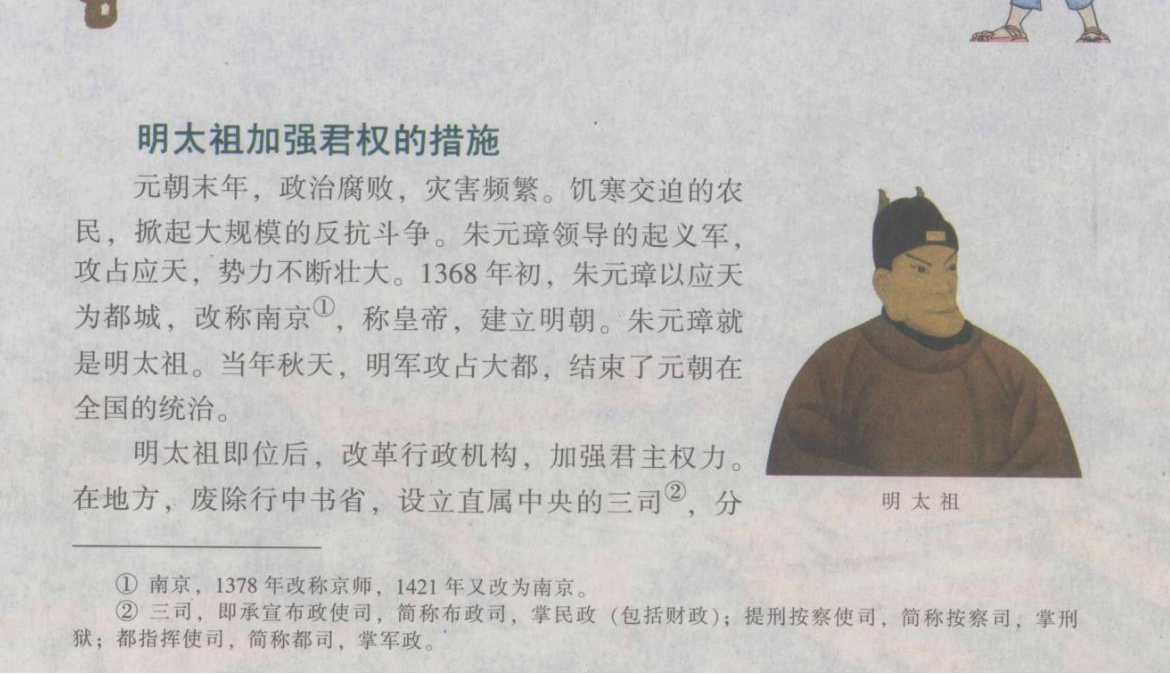
The image of Emperor Taizu of Ming in old history textbooks (scanned electronic version of People's Education Press textbook)
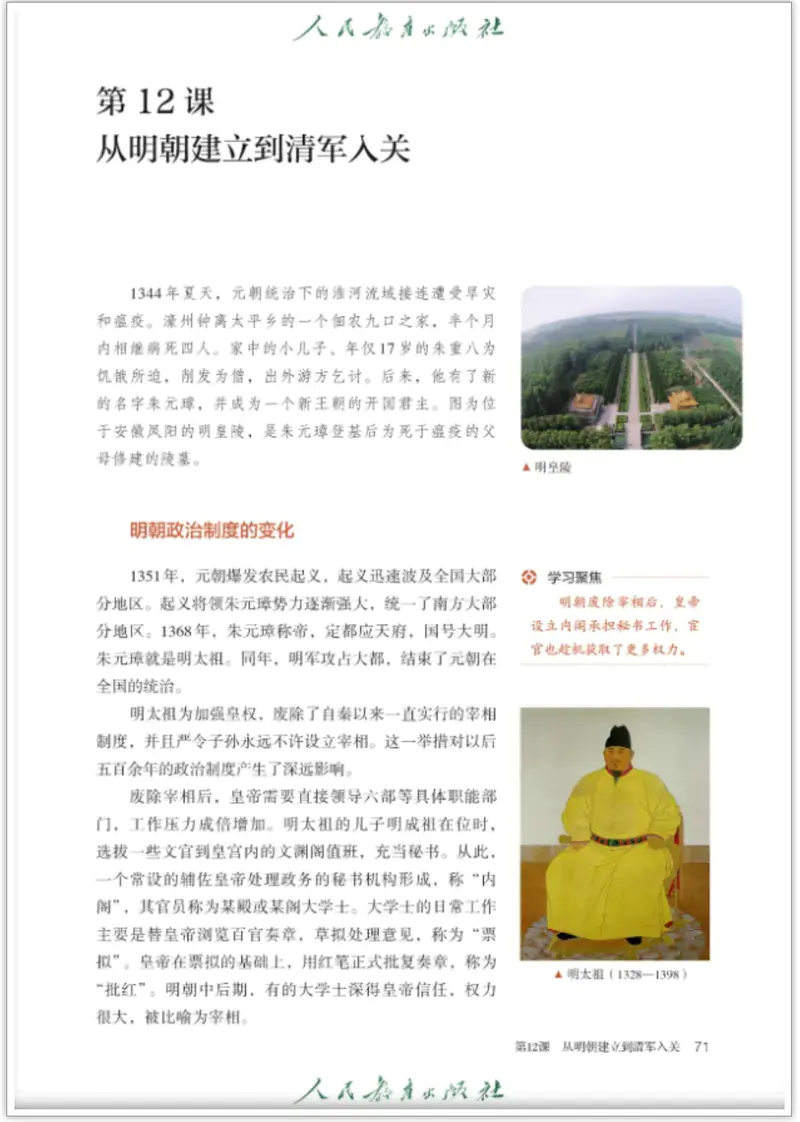
2019 edition of People's Education Press textbooks
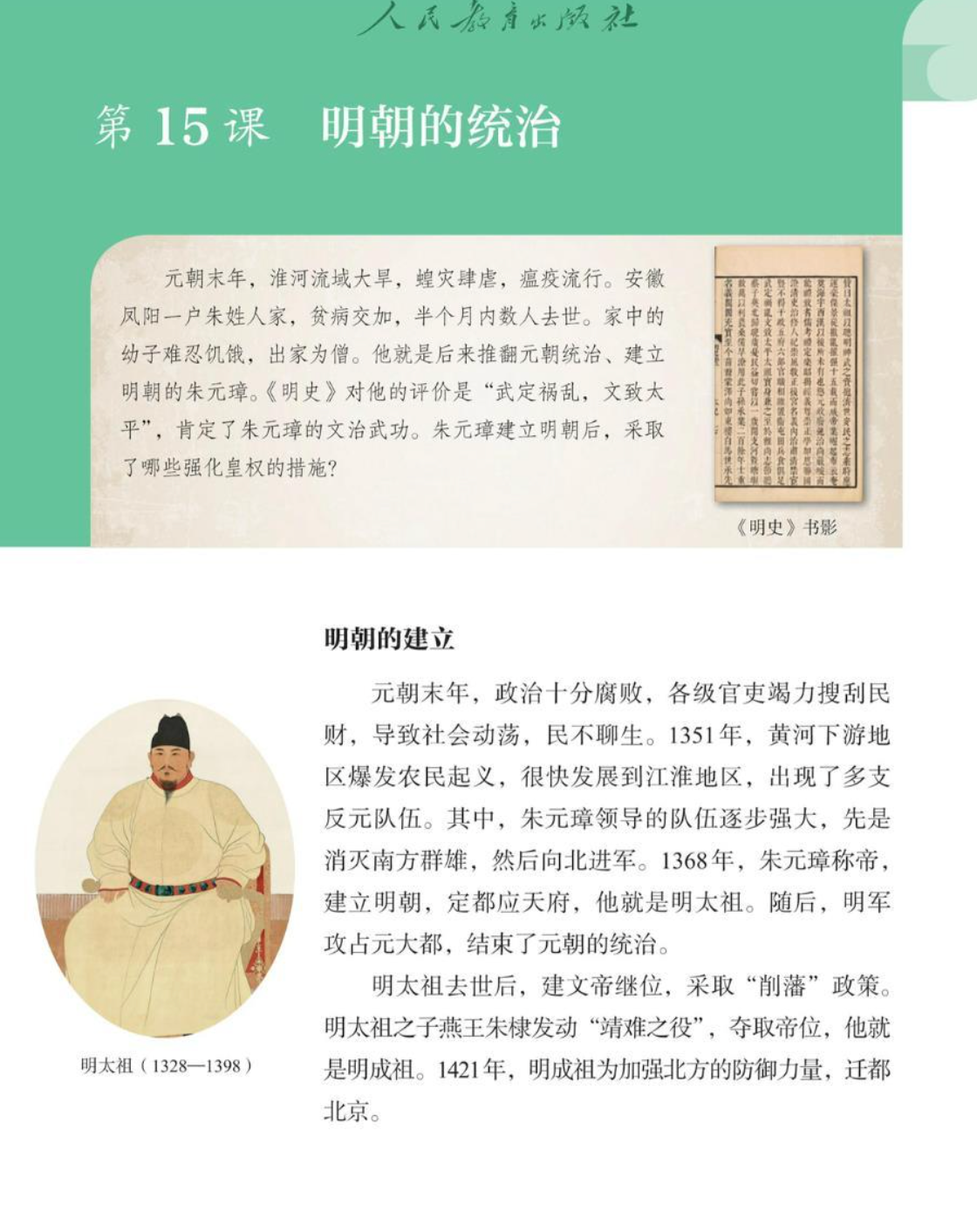
People's Education Press 2024 edition textbook (Grade 7, Volume 2)
Textbooks are being redesigned, and historical memories are being refreshed.
Recently, the replacement of the portrait of Zhu Yuanzhang in the People's Education Press history textbook has attracted widespread attention. The old "shoehorn face" has become a shared memory for several generations, with its protruding forehead, protruding chin, and pockmarked face, making its exaggerated facial features unforgettable.
The new textbook's portrait of Zhu Yuanzhang depicts him with a round face, square forehead, clear eyes, and a dignified expression, perfectly embodying the demeanor of a founding emperor. A comparison by The Paper reporter revealed that this portrait is similar to the "Portrait of Zhu Yuanzhang, the Ming Taizu Emperor" previously exhibited at the National Museum of China. According to Guangming Daily, the "shoe-shaped face" of Zhu Yuanzhang was already removed in the 2019 edition of the People's Education Press's high school textbook, *Outline of Chinese and Foreign History (Volume 1)*. Furthermore, on the People's Education Press's official website, Zhu Yuanzhang has also been replaced in the 2024 edition of the junior high school history textbook (Volume 7, Semester 2).
In fact, as early as 2020, at the “Perfect Harmony of Spirit and Form: Portrait Paintings of the Ming and Qing Dynasties” exhibition held at the National Museum of China, visitors showed great interest in the “unusual images” of Zhu Yuanzhang, and the exhibition site was often crowded with curious visitors.
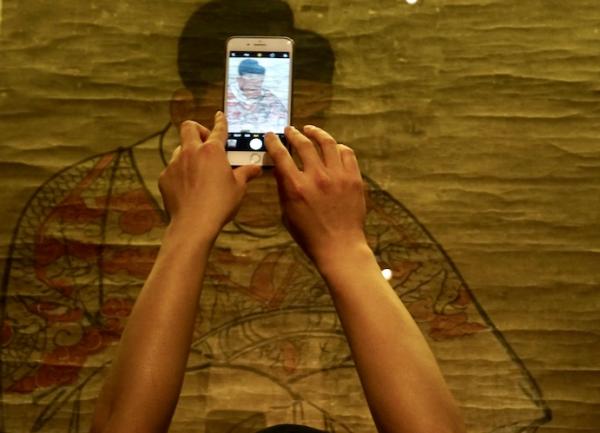
At the National Museum exhibition, visitors paid particular attention to the "unusual appearances" of Zhu Yuanzhang.
The exhibition begins with the subject of "portrait painting." Unlike figure painting, the purpose of portrait painting is mostly to depict people in real life, so it has less personal style and focuses on expressing the spirit of the subject.
Of course, even portraits can present completely different appearances of the same historical figure for various reasons. For example, the Ming Dynasty painting "Unusual Portrait of Zhu Yuanzhang, the Hongwu Emperor" and the Qing Dynasty painting "Official Portrait of Zhu Yuanzhang, the Hongwu Emperor" are shown in the exhibition.
In the exhibition, visitors can see that the figure in the "Strange Portrait of Zhu Yuanzhang, the Ming Taizu Emperor" has a distorted and elongated face, a protruding chin, and is covered with black moles. In fact, such strange portraits of Zhu Yuanzhang are not uncommon in Ming Dynasty works. Their common features are "phoenix eyes, dragon head, and a face full of black moles." Meanwhile, the "Standard Portrait of Zhu Yuanzhang, the Ming Taizu Emperor," copied by Yu Ming from the late Qing Dynasty to the Republic of China period, is also on display, depicting a standard imperial image.
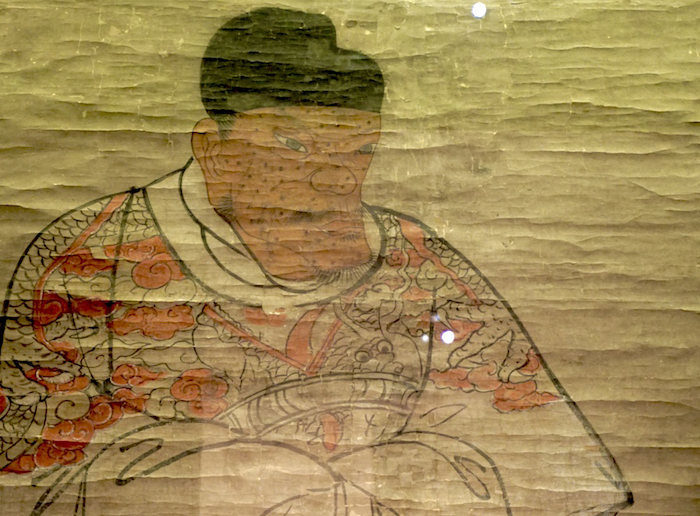
Partial view of "Strange Portrait of Zhu Yuanzhang, the Hongwu Emperor" painted by a Ming Dynasty artist
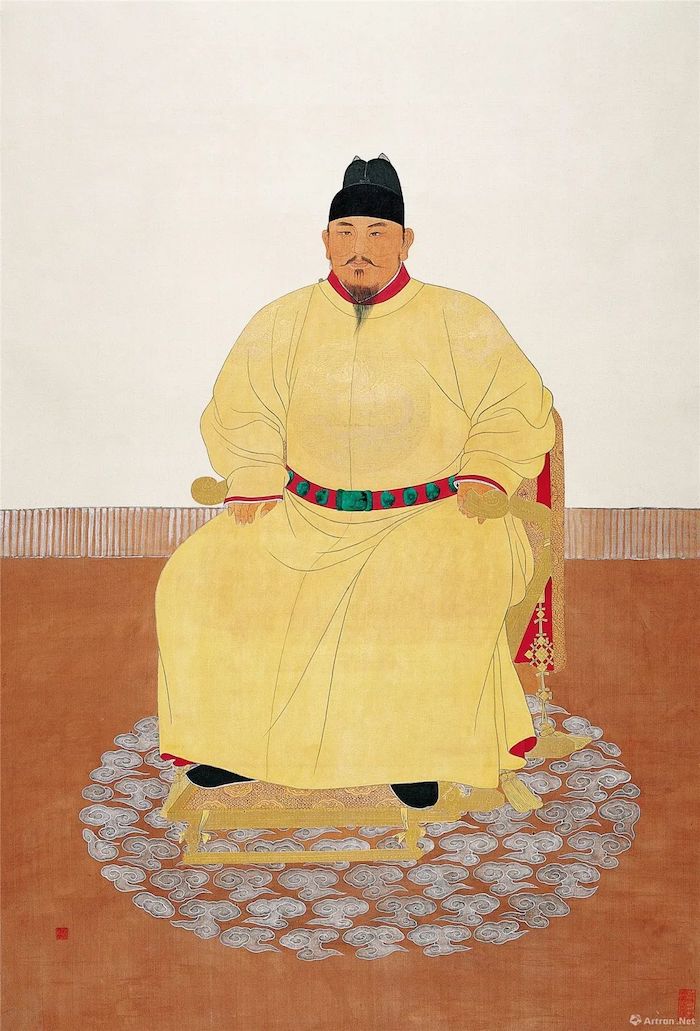
A partial view of Yu Ming's "Portrait of Zhu Yuanzhang, the Hongwu Emperor" from the late Qing Dynasty, now in the collection of the National Museum of China.
One Emperor, Multiple Faces: The Coexistence of Orthodox and Extraordinary Forms
There are many explanations for this phenomenon. Art scholar Li Liechu, in a 2001 article titled "The Mystery of Zhu Yuanzhang's Portraits" published in the magazine *Collection*, argued that the widespread circulation of Zhu Yuanzhang's unusual appearance was intentional, serving a political propaganda purpose. This "shoehorn face" was not considered an insult at the time, but rather an image of a dragon. Another theory suggests that the public's fondness for such legendary figures led scholars to exploit the people's worship, superstition, and unfamiliarity with him, deliberately creating such unusual depictions.
According to relevant documents from the National Palace Museum in Taipei, the unusual appearance of Emperor Taizu of Ming originated from the praise and mythology embellished by Emperor Yongle (Zhu Di, 1360-1424, reigned 1402-1424) to consolidate his power, and became the mainstream popular belief among the people. Emperor Taizu's true appearance, however, became a hidden, authentic image used in palace commemorations of the late emperor.
Two different types of visual records have led to completely different portrayals of the same historical figure, which explains why there are such great differences in the image of Zhu Yuanzhang in history.
Mythologizing emperors is a common political tactic used to construct the Mandate of Heaven for dynasties. The description of Qin Shi Huang in the *Taiping Guangji* as having "a prominent nose, bee-like eyes, a bird's beak, and a jackal's voice" exemplifies this. The Mandate of Heaven is the fundamental basis for the legitimacy of a dynasty; if an emperor possesses unusual features, he is said to have extraordinary abilities, which in turn serve as a metaphor for his mission.
Zhu Yuanzhang's unusual appearance was not only due to his pig-dragon face resembling that of Qin Shi Huang, but also because some of his portraits showed "twelve black moles," a feature reminiscent of Liu Bang, both of whom rose from humble origins to become emperors. The classic description of Liu Bang's appearance in the "Records of the Grand Historian: Annals of Gaozu" is that he had "a prominent nose and a dragon-like face, a beautiful beard, and seventy-two black moles on his left thigh."
After reviewing the materials, The Paper reporter found that the National Palace Museum in Taipei has a number of half-length portraits of Emperor Taizu of Ming, including both regular and irregular portraits. Among them, the portrait of Emperor Taizu of Ming, which was exhibited in the "Traveling Through Time to See Hongwu" special exhibition in May this year, is a portrait of Emperor Taizu in his old age. It is the first page of the album of "Half-length Portraits of Emperors and Empresses of the Ming Dynasty" formerly in the Nanxun Hall of the Forbidden City, and it is a regular portrait.
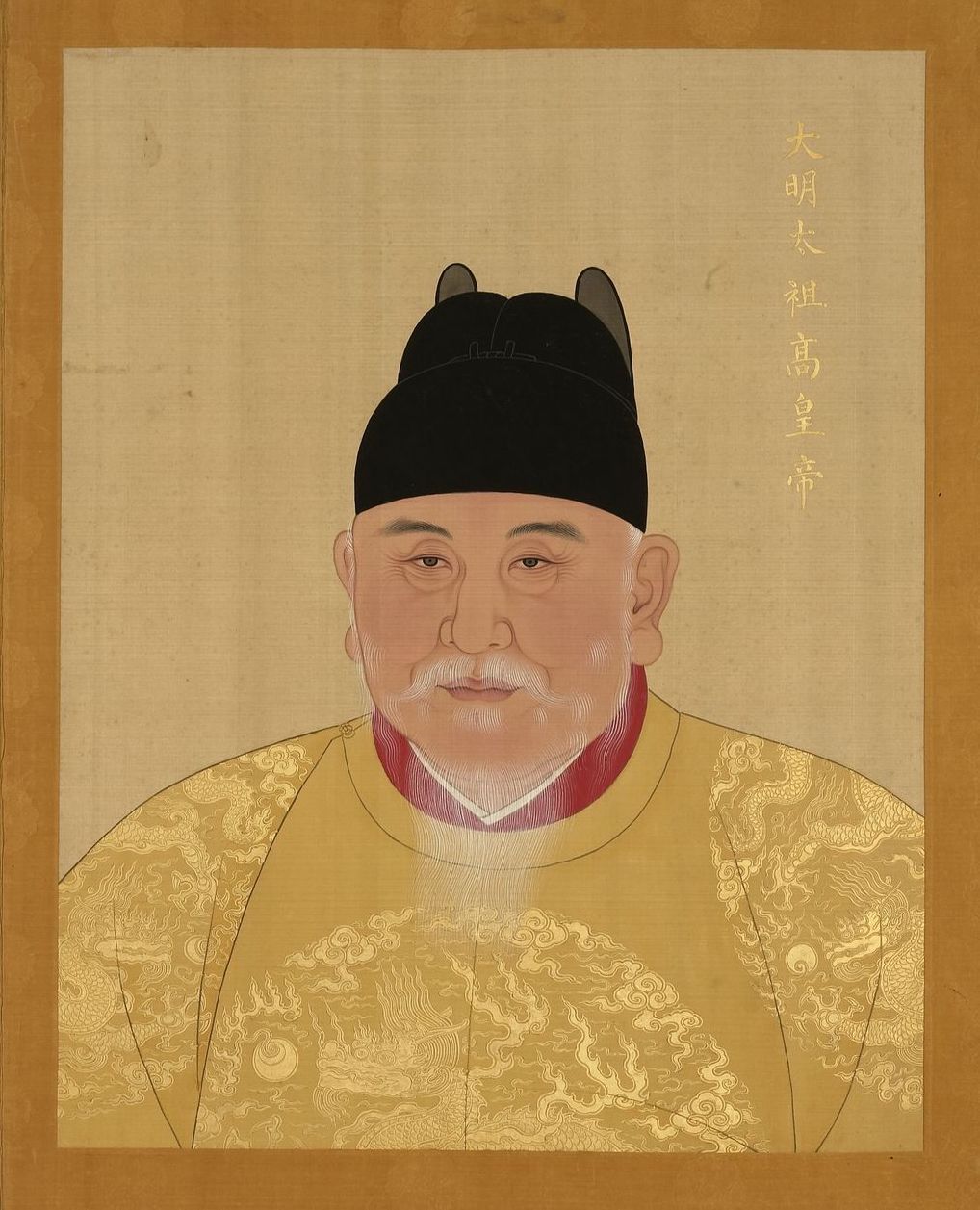
The National Palace Museum in Taipei is exhibiting a portrait of Emperor Hongwu in his later years in its "Journey Through Time" exhibition. This portrait is the first page of the album of "Half-Length Portraits of Ming Dynasty Emperors and Empresses" formerly in the Nanxun Hall of the Forbidden City.
Among the unusual portraits of the Ming Taizu in the museum's collection, many have a bulbous nose like a garlic clove and a pointed mouth, which are known as "Five Sacred Mountains Facing the Sky" or "Pig-Dragon Shape"; their faces are also covered with black spots, which are the strange appearances of "Seventy-two Evils (Molees)" that symbolize good fortune.
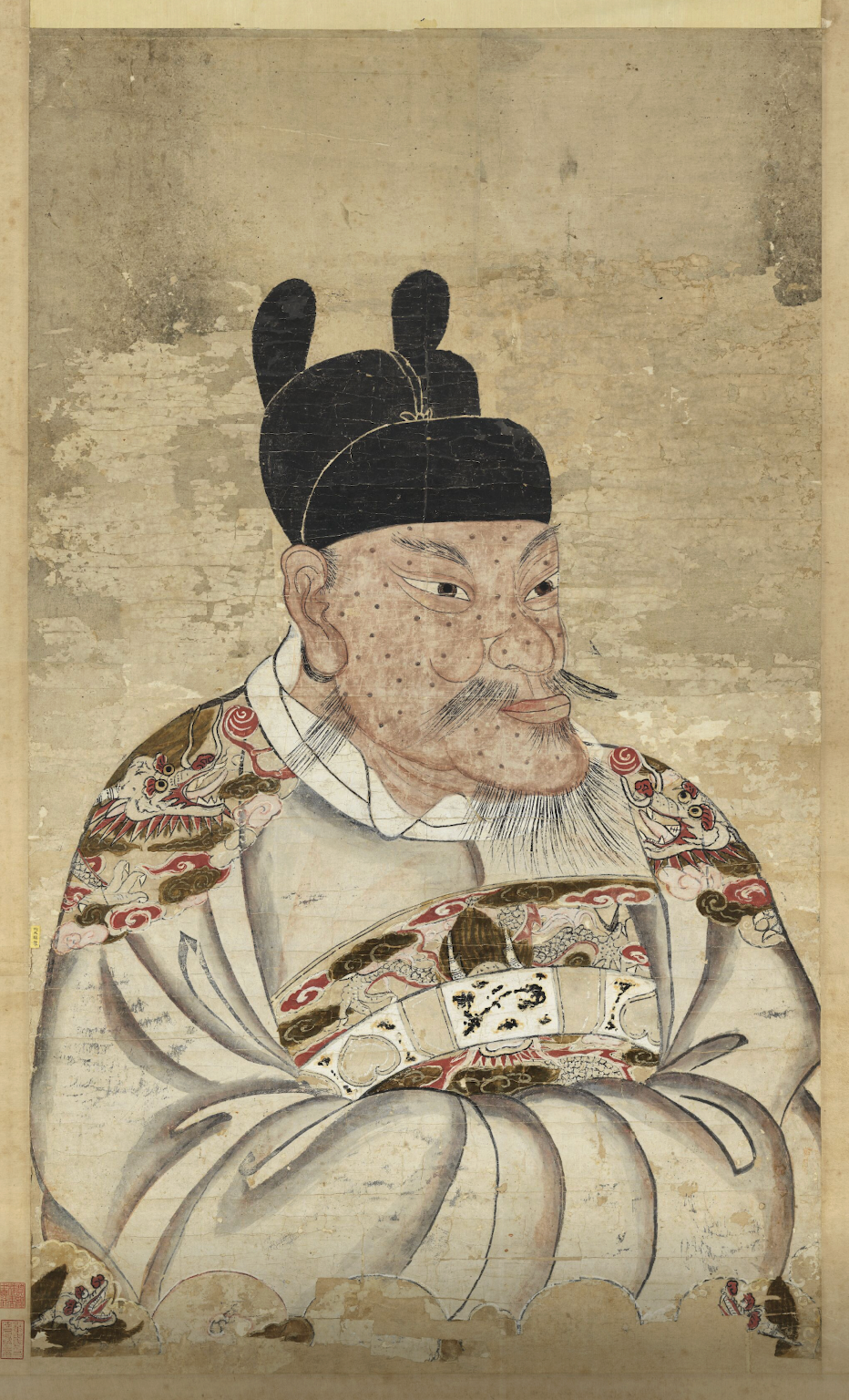
Anonymous Ming Dynasty half-length portrait of Emperor Taizu of Ming, housed in the National Palace Museum, Taipei.
In his book *Songchuang Mengyu*, Zhang Han, a Ming Dynasty scholar, recorded that when he served as the Southern Minister of Works, he personally viewed the portraits of Emperor Taizu and Emperor Chengzu in the Wuying Hall. He observed that "Emperor Taizu's appearance was striking: his eyebrows were elegant, his eyes were bright, his nose was straight, his lips were long, his face was like a full moon, and his beard was less than a foot long, quite unlike the fantastical images circulating among the common people." This suggests that the portraits of Emperor Taizu displayed in temples and palaces at that time were mostly realistic depictions meticulously drawn based on Zhu Yuanzhang's true appearance, vastly different from the "extraordinary" images widely circulated among the people.
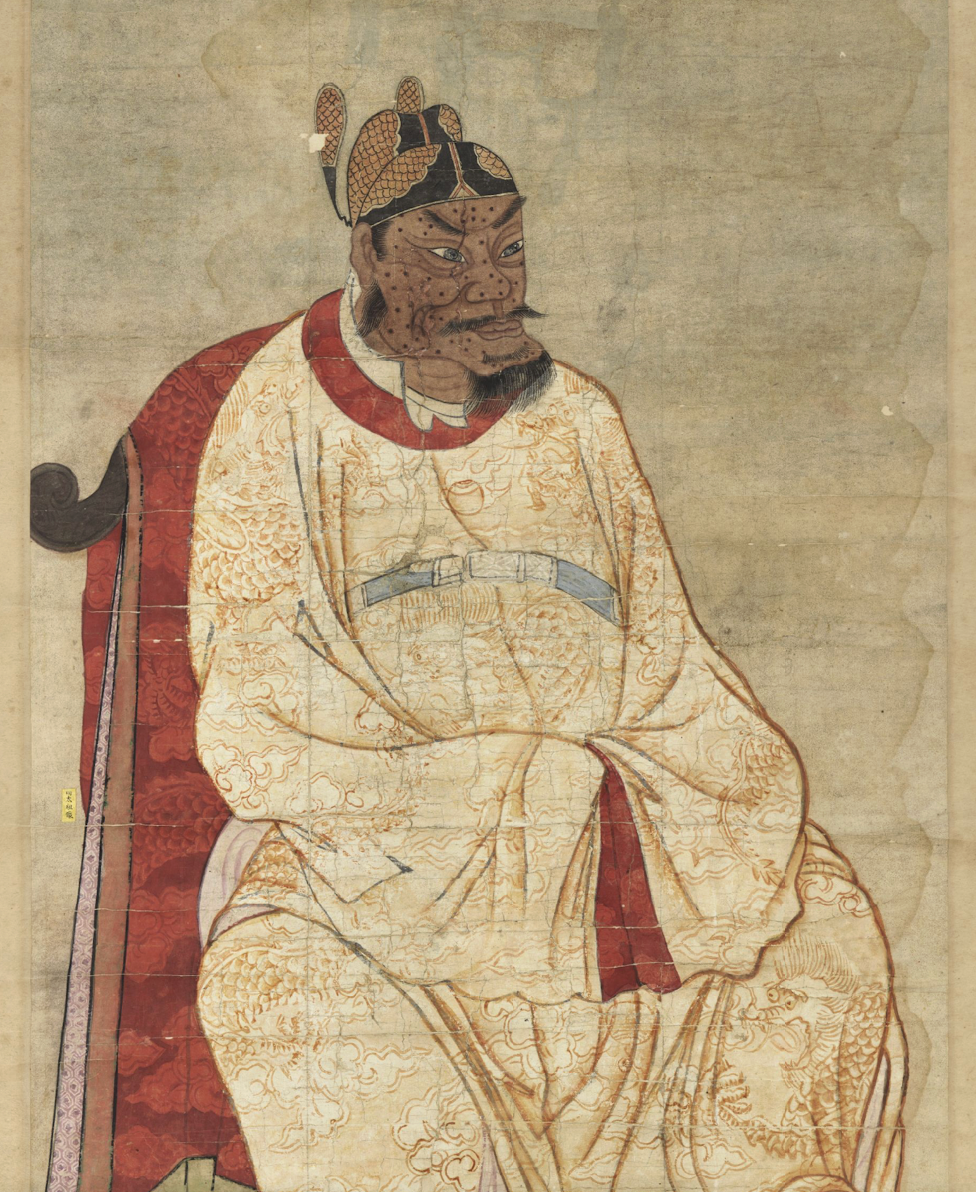
A partial portrait of Emperor Taizu of Ming (Ming Dynasty), housed in the National Palace Museum, Taipei. (Anonymous)
Why did so many "unusual" portraits appear at that time? According to the research of scholars such as Wang Yaoting and Zeng Jia, the creation of these "pig-dragon-shaped" portraits was influenced by physiognomy books, serving as a means to conform to the concept of "destiny" and thus provide a basis for establishing a dynasty. These special "unusual" portraits only appeared briefly in a specific period of history before disappearing, making them an extremely rare phenomenon in art history.
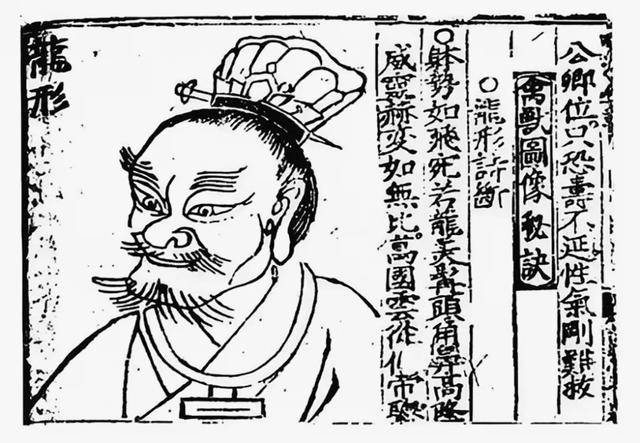
[Ming Dynasty] Wang Wenjie, *The Complete Book of Physiognomy and Face Reading: The Secret Transmission of the Wang Family*, "Dragon-shaped" Physiognomy, Collection of the National Library of China
During the Ming and Qing dynasties, with the rise of realistic portraiture promoted by painters such as Zeng Jing and the introduction of Western painting techniques, the upper class demanded greater realism and solemnity in portraiture. Exaggerated "grotesque images" were gradually regarded as vulgar folk art unfit for high society.
(Some information in this article is referenced from the official website of the National Palace Museum in Taipei and Chen Yanjun's "The Replicated Imperial Portrait: A New Exploration of the Strange Image Patterns of the Ming Taizu Emperor")