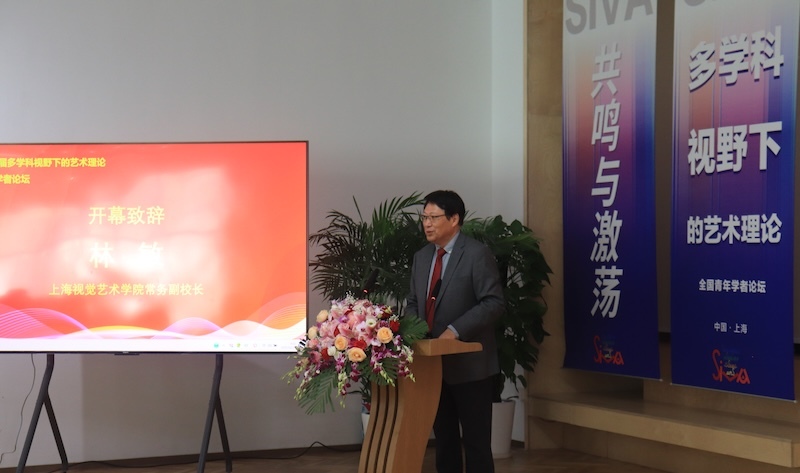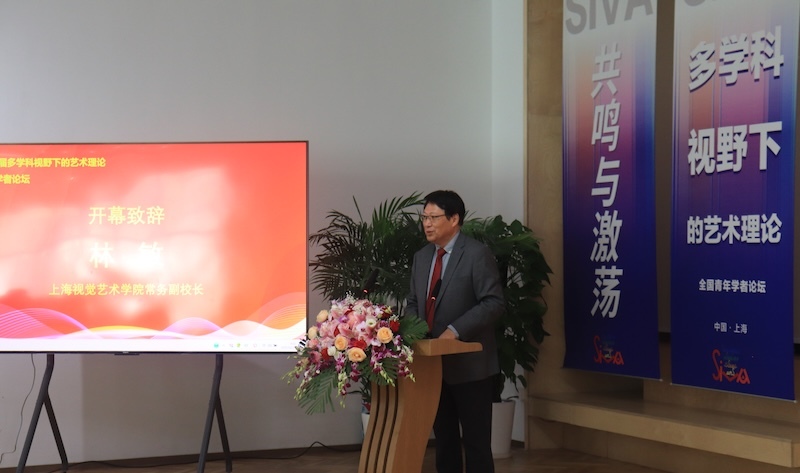
Currently, artificial intelligence is reshaping the ways in which art is produced, disseminated, and perceived. On November 29th, the Second National Forum for Young Scholars on "Art Theory from a Multidisciplinary Perspective" was held at the Shanghai Institute of Visual Arts. The forum explored the diverse prospects of art theory as a discipline in the context of the development of artificial intelligence, ranging from the reconstruction of the essence of art itself to the boundaries of the creative subject, from the evolution of aesthetic experience to the transformation of art education.
According to Lin Min, Executive Vice President of the Shanghai Institute of Visual Arts, this forum focuses on topics such as "Art Philosophy, Artistic Creation, Aesthetics, Education, Ethics, and Art History in the AI Era." This year, the forum attracted more than 50 young scholars from over 30 universities and research institutions at home and abroad, including Fudan University, Peking University, Tsinghua University, the Central Academy of Fine Arts, the Chinese National Academy of Arts, Macau University of Science and Technology, and Kyung Hee University in South Korea. Through interdisciplinary, interregional, and intercultural dialogue, the forum aims to enhance the ability and effectiveness of art theory in addressing core issues in the era of artificial intelligence.
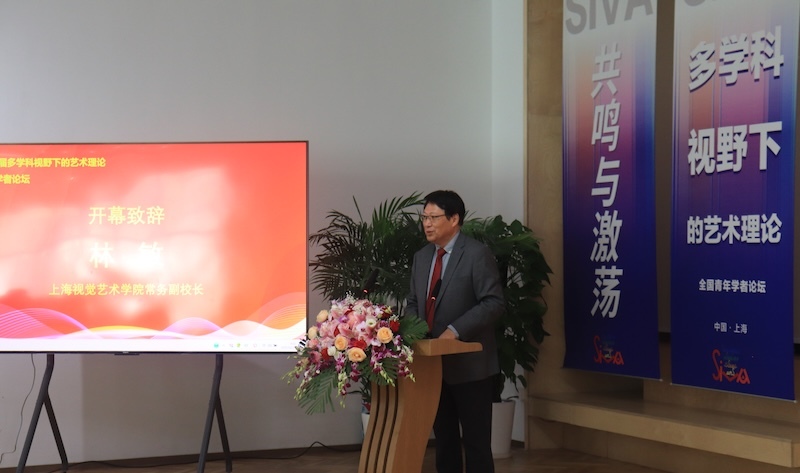
Lin Min, Executive Vice President of Shanghai Institute of Visual Arts, delivered a speech.
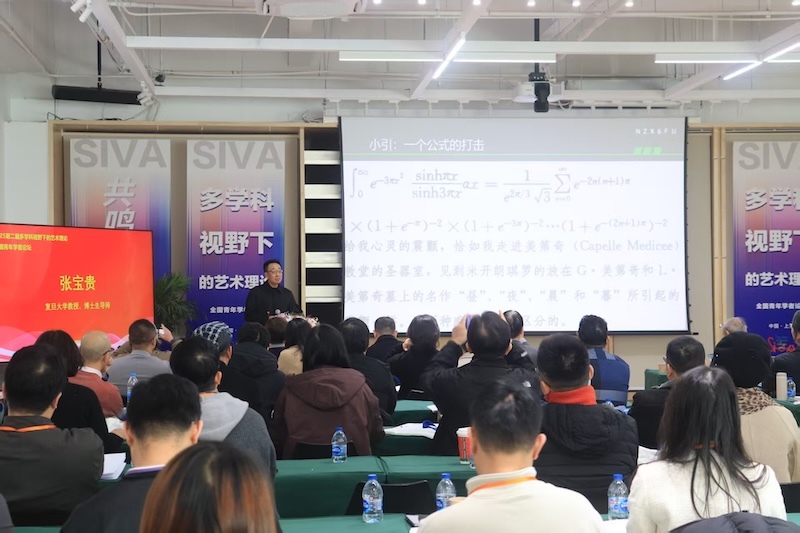
Forum scene
Professor Zhang Baogui of Fudan University, Professor Zhi Yunbo of Shanghai Theatre Academy, and Professor Ren Huadong of Shanghai University, from the perspectives of Marxist aesthetics, drama theory, and art studies respectively, discussed how traditional art theories and aesthetic paradigms often face the predicament of becoming ineffective in the age of artificial intelligence. As art theory researchers, they should pay attention to cultivating their own artificial intelligence technology literacy, mastering the special production paradigm of artificial intelligence art, and, in the artificial age, "coming down from the mountain" to study the "real problems" in art theory, seeking mutual nourishment between theoretical research and artistic creation.
In addition to the main venue, this youth forum also set up four parallel sessions, with the themes of "Philosophy of Art in the AI Era", "Artistic Creation in the AI Era", "Artistic Practice and Aesthetics in the AI Era" and "Art Education, Ethics and Art History in the AI Era", respectively. The forum invited participating scholars to discuss various issues facing art theory in the context of the rapid development of artificial intelligence.
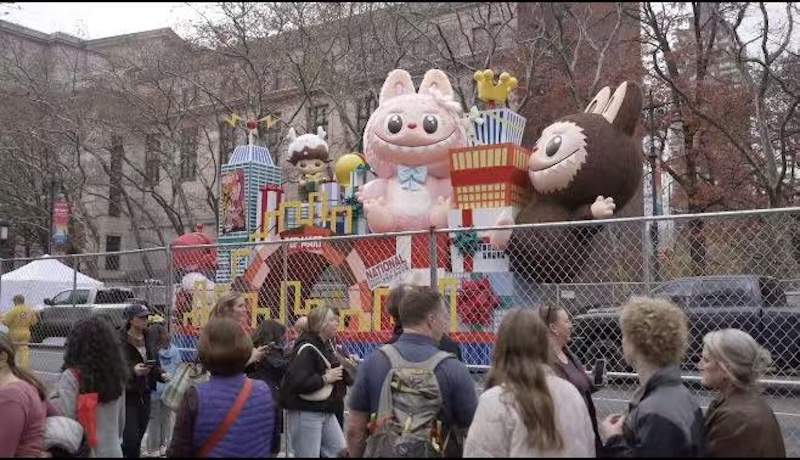
The globally popular trendy IP "Labub"
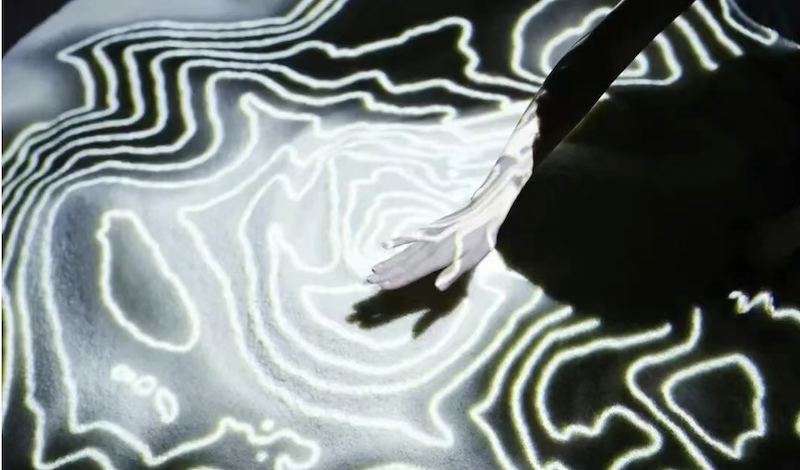
Interactive installation art "Japanese Cuisine"
Cen Qingyuan and Zhang Chao from Guangxi University of Science and Technology explored the aesthetics of the AI era through the phenomenon of the trendy IP "Labubu," discussing the paradox and liberation of "ugly-cute." Chang Junsong, a doctoral student at Kyung Hee University in South Korea, used the interactive work "Imitation Game" as an example to discuss research on human-computer collaborative creation. Huang Nuohua, a doctoral student from the School of Philosophy at Shanxi University, discussed the manifestation from "weak images" to "algorithmic sublimity." These scholars, from their respective perspectives, discussed the deconstruction and reconstruction of artistic creation by understanding technological logic, the evolution of the creator's subjectivity, and the inheritance and innovation of humanistic values in the intelligent era.
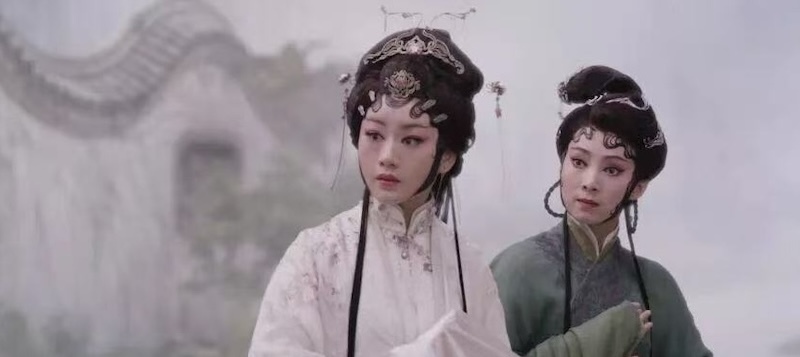
The Aesthetics of Traditional Chinese Opera in the Cantonese Opera Film "The Legend of the White Snake"
The impact of the artificial intelligence era on artistic creation lies not only in its widespread application in contemporary art, but also in its transformation of traditional art, art education, and art historical research. Meng Dan, a doctoral student at the Chinese National Academy of Arts, used the opera aesthetics in the Cantonese opera film *The Legend of the White Snake* as an example to illustrate the technological translation and reconstruction of opera aesthetics in the AI era; Wang Zekun, a postdoctoral researcher at the Shanghai Academy of Fine Arts, Shanghai University, used *Gezhi Huibian* (a collection of scientific and technological publications) as an example to explore the media practice and modernity generation of scientific and technological images in modern periodicals; Yang Shibin, a doctoral student at the Chinese National Academy of Arts, discussed the ecology of contemporary ceramic art creation in the context of artificial intelligence; and Li Yanan, a lecturer at Capital Normal University, discussed the application of AI image analysis technology in the stylistic dating of art history. They drew from various interdisciplinary fields to discuss the impact of artificial intelligence on traditional artistic creation, art education methods, and traditional art historical narratives.
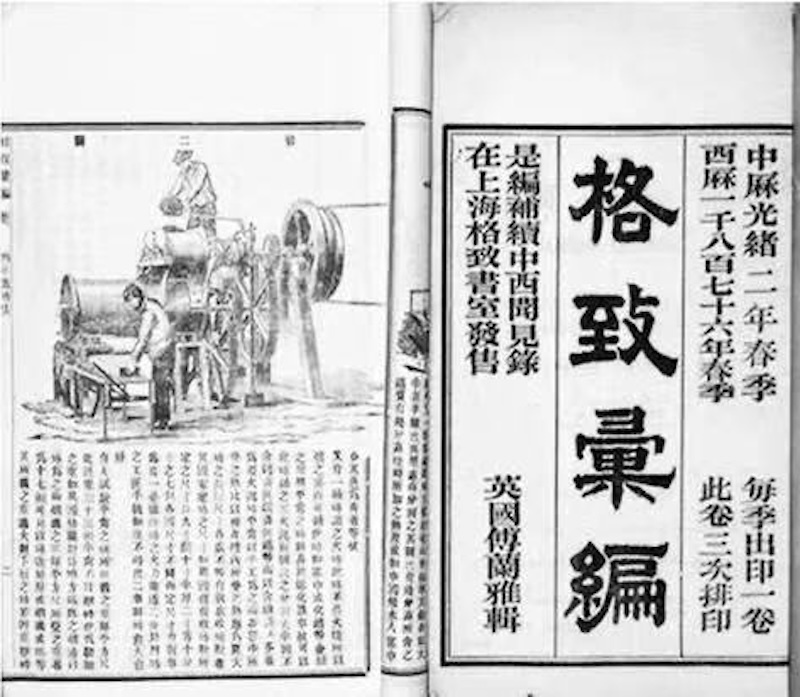
The Compendium of Scientific Research
In addition, during discussions on topics such as artistic value and artistic ethics, the young scholars present reflected on artistic creation in the AI era from multiple dimensions, including phenomenology, hermeneutics, digital simulacra, knowledge production, and event philosophy, based on new philosophical foundations.