Between each stroke, one can see not only the boundless passion of revolutionaries but also the demeanor of a master calligrapher. Shu Tong's (1905-1998) calligraphy style is also known as "Shu Style". He was praised by Chairman Mao Zedong as a "Red Army calligrapher" and a "horseback calligrapher". He was the first chairman of the China Calligraphers Association.
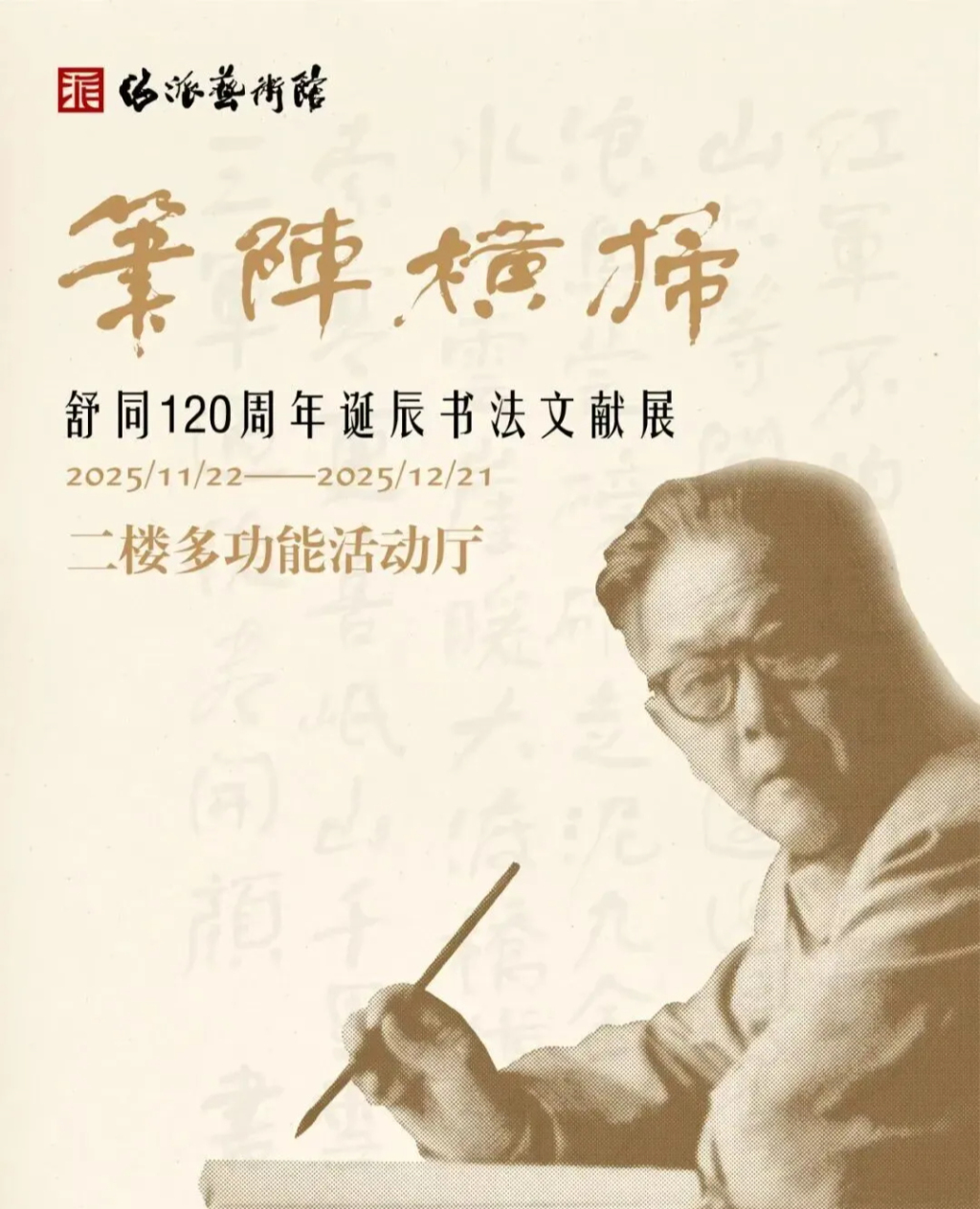
The "A Thousand Years of Calligraphy and Painting: A Documentary Exhibition and Symposium Commemorating the 120th Anniversary of Shu Tong's Birth," co-sponsored by the China Federation of Literary and Art Circles, the China Calligraphers Association, and the Jiangxi Provincial Federation of Literary and Art Circles, was recently held at the China Artists' Home in Beijing.
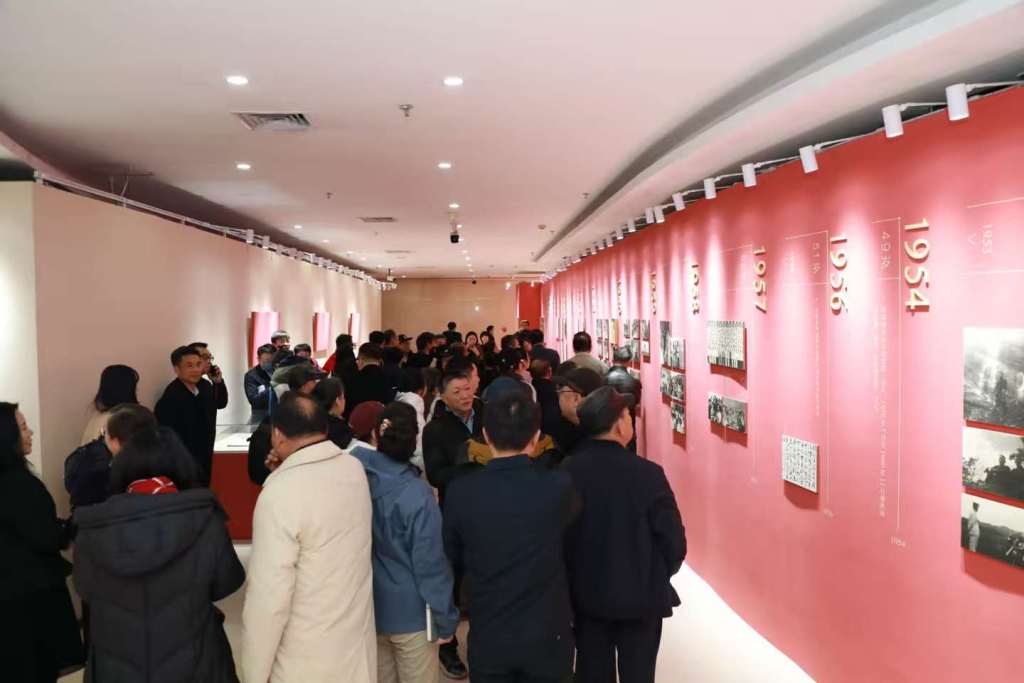
The Paper observed at the scene that the exhibition, through a biographical chronology, historical photographs, articles, letters, calligraphy works, classic quotes, publications, and handwritten notebooks, reviewed Shu Tong's life, which resonated with the course of the Chinese revolution and the development of contemporary calligraphy.
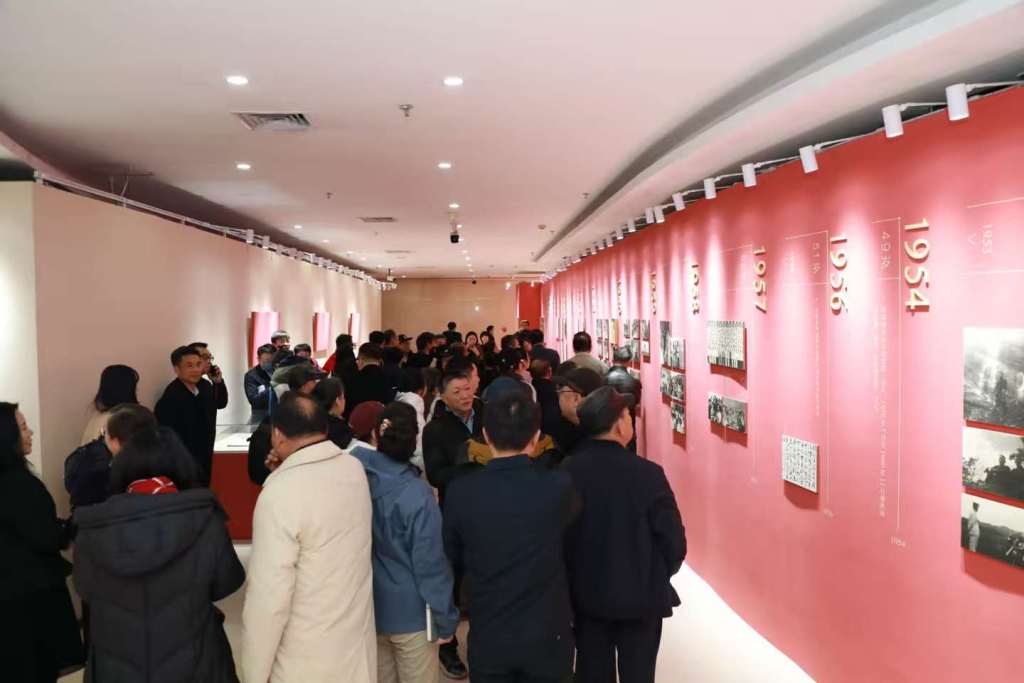
Exhibition site
Xu Yongjun, member of the Party Leadership Group and Vice Chairman of the China Federation of Literary and Art Circles, attended the opening ceremony of the exhibition and delivered a speech at the symposium. Sun Xiaoyun, Chairman of the China Calligraphers Association, also addressed the opening ceremony. Members of the Presidium of the China Calligraphers Association, officials from relevant departments of the China Federation of Literary and Art Circles, relatives and friends of Shu Tong, and descendants of revolutionaries attended the opening ceremony. Su Shishu, Sun Xiaoyun, Zhang Biao, Li Gangtian, Bai Xu, Shu An, and others spoke at the symposium, jointly commemorating this "calligrapher on horseback" who perfectly blended revolution and art.
Attendees stated that Shu Tong, as the first chairman of the China Calligraphers Association, was a successor and pioneer of Chinese calligraphy. He wielded both brush and ink, using calligraphy to convey meaning; his work was not only a sharp weapon for revolutionary propaganda but also embodied the profound patriotism of a member of the Communist Party of China. He presided over the establishment of the China Calligraphers Association, upholding the principles of "letting a hundred flowers bloom and weeding through the old to bring forth the new," thus opening a new chapter in the development of contemporary calligraphy.
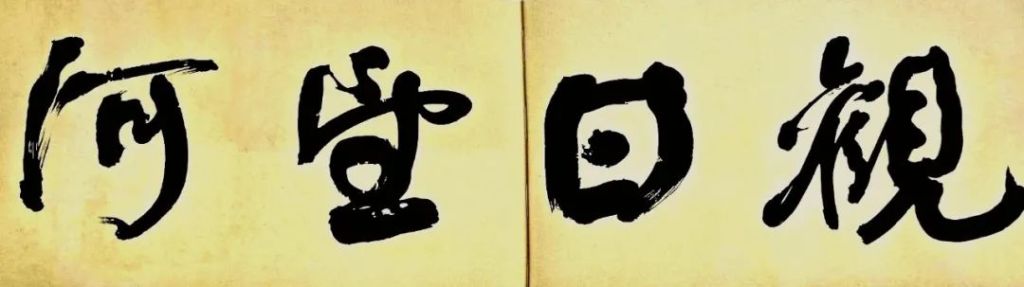
Large-character calligraphy for viewing the sunrise and overlooking the river
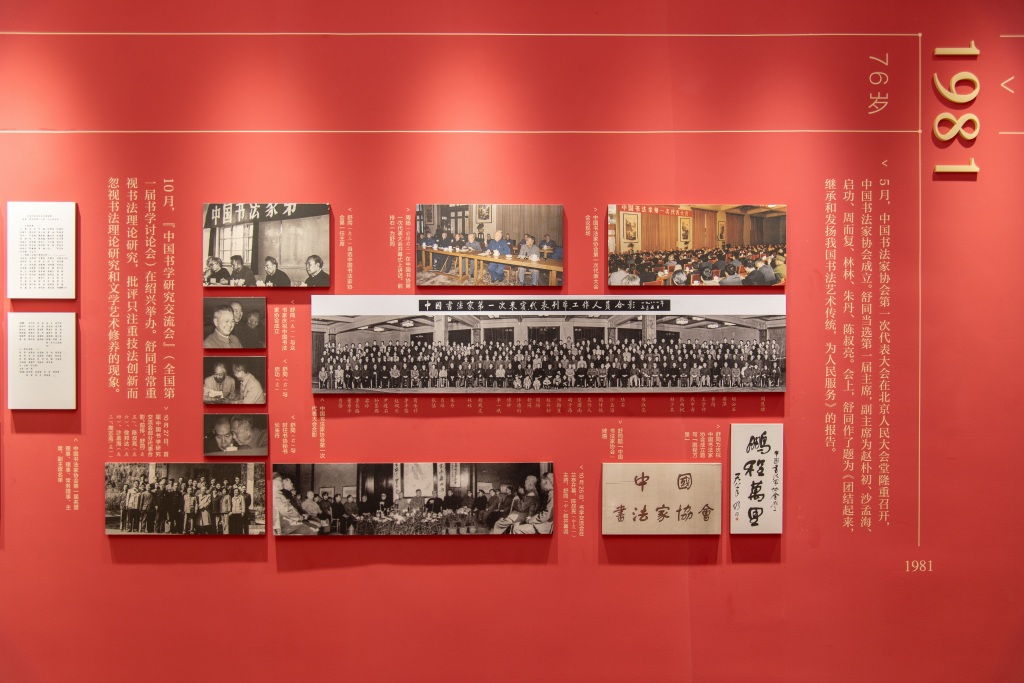
Exhibition site
In an exclusive interview with The Paper after the symposium, Sun Xiaoyun, Chairman of the China Calligraphers Association, said: "As the first chairman of the China Calligraphers Association, Mr. Shu Tong's advocacy of academic style and pursuit of ideals are still very wise in retrospect. He was the leader, founder, and guide of contemporary Chinese calligraphy, and he is also a role model and example for us calligraphers today."
Legends of Pen and Ink in the Flames of Revolution
Shu Tong was born on November 25, 1905, into a poor family in Dongxiang, Jiangxi Province. He began writing at the age of five and by fourteen, he was known in his hometown as a "talented scholar of Dongxiang." During the May Fourth Movement, he and his progressive classmates founded the "Jinlan Students Society" and later initiated the "Marxist Research Society," exploring ways to save the country through their writing.
In 1926, Shu Tong joined the Communist Party of China, thus inextricably linking his personal destiny with the future of the nation. Four years later, he joined the Chinese Workers' and Peasants' Red Army, serving as secretary of the Political Department of the Fourth Red Army. Amidst the flames of war, he used his pen as a weapon, writing countless propaganda slogans. Mao Zedong, upon seeing his calligraphy, greatly praised him: "The Red Army has produced a calligrapher!"
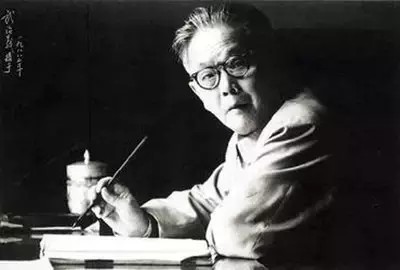
Shu Tong (1905-1998)
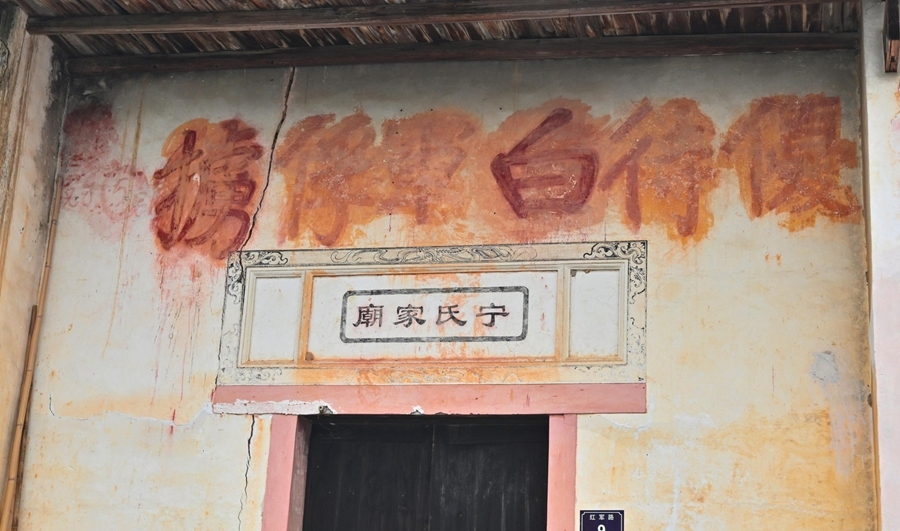
In the Ning Family Temple in Xiaobu Town, Ningdu County, a wall several meters high stands majestically, with a red banner prominently displayed on it that reads "Treat White Army Prisoners Well."
Chikan Village, Xiaobu Town, Ningdu County, Jiangxi Province, was once one of the command centers of the Party and the Red Army during the Central Soviet Area period. It was later confirmed that nearly ten Red Army slogans were in the handwriting of Shu Tong. Among them, the slogan "Treat White Army Prisoners Well" is characterized by its vigorous brushstrokes, broad structure, and subtle hints of Yan Zhenqing's style. Given the harsh conditions of those years, calligraphy was often done with palm-handled brushes and brooms as pens, and lime water as ink. Even in such simple and rudimentary circumstances, Shu Tong still left behind works full of vivid charm.
In 1939, Shu Tong participated in a highly strategic "cognitive war" against the enemy. At that time, Higashine Seiichiro, the head of the Japanese pacification squad, wrote to the Jin-Cha-Ji Military Region requesting the release of the captured pacification officer, Urata Yoshio. Shu Tong and Nie Rongzhen jointly replied, writing "A Letter to Higashine Seiichiro." This long letter, written in parallel prose, was published in the "Anti-Enemy Daily" and was later described by the "People's Daily" as a "memorandum in the history of Sino-Japanese relations."
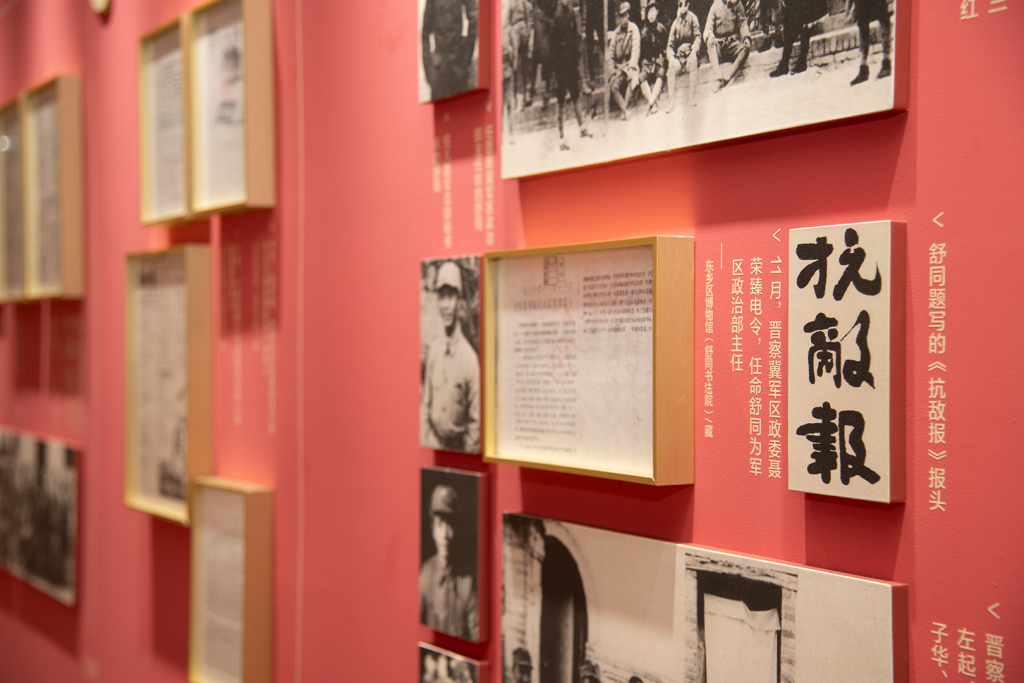
Exhibition site photos
In the letter, Shu Tong argued that "the two great nations of China and Japan stand tall in East Asia; mutual assistance leads to coexistence and prosperity, while mutual attack results in mutual destruction," directly accusing the Japanese militarists of being "enemies of both countries." He also meticulously depicted the wartime suffering of Japanese soldiers, who "abandoned their fields in the wilderness, causing their parents to weep in grief, and their wives to wail in sorrow." This strategy, which both highlighted national integrity and garnered empathy from ordinary Japanese people, demonstrated his profound political acumen.
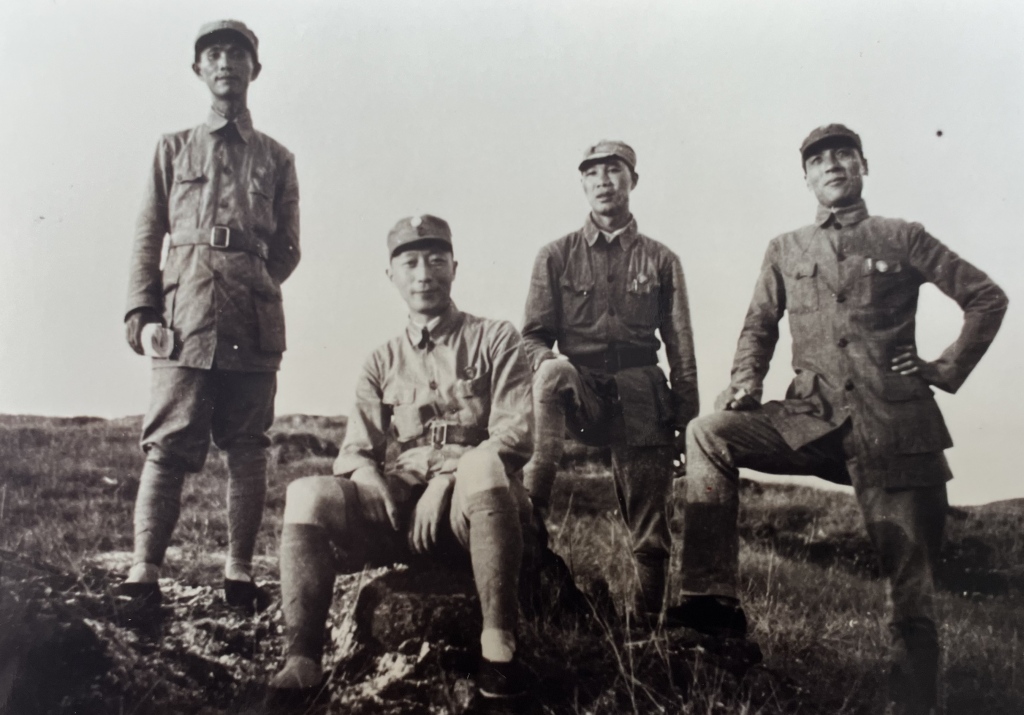
A meeting of commanders of the main attacking forces on the eve of the Hundred Regiments Offensive in 1940. Seated in the center is Nie Rongzhen; from the left is Shu Tong. Photograph by Sha Fei.
In 1941, the Shaanxi-Gansu-Ningxia Border Region, in order to improve its work on the anti-Japanese united front, planned to appoint a group of highly respected figures as government senators. Unexpectedly, Xiao Zhibao refused—a former Qing Dynasty scholar who believed the newly emerging Communist Party was "uncultured." Upon hearing this, Mao Zedong, far from being angry, laughed heartily. He instructed his staff: "Have Shu Tong write him a letter!" Shu Tong, upon receiving the task, poured his patriotic fervor and respect for intellectuals into his writing. After reading the letter, Xiao Zhibao exclaimed, "The writing is excellent, and the handwriting is even better than mine! The Communist Party has talented people!" He then readily agreed to serve as a senator. A seemingly unsolvable political deadlock was thus easily resolved with a single letter, becoming a celebrated story. Mao Zedong subsequently called Shu Tong "a pen within the Party."
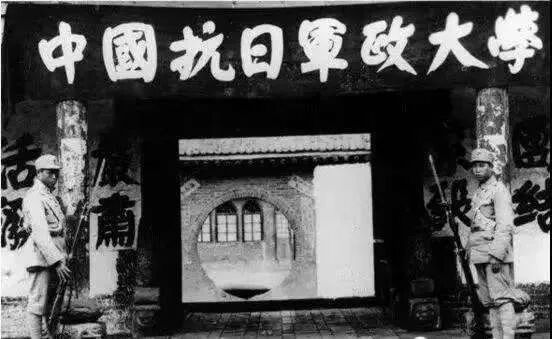
Shu Tong wrote the name and motto of the "Chinese Anti-Japanese Military and Political University": "Unity, Tension, Seriousness, and Liveliness".
He Xiangning once said, "The Kuomintang and the Communist Party have two pens: Yu Youren for the Kuomintang and Shu Tong for the Communist Party." These evaluations established Shu Tong's unique position in the calligraphy world.
Governing a region and writing diligently
After 1949, Shu Tong transferred to local work. During this period, he did not put down his pen, but integrated the art of calligraphy into the new construction cause.
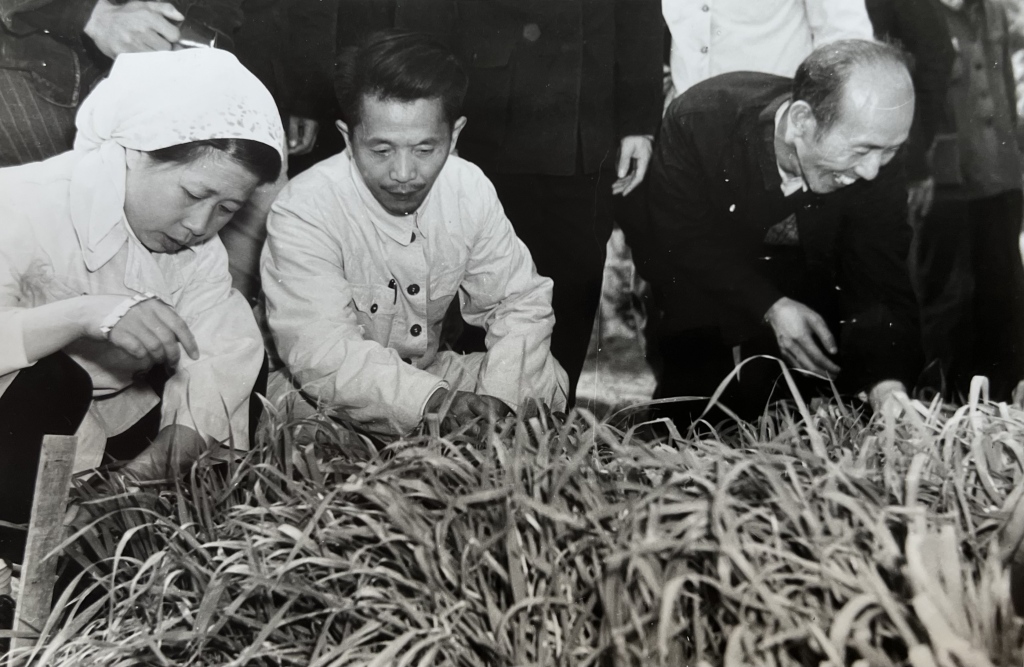
In the late 1950s, Shu Tong, then Secretary of the Shandong Provincial Party Committee, conducted in-depth research and investigations in rural areas.
Among the exhibits is a yellowed handwritten work notebook, which clearly records his research and reflections on industrial and agricultural production in Shandong. Meanwhile, many plaques and mastheads of important Shandong institutions bear his bold and powerful calligraphy, these works not only reflecting his personal artistic achievements but also becoming cultural imprints of an era.
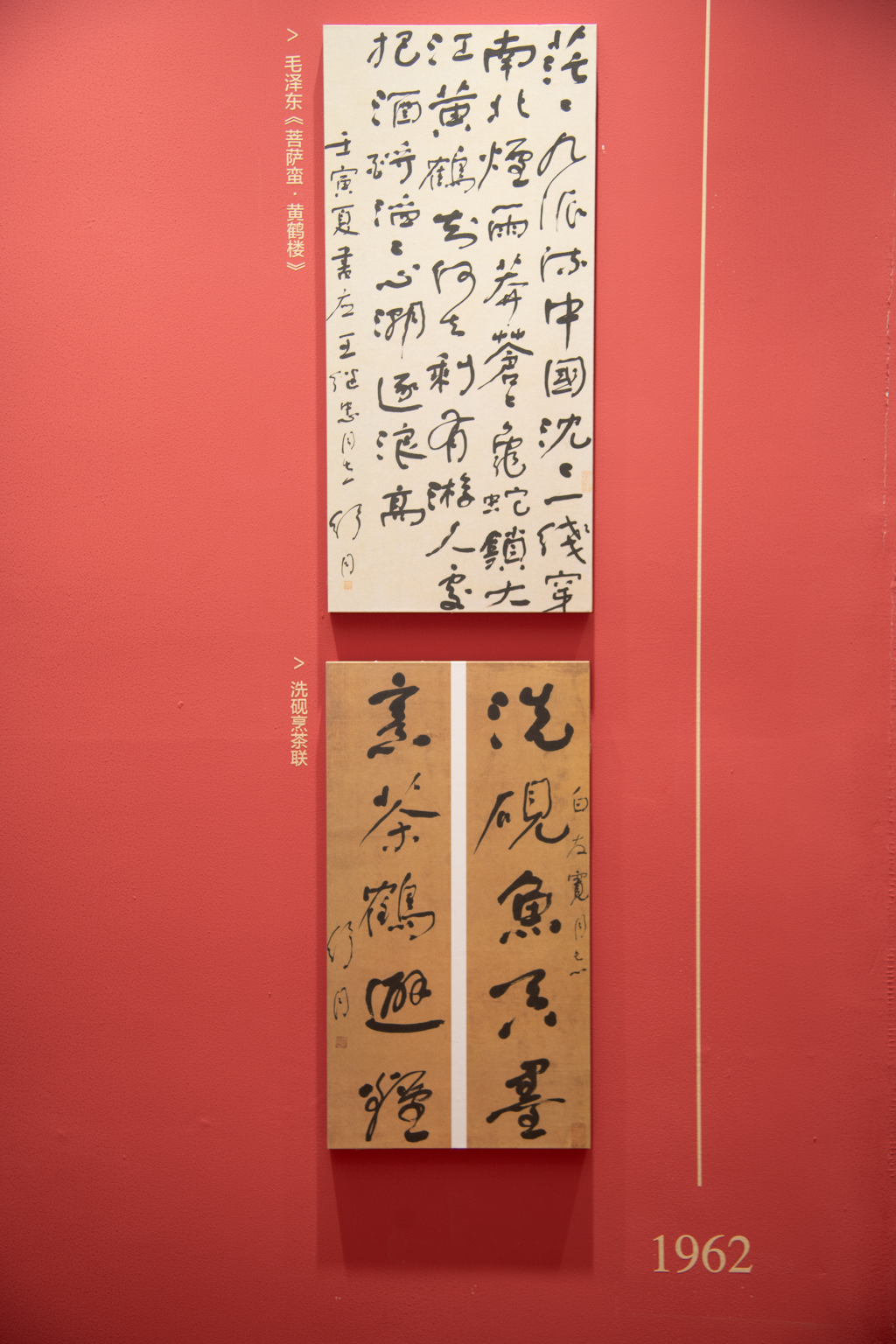
Documents of Shu Tong's works at the exhibition
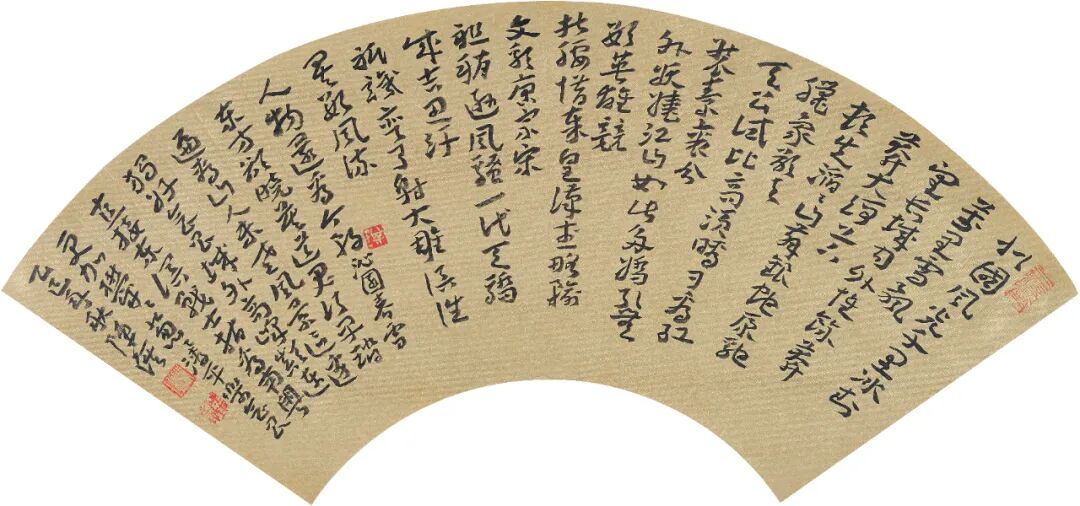
During the decade from 1966 to 1976, Shu Tong suffered persecution. Even while imprisoned, his love and dedication to calligraphy never diminished. A reporter from The Paper noticed a piece Shu Tong copied during his imprisonment, a poem by Mao Zedong, "Seven-Character Quatrain: The People's Liberation Army Occupies Nanjing" (later, Shu Tong's seal was added to the lower right corner after his rehabilitation). This work is a profound fusion of his personal artistic style and the spirit of the times. It employs the typical Shu-style cursive script, with a coherent overall flow and dynamic brushstrokes, demonstrating the artist's enduring creative passion and artistic control even in adversity.
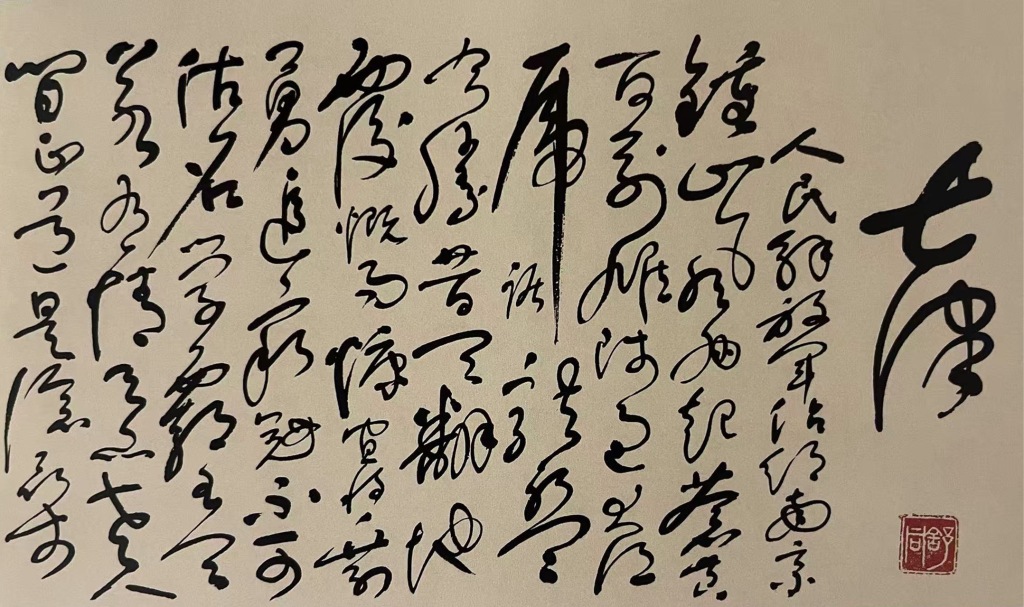
A Seven-Character Quatrain: The People's Liberation Army Occupies Nanjing
The establishment of the Calligraphy Association and the creation of a new era in the calligraphy world
The spring breeze of reform and opening up brought new brilliance to Shu Tong's artistic life. In May 1981, the First National Congress of Chinese Calligraphers was solemnly held in the Great Hall of the People in Beijing, and the China Calligraphers Association was officially established. Shu Tong, then 76 years old, was elected as the first chairman, and the vice chairmen were Zhao Puchu, Sha Menghai, Qi Gong, Zhou Erfu, Lin Lin, Zhu Dan, and Chen Shuliang.
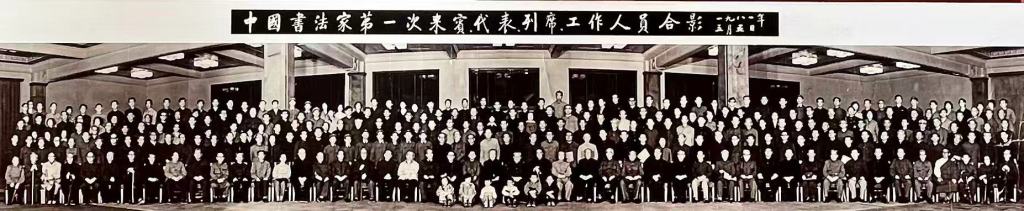
A group photo of Chinese calligraphers representing the guests and staff at the first visit to China, 1981.
In his report to the conference, Shu Tong emphasized: "Chinese calligraphy is the art of the people. It has developed into an art that the people love because it originated from the people and has a long and splendid historical tradition."
As the first chairman, Shu Tong united calligraphers and laid a solid foundation for restoring and establishing the social status of calligraphy, promoting calligraphy education, and organizing domestic and international calligraphy exchanges. With his unique personal charm and high artistic prestige, he rallied the forces of the calligraphy world, laying a solid foundation for the future prosperity and development of Chinese calligraphy. In April 1985, at the Second National Congress of the China Calligraphers Association, Shu Tong delivered a report entitled "Popularizing Teaching, Promoting Creation, and Raising Contemporary Calligraphy to a New Level." Given that he had already been nominated as a candidate for the new chairman, he proactively requested a replacement by a younger comrade before the meeting. The congress ultimately agreed to his request and unanimously elected him as honorary chairman.
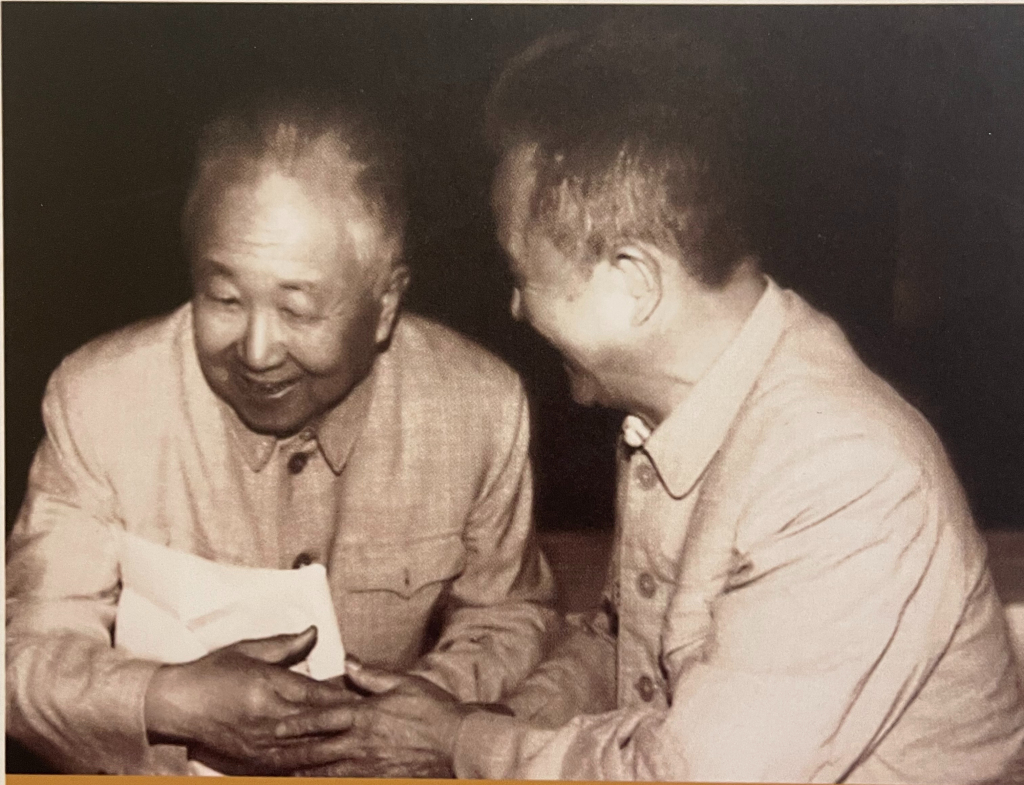
In the 1980s, Shu Tong (right), the first chairman of the China Calligraphers Association, and Qi Gong, the vice chairman.
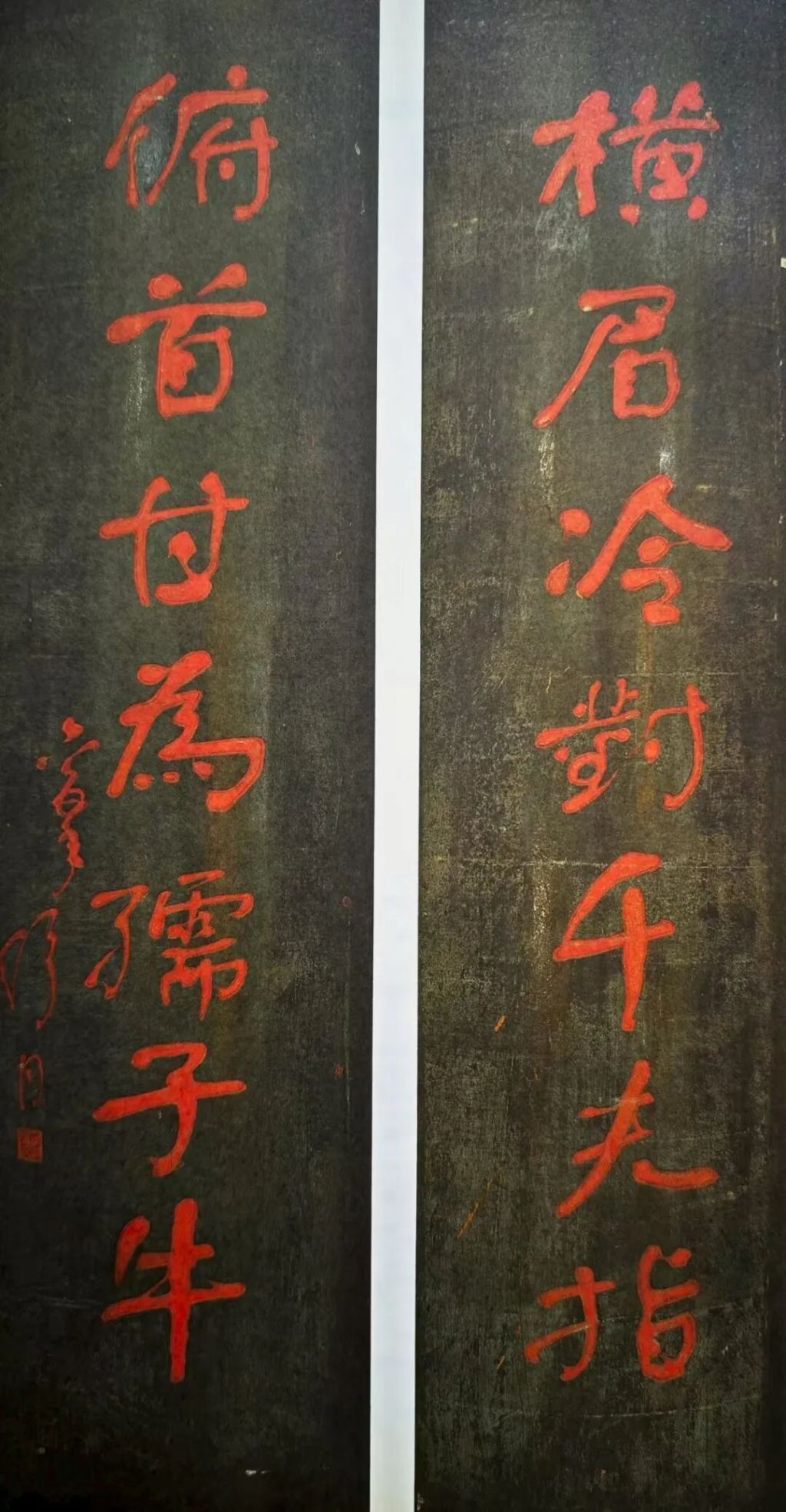
A couplet in seven-character lines: Frowning and bowing
Even in his later years, Shu Tong remained concerned with the advancement of calligraphy. His unique "Shu Style" calligraphy gained wider social recognition and application, and its influence long transcended the art world. In the autumn of 1989, at the age of 84, Shu Tong experienced another leap forward in his artistic life: the Shanghai Typeface Factory successfully incorporated his original "Shu Style" calligraphy into a computer font library. Subsequently, Japan also produced Japanese Shu Style fonts. Shu Tong became the first contemporary calligrapher to have his calligraphy style incorporated into a computer using his surname.
Shu Tong's calligraphy inherited the two major mainstreams of the late Qing Dynasty: the veneration of Yan Zhenqing's style and the emphasis on stele inscriptions. He skillfully blended the vigorous style of Yan Zhenqing with the unadorned style of stele inscriptions, creating a unique style that was rounded, graceful, profound, and vigorous. His original "seven and a half" style of calligraphy took one part from each of the five major styles of regular script, running script, cursive script, seal script, and clerical script, one part from the styles of Yan Zhenqing and Liu Gongquan, and half a part from the artistic conception of He Shaoji, pushing the style of Yan Zhenqing's calligraphy to a new level.

Shu Tong's calligraphy
Mao Shi'an, former vice chairman of the China Federation of Literary and Art Circles, said: "Shu Tong started with Yan Zhenqing's calligraphy. Among calligraphers, he is one of the very few who can communicate with Yan Zhenqing on a spiritual level. Yan Zhenqing's patriotism and dedication to his country, which led him to sacrifice his life for his country, is in line with the spirit of Shu Tong's generation in the face of national crisis."
"Shu Tong was a high-ranking leader, but our recognition of his achievements in calligraphy cannot be limited to this position alone," wrote calligraphy critic Ma Xiao. "Shu Tong became a landmark figure in the history of modern Chinese calligraphy because of his contributions to calligraphy. To be more precise, he was a calligrapher who, after He Shaoji of the Qing Dynasty, once again carried forward the Yan Zhenqing style and pushed it to a new level."
The exhibition held at the China Arts House uses a simple and dignified format, including a biographical chronology, historical photographs, artifacts, and manuscripts, to outline Shu Tong's life trajectory.
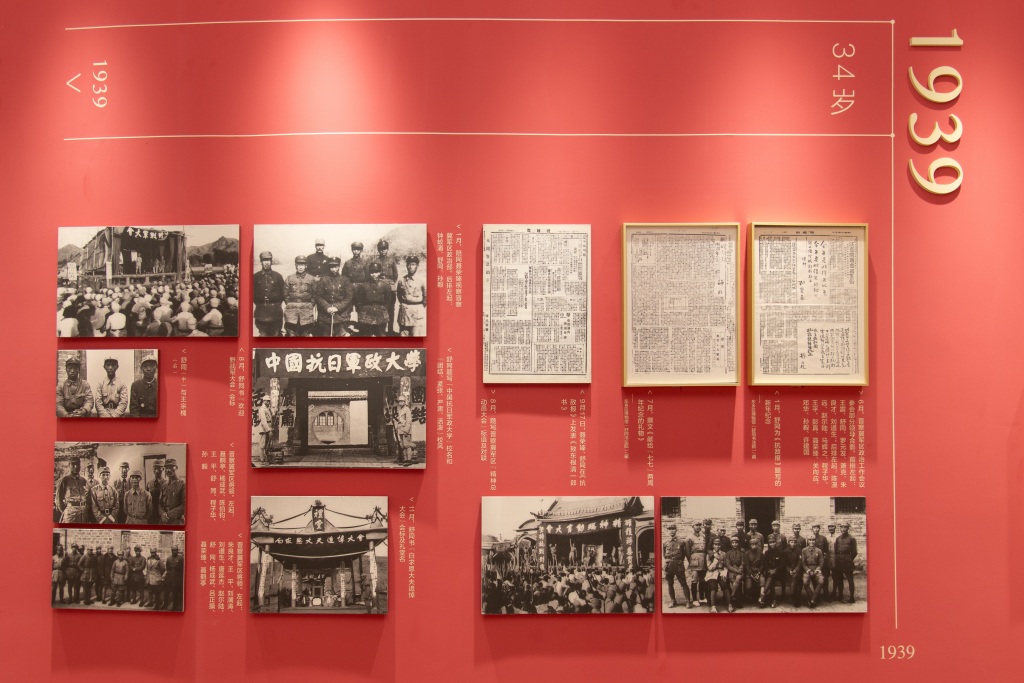
Exhibition site photos
Of particular note is a sketch accompanied by a poem, which attracted the attention of many visitors at the very beginning of the exhibition. This work, titled "Sketching Shu Tong," created by Li Lanqing, is a commemorative piece that integrates poetry, calligraphy, and painting.
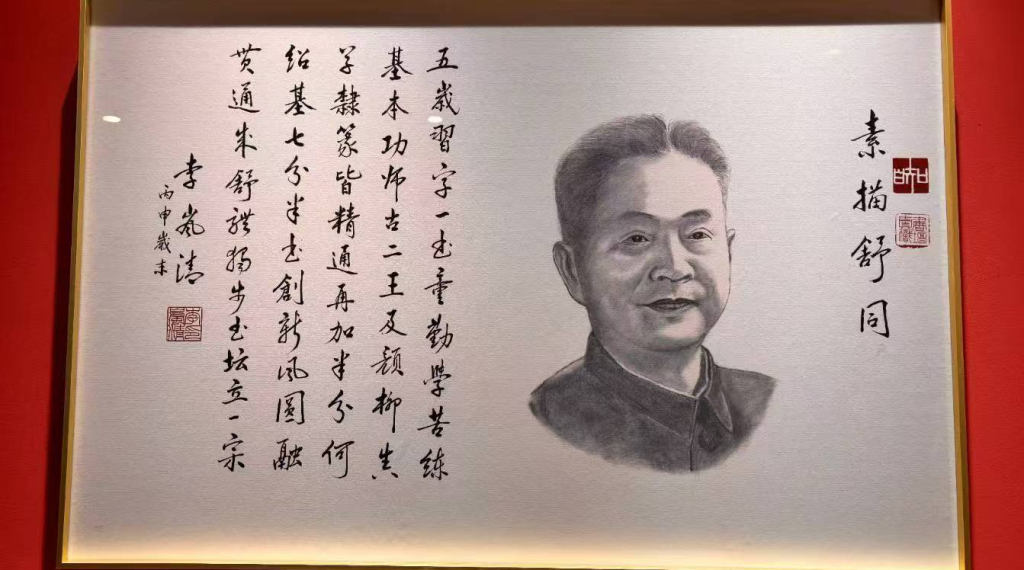
Exhibition site photos
The sketch depicts Shu Tong's portrait in a realistic style, while the inscribed poem is written in running script. One of the poems reads: "Mastering the styles of Wang Xizhi, Wang Xianzhi, Yan Zhenqing, and Liu Gongquan, proficient in all scripts—regular, cursive, clerical, and seal—plus a touch of He Shaoji, creating a new style with seven and a half parts of clerical script, achieving a harmonious and unified Shu style, standing alone in the calligraphy world." The inscription is dated "the end of the Bing Shen year," suggesting it was created around the 110th anniversary of Shu Tong's birth in 2016. It is reported that on November 24, 2025, Li Lanqing sent a congratulatory message through his office before the exhibition: "Old Shu is a benchmark figure among calligraphers in our Party, creating the unique Shu style. My sketch also expresses my remembrance and respect for Old Shu. Due to my advanced age, I will not be participating. I wish the exhibition great success."
Following the symposium held on the morning of the exhibition, The Paper, along with staff involved in organizing the commemorative event, visited the Babaoshan Revolutionary Cemetery in western Beijing to pay their respects at the tomb of Shu Tong and Wang Yunfei. Located within the cemetery's tranquil garden area, the tomb's dignified and elegant design reflects the profound respect for the revolutionary predecessors.
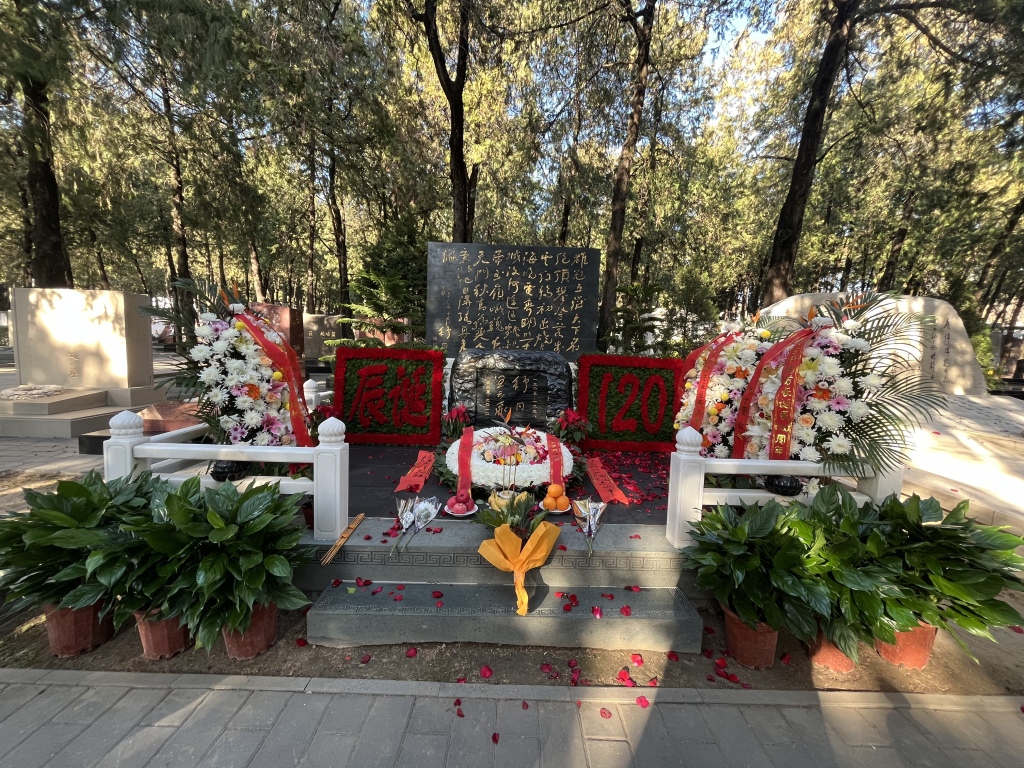
Shu Tong's Tomb. Photograph by Wang Zheng.
The main body of the tomb is a single, complete black granite tombstone. The stone is fine-grained and polished to a warm sheen. The front is engraved with the full text of "Climbing Mount Tai," written by Shu Tong on October 10, 1956, when he ascended Mount Tai. The poem contains lines such as "The majestic peaks of Mount Tai are renowned throughout the world; climbing to the summit is like walking on clouds." These lines complement the calligrapher's vigorous and powerful strokes, showcasing his artistic sentiments of finding solace in nature.
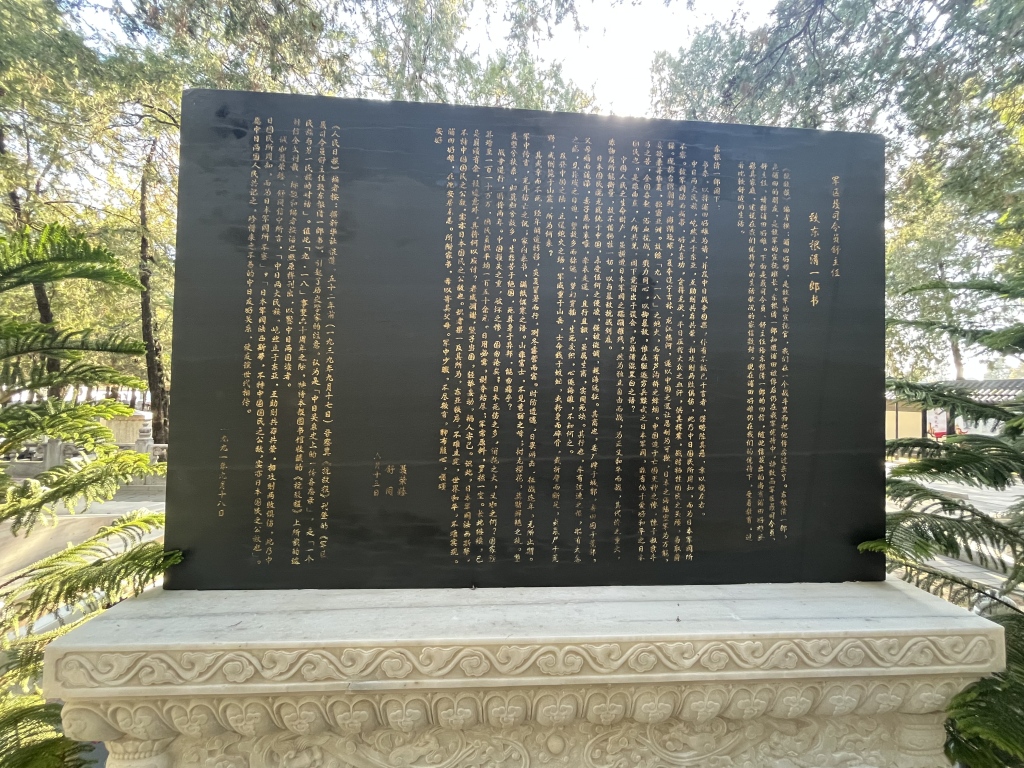
Shu Tong's tomb, behind the tombstone. Photo by Wang Zheng.
The reverse side is engraved with the full text of "Letter to Higashine Seiichiro" dated June 13, 1939. This letter, jointly signed by Nie Rongzhen and Shu Tong, contains the core ideas of replacing confrontation with cooperation, transcending selfishness with people-centeredness, and resisting short-sighted conflict with a clear historical perspective—wisdom and maxims that still urgently need to be revisited in current Sino-Japanese relations.
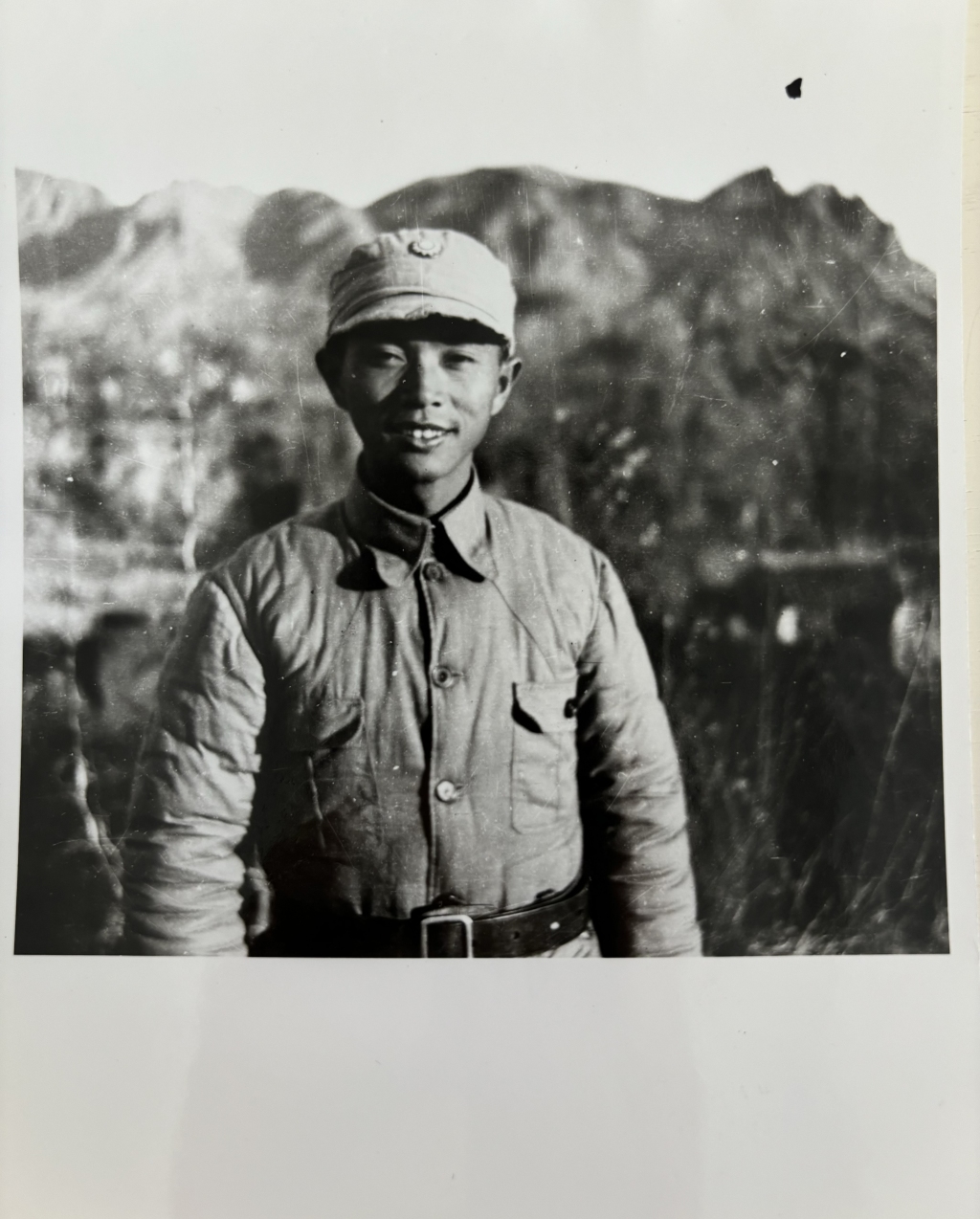
Taken in the Jin-Cha-Ji Military Region during the early stages of the War of Resistance Against Japan. Shu was then the Director of the Political Department of the Jin-Cha-Ji Military Region. Photograph by Sha Fei.