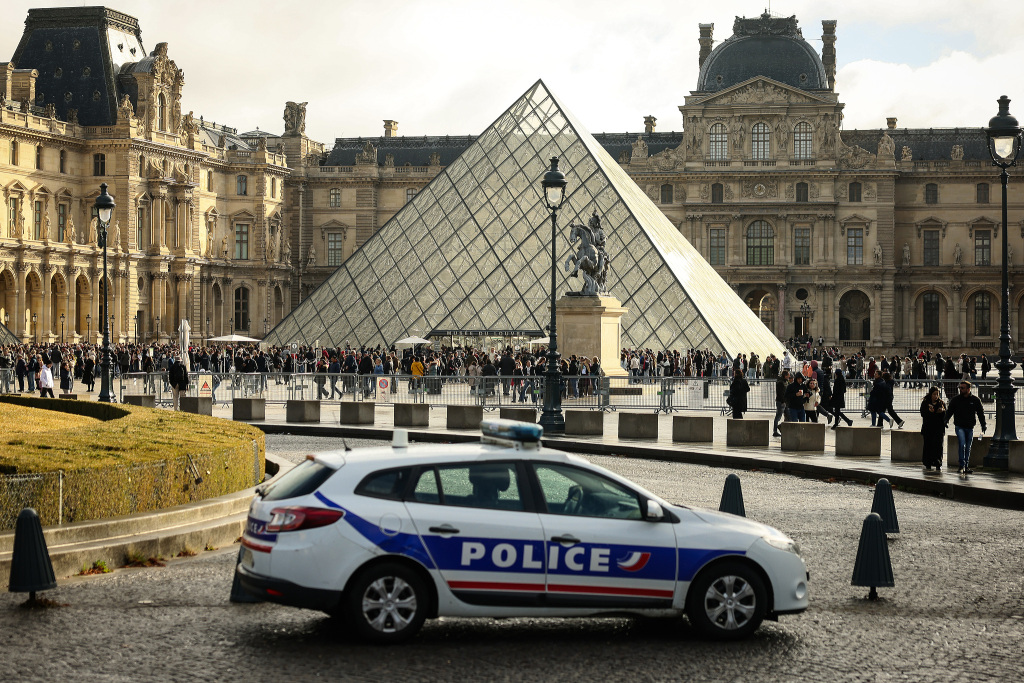
The Louvre Museum's first major exhibition in Shanghai, "The Miracle of Patterns: Masterpieces of Indian, Iranian and Ottoman Art from the Louvre," will open at the Shanghai Pudong Art Museum in mid-December. Following this, another major exhibition, "Extraordinary Picasso: Paul Smith's New Perspective," will also be on display.
On December 4th, Art Surge visited the exhibition hall of the Pudong Art Museum, which was under construction, and discovered that the narrative of the second half of the "Louvre Grand Exhibition" unfolded from a thought-provoking paper work, "Drunkard Dozing on a Chinese Wine Jar"; the "Extraordinary Picasso" special exhibition presented a collaborative art creation on the exhibition wall, with the background of Picasso's 1953 work "Children Playing with Toy Trucks" being meaningfully reproduced in the exhibition hall.
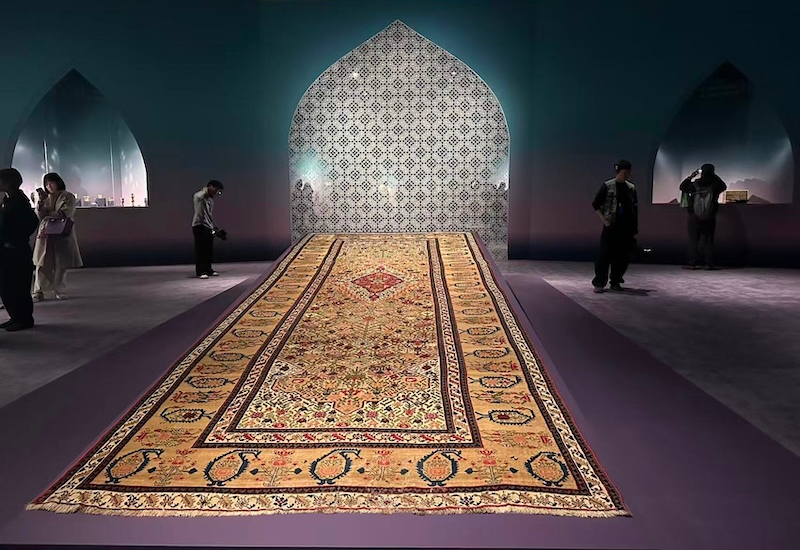
The Pudong Art Museum is currently showcasing the exhibition "The Miracle of Patterns: Masterpieces of Indian, Iranian and Ottoman Art from the Louvre," which will open to the public on December 13.
From the mystery and exchange of ancient cultures to modern visual innovation, this winter, the Pudong Art Museum looks back on art history and extends contemporary expression with the "Louvre Grand Exhibition" and "Extraordinary Picasso".
Among them, the "Louvre Grand Exhibition," the largest exhibition ever held by the Louvre Museum in China, will open to the public on December 13, opening a macro-perspective that extends from the 16th to the 19th century.
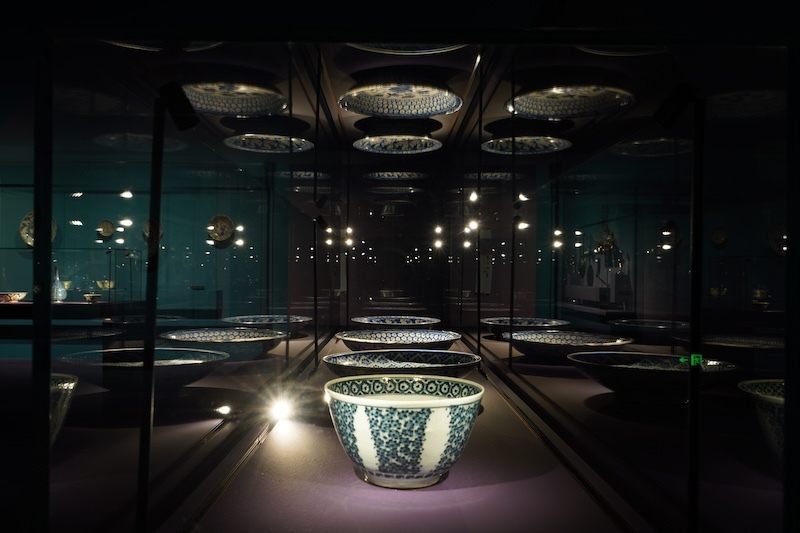
Exhibition view of "The Miracle of Patterns: Masterpieces of Indian, Iranian and Ottoman Art at the Louvre"
"Extraordinary Picasso" is another major Picasso exhibition held in Shanghai, following the "Picasso China Exhibition" held at the China Pavilion of the Shanghai World Expo Park (later converted into the Shanghai Art Museum) in 2011. The exhibits for both exhibitions came from the Picasso Museum in Paris. This exhibition covers all of Picasso's iconic creative periods, including dozens of creative materials such as oil painting, charcoal drawing, pencil drawing, sculpture, watercolor, relief, printmaking, and ceramics, comprehensively presenting the multifaceted nature of this artist.
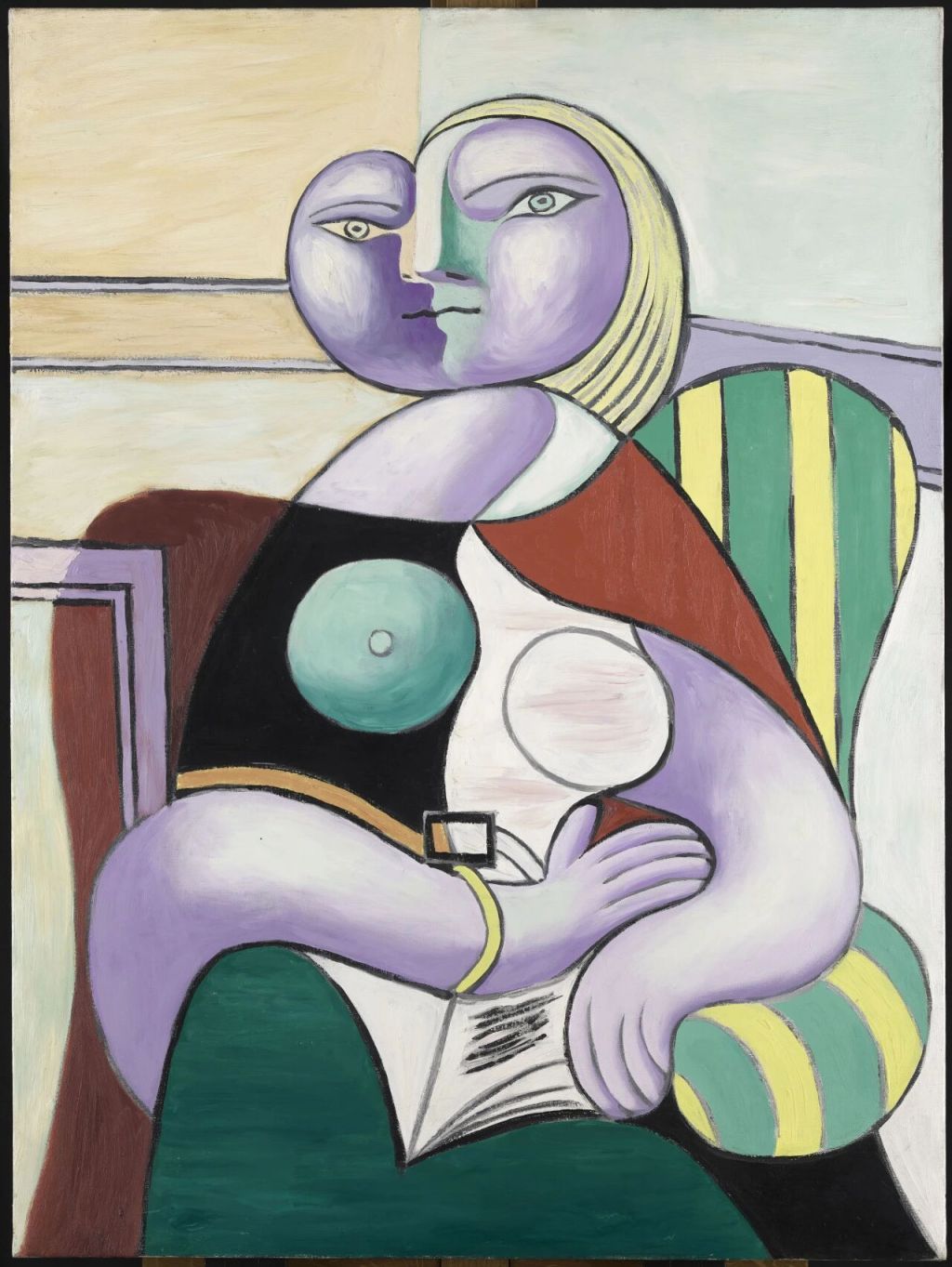
Picasso, *Reading*, 1932, oil on canvas
From Chinese Porcelain to Persian Floral and Bird Designs: How Flowing Patterns Changed Global Aesthetics
The Louvre exhibition brings together approximately 300 items from the Louvre’s collection, encompassing a variety of important media including ceramics, jewelry, jade, glass, metal, carpets, calligraphy, painting, sculpture, and wood carving, providing an immersive experience of cultural exchange and aesthetic transformation across Asia, Africa, and Europe.
According to Judith Henon, Deputy Director of the Islamic Department and curator at the Louvre, this exhibition not only showcases the flourishing of pattern aesthetics, but also witnesses the dynamic process of cultural arts absorbing, colliding, and reorganizing each other in a fluid manner. Many of the exhibits are being shown to the public for the first time since they were acquired by the Louvre.
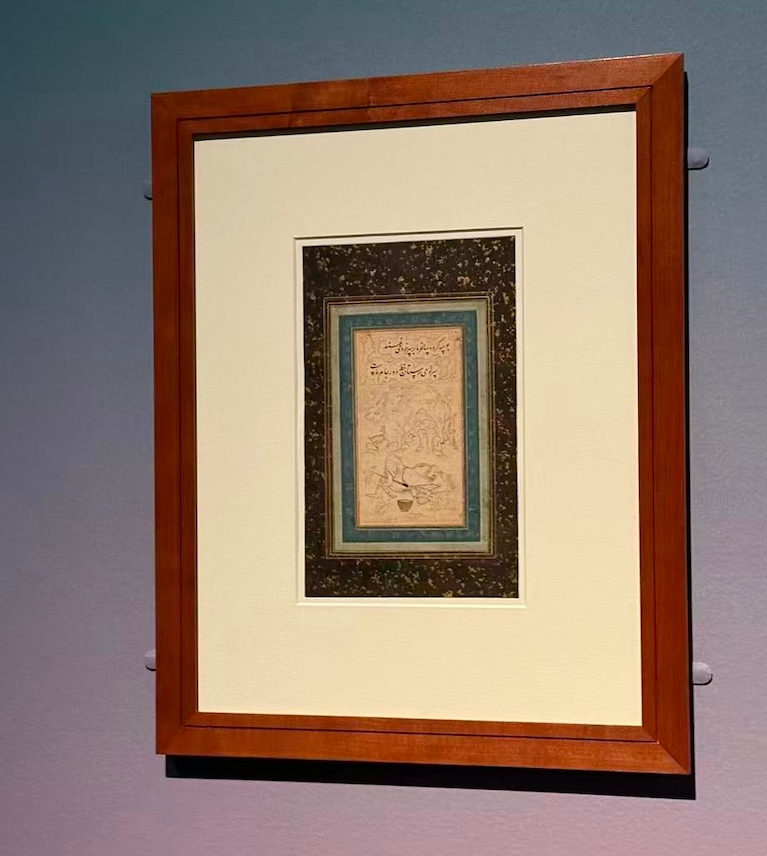
The first piece in the open exhibition hall, featured during a media visit, is titled "A Drunkard Dozing on a Chinese Wine Jar," from Uzbekistan, dated 1585–1600, and is rendered in ink, gold, on paper, and cardboard.
The latter half of the "Louvre Grand Exhibition" was open to the media. This section's narrative unfolds through a thought-provoking work on paper, "A Drunkard Dozing on a Chinese Wine Jar." An everyday image from China, within the time and trade networks spanning Eurasia, becomes the key to unlocking the story. While the work originates from Uzbekistan, it points to the cultural landscape of the 16th and 17th centuries—an era rapidly transformed by the accelerating flow of global trade.
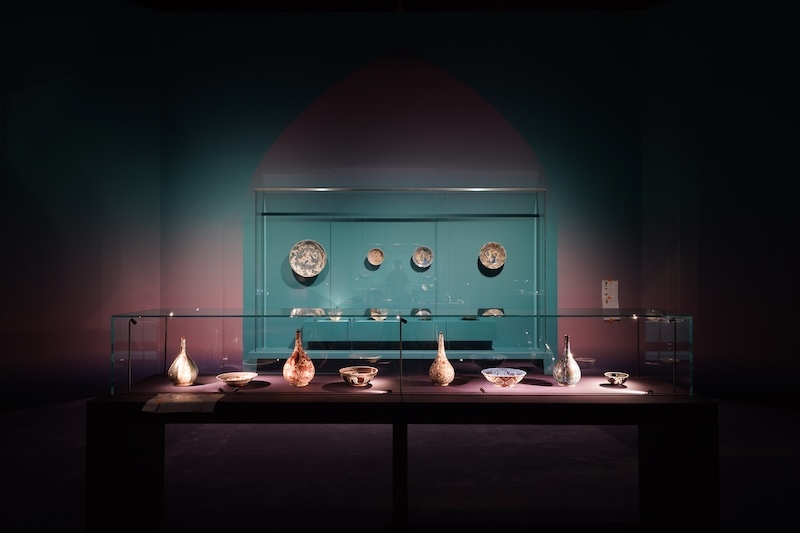
Media visit to some of the Louvre Museum exhibition halls open to the public.
In the 17th century, traditional land trade routes remained open, while maritime routes were dominated by the ever-expanding European powers. Abbas I of the Safavid dynasty ended Portugal's monopoly and facilitated the establishment of the British and Dutch East India Companies. Accompanying the large-scale import of porcelain, textiles, and metalware was a shift in aesthetics and techniques—Safavid artisans, faced with the powerful allure of Chinese blue and white porcelain, strived to replicate this oriental art form using local resources.
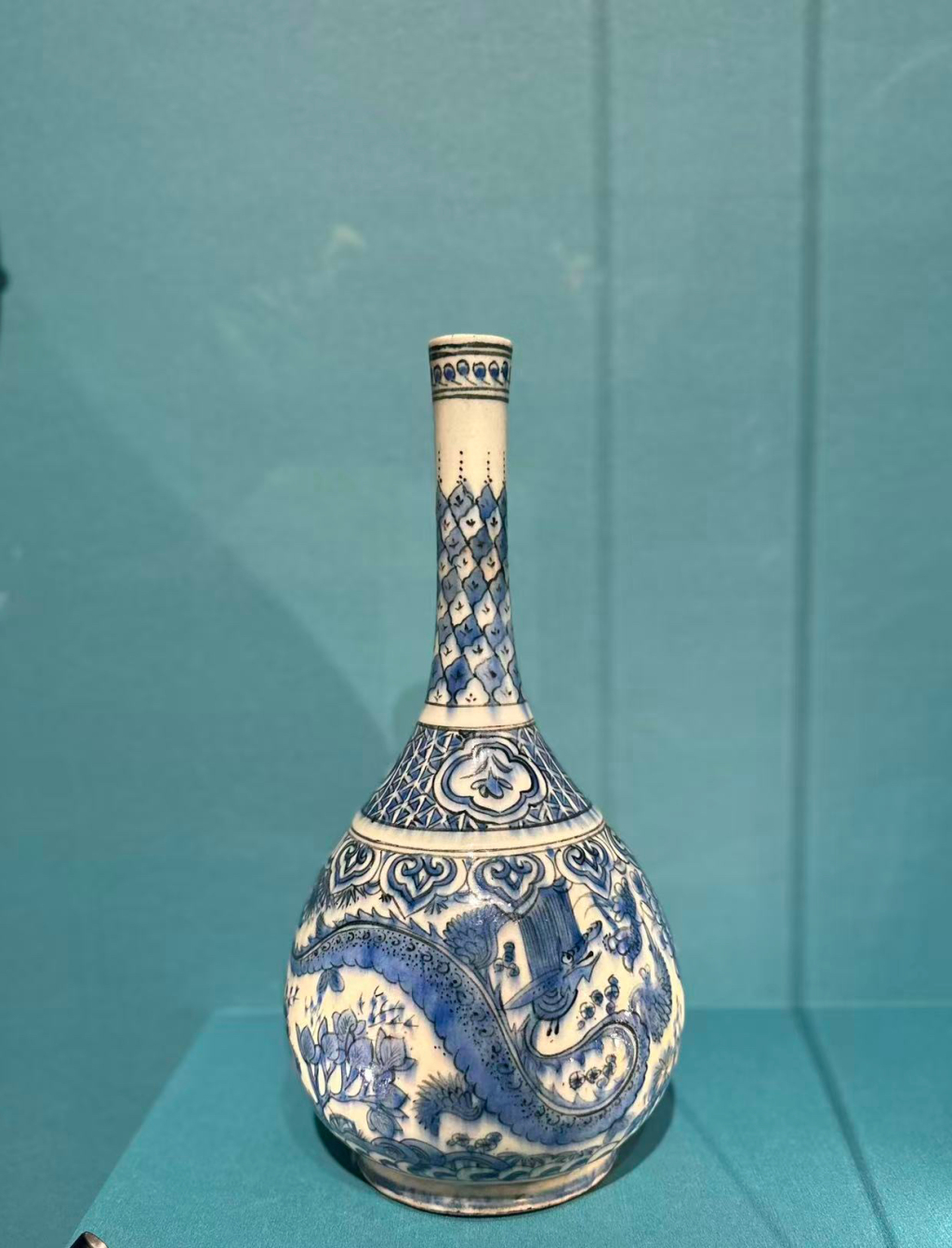
The exhibition features porcelain vases with Chinese patterns.
The complexity of this imitation process is clearly visible in the ceramics section of the exhibition hall: some pieces are similar to Chinese patterns in shape, glaze, and design; while others deliberately deviate from the original in color, brushstrokes, and even composition, attempting to find a new expression between imitation and creation.
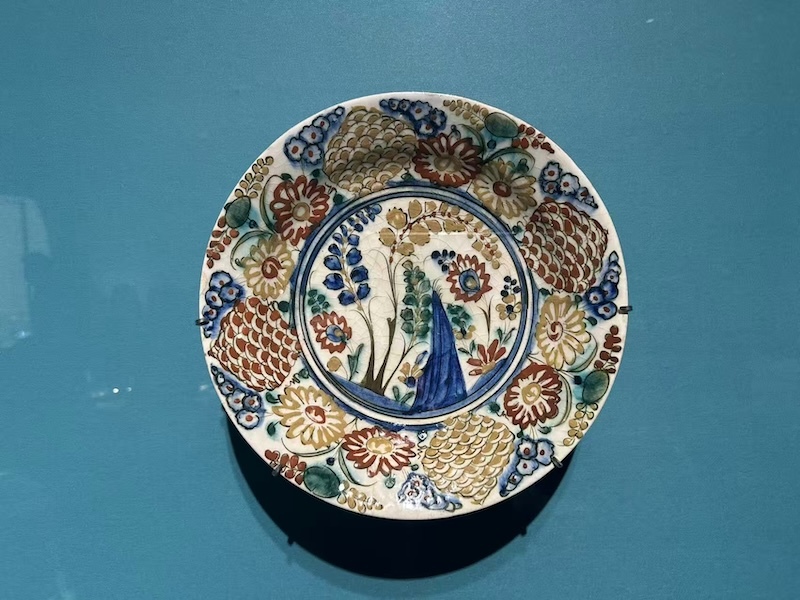
Porcelain plates in the exhibition
In the next section, we move to the late 18th century, with the establishment of the Qajar dynasty. The rulers established their capital in Tehran, attempting to reconstruct the national order amidst pressure from European powers. 19th-century Iran became a typical example of "forced modernization": on the one hand, it faced encroachment from the Ottomans, Britain, and Russia; on the other hand, under the rule of Fatah-Ali Shah and Nasser al-Din Shah, it continuously tried to absorb European systems and ideas, promoting military reforms, building an education system, and imitating European bureaucratic structures.
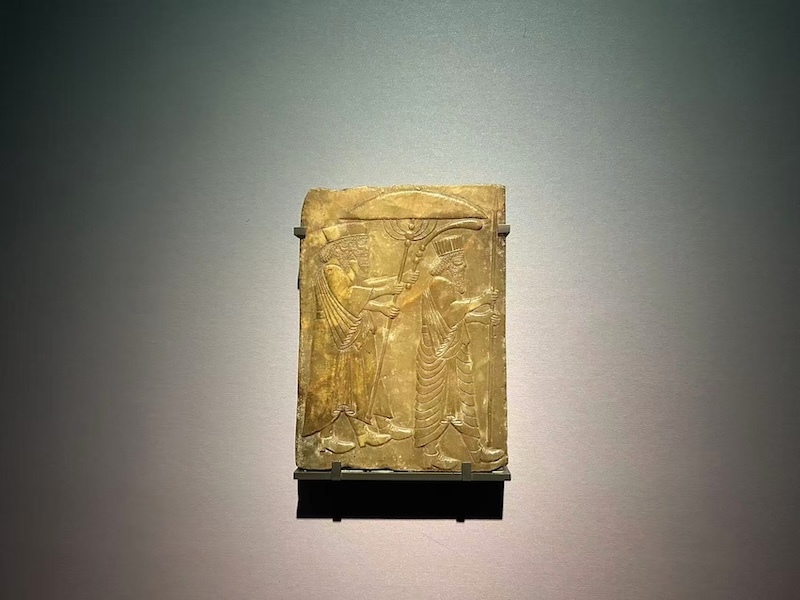
Exhibits
These conflicts and reforms inevitably left a deep imprint on art. The large-scale portraits and decorative items from the Qajar period in the exhibition hall present a striking fusion: European painting techniques such as perspective, chiaroscuro, and volumetric modeling began to enter the painting system on a large scale, while court artists maintained the decorative and narrative traditions unique to Persian art. For the first time, Iranian art systematically dealt with "large-scale," "large figures," and "large scenes"—this was both a visual construction of imperial power and a new aesthetic requirement within the world system.
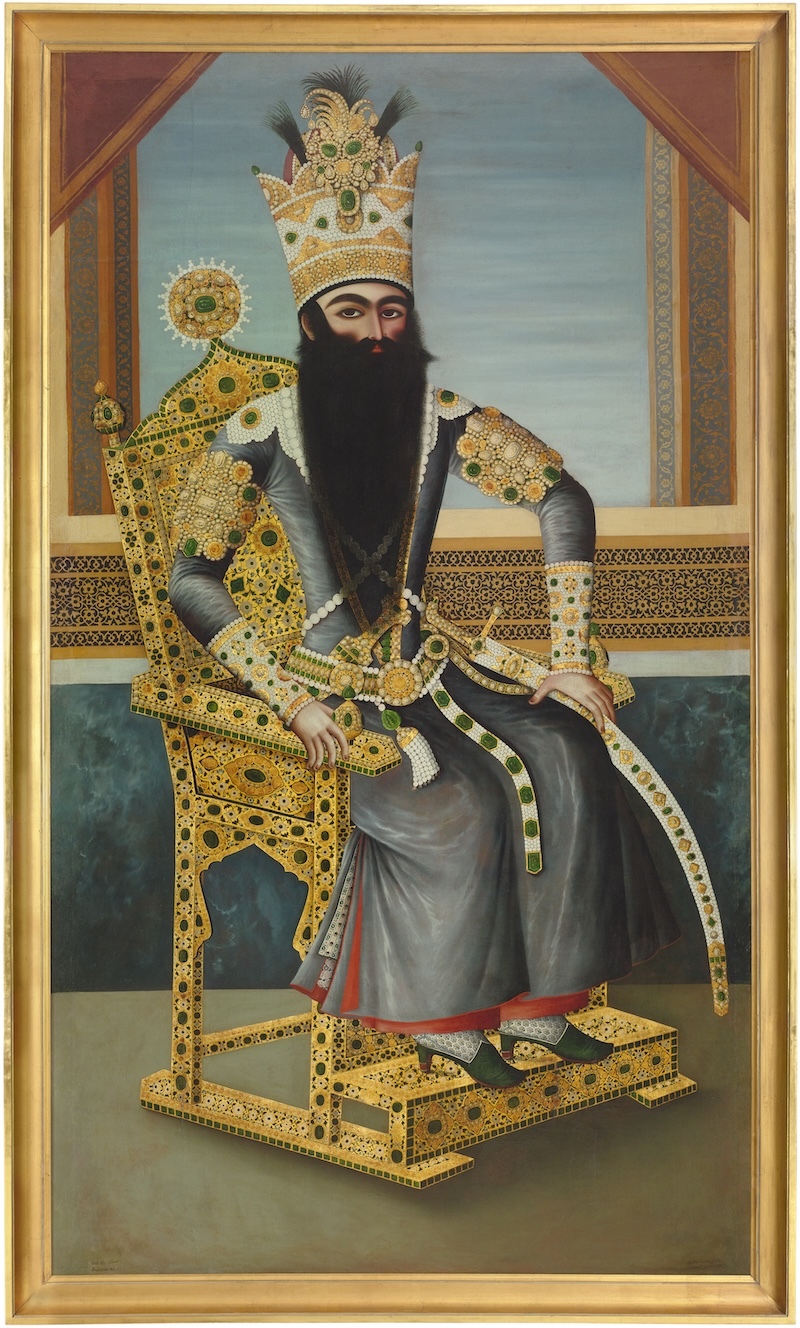
Portrait of Fatah Ali Shah (reigned 1797–1834) by Mir Ali, painter.
However, the Qajar dynasty was not entirely swallowed up by the European paradigm. In the mid-19th century, a strong wave of traditional revival emerged in Iran—the "Union of Arts and Crafts" was established in the Grand Bazaar of Tehran, and the artistic language of the Safavid period regained favor. "Antique style" was seen by artists as a way to respond to the crisis of reality and to more actively explore cultural roots.
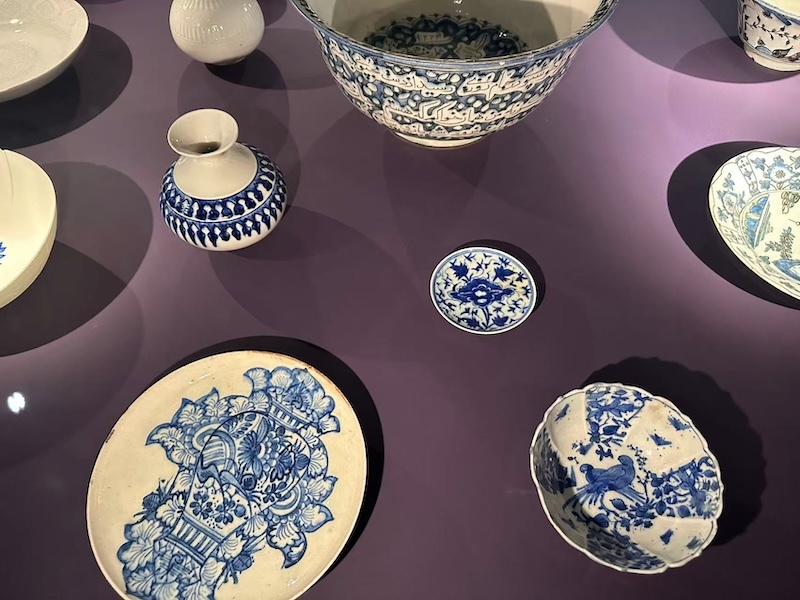
Various porcelain products on display at the exhibition
In this section of the exhibits, the pattern of "roses and nightingales" appears repeatedly. According to curator Judith Henon, the pattern of "roses and nightingales" originated from Chinese Song Dynasty flower-and-bird paintings and evolved into the "roses and nightingales" in Iranian culture.
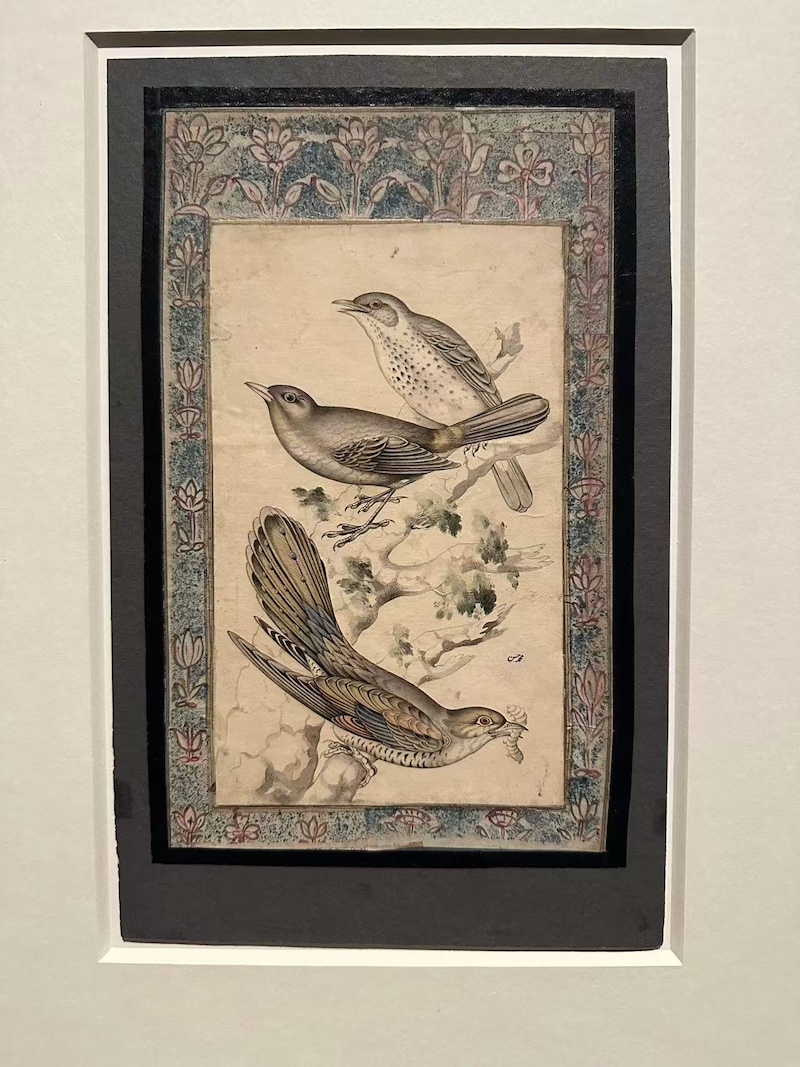
The works in the "Louvre Exhibition" are believed to have been inspired by the style of flower-and-bird paintings from the Song Dynasty.
Among the exhibits, a book with a "roses and nightingales" design stands out for its exquisite binding. At its center is a clearly discernible floral motif (including irises, hyacinths, carnations, and roses). The border is green with interspersed floral patterns.
The inscription contains lines from Saadi's poem "The Orchard": "The rose, without fragrance or color, is truly an anomaly. The nightingale will not be captivated by it. O scholar, what I admire is the spirit of this flower, not its beauty and charm."
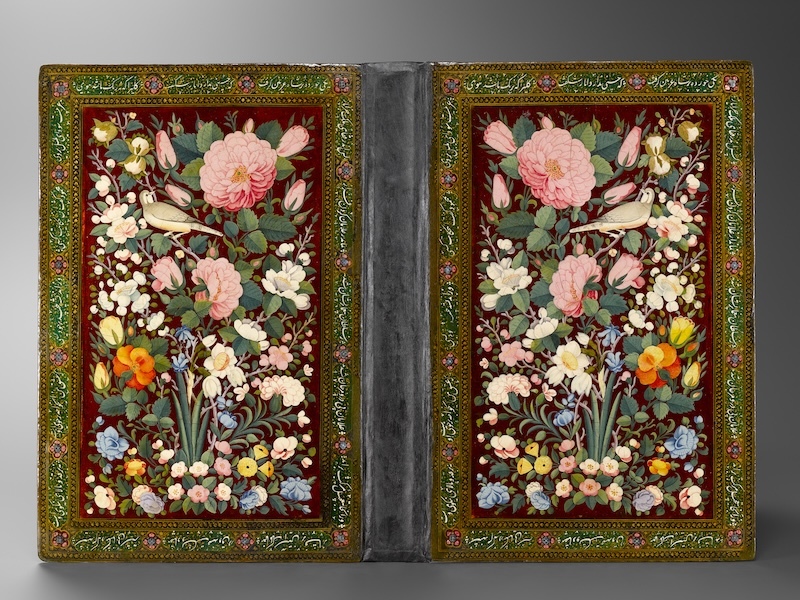
Book cover with a "rose and nightingale" design
Meanwhile, Europe was also enthusiastically "rediscovering Persia." Institutions such as the South Kensington Museum in London and the Sèvres Pottery Workshop near Paris amassed large collections of Iranian artifacts during this period, giving Persian art a new global standing. The underglaze painted ceramic tiles in the exhibition come from this wave of "rediscovery": their patterns are either derived from national epics or continue classic designs influenced by China during the Safavid period, evolving both for the domestic market and during transport to European buyers.
The exhibition's design is reportedly overseen by French designer Cécile Degos, who previously created the 1980s exhibition "Creating Modernity," transforming the expansive space into an unfolding spatial narrative. Exquisite exhibits such as jade, ceramics, and manuscripts are repositioned within an intimate display rhythm. Two specially exhibited restored showrooms recreate Ottoman aristocratic palaces and residences in a near-authentic manner, offering visitors an immersive experience akin to stepping into the depths of history.
Picasso reappears in the 21st century; the exhibition becomes an open creative space.
If the Louvre exhibition showcases the continuous development of culture and art through symbols and patterns, then "Extraordinary Picasso: Paul Smith's New Perspective," which will open to the public on December 22, reveals from another dimension how Pablo Picasso (1881–1973), one of the founders of modern art, a pioneer of Cubism, and a central figure of Surrealism, is being reinterpreted in the 21st century.
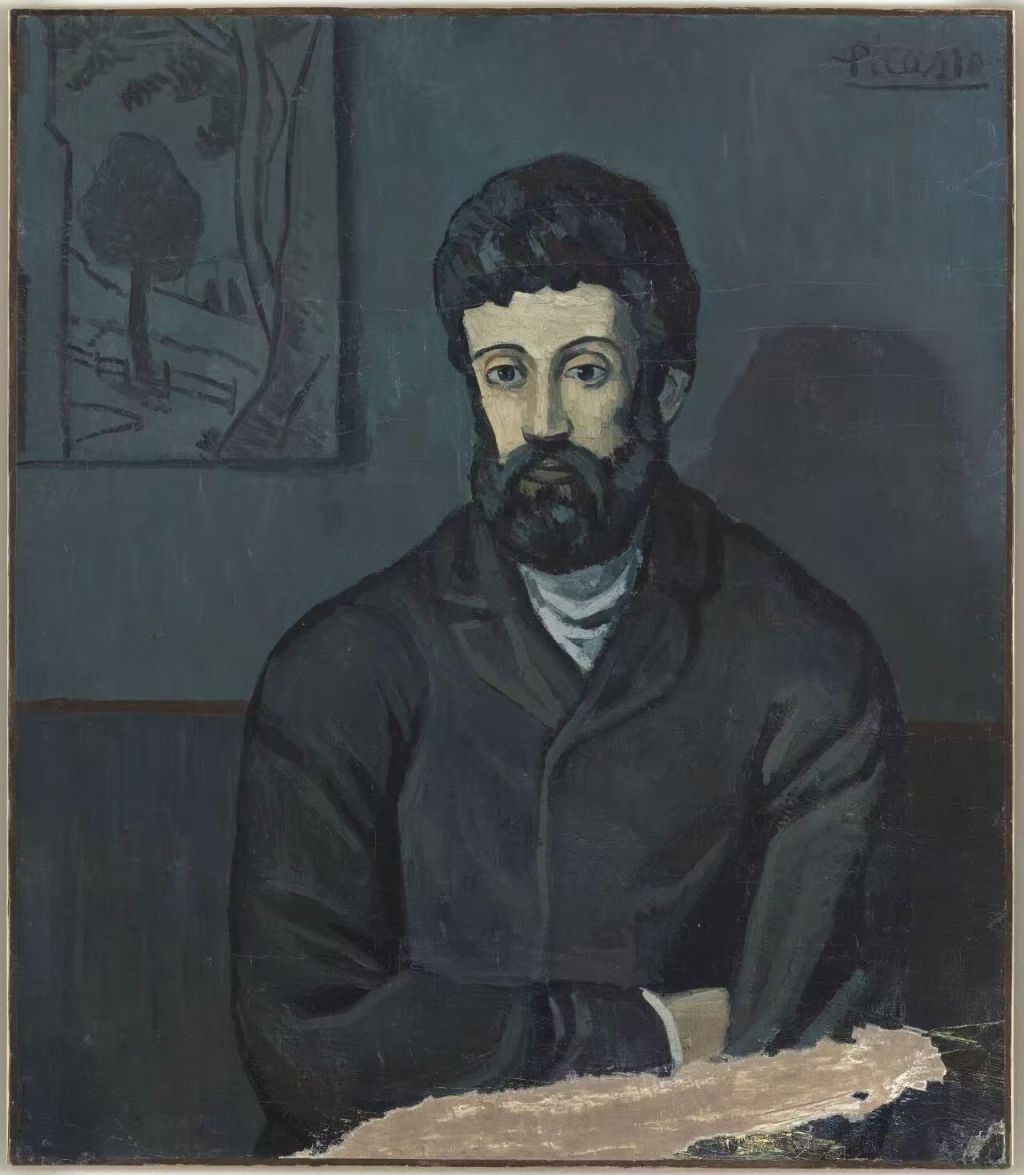
Picasso, Portrait of a Man, 1902-1903, oil on canvas
It is reported that "Extraordinary Picasso" will showcase classic works from the collection of the Picasso Museum in Paris, spanning the artist's entire career, from a contemporary perspective, forming the most complete and comprehensive Picasso art tour in China to date. As the first stop of the international tour and the only stop in China, the exhibition encompasses all the iconic creative stages of the artist's life.
According to Li Minkun, director of the Pudong Art Museum, the exhibition was designed by British designer Paul Smith, who was invited to serve as artistic director. He continued the exhibition model of abandoning the "white cube" and combined it with the open and flexible architectural structure of the Pudong Art Museum to present an exhibition with more local characteristics compared to the 2023 version at the Picasso Museum in Paris.
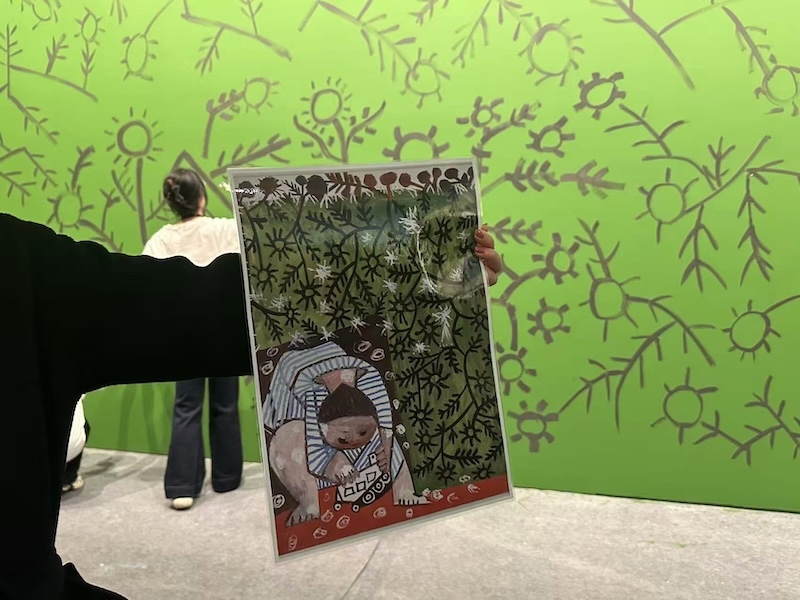
The artwork on the exhibition wall is inspired by Picasso's painting "Children Playing with Toy Trucks".
On the media visit day, Li Minkun and his team drew inspiration from Picasso's "Children Playing with Toy Trucks," which will be exhibited, to create corresponding murals for the exhibition wall. "Paul Smith's design aimed for a relaxed, joyful, and free presentation, and I shared that feeling while painting," Li Minkun said on site. "The exhibition wall is not just a backdrop, but also a live experience for the audience to participate in Picasso's art." When colors and lines converge on the wall, the exhibition space is instantly activated, and art is no longer a passive viewing experience. This also reflects Picasso's constant desire to create "like a child."
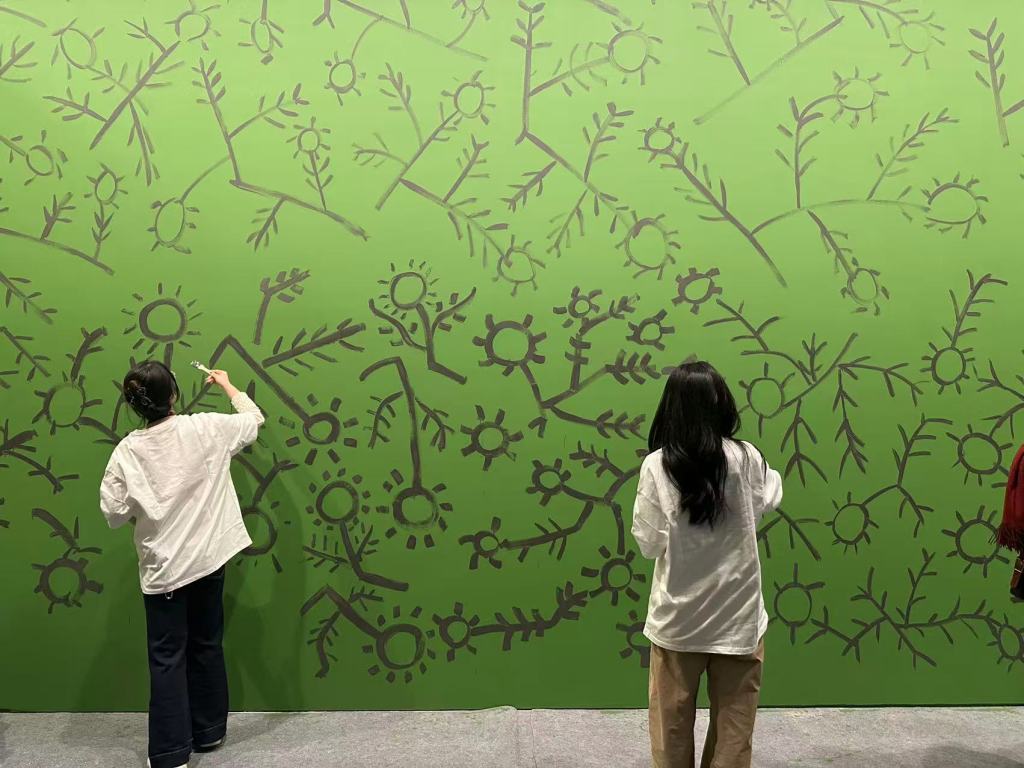
Staff at the Pudong Art Museum are painting the exhibition walls.
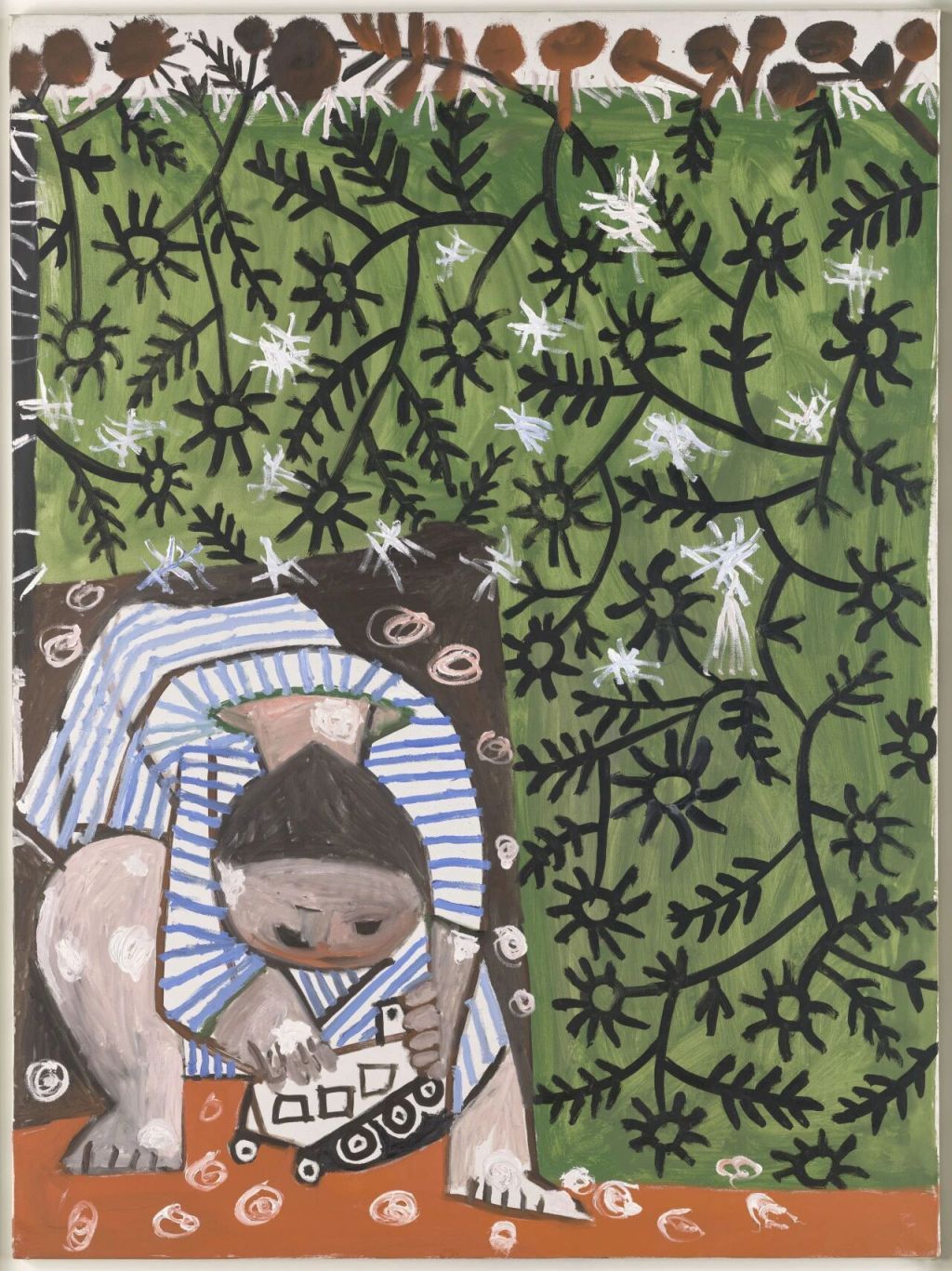
Picasso, *Children Playing with Toy Trucks*, 1953, oil on canvas
It is reported that the Pudong Art Museum will recruit "Little Audio Guides" for the first time, targeting children aged 6-15. Under professional guidance, the children will gain a deeper understanding of Picasso and his artworks, participate in behind-the-scenes recording work for the exhibition, and experience firsthand the process of exhibition production and artistic presentation, thereby experiencing the joy of collaborative creation and the charm of artistic expression.
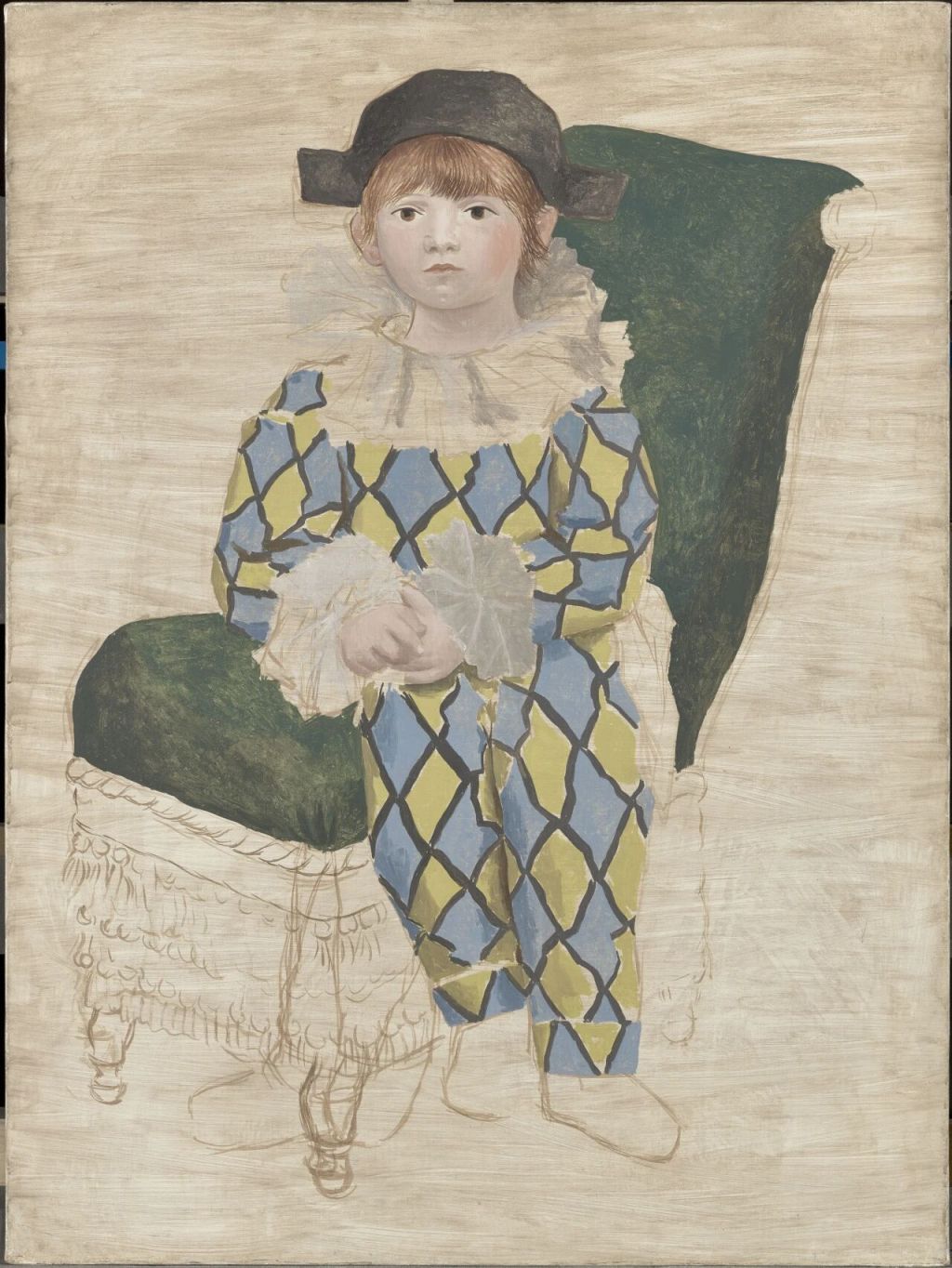
Picasso, *Paul in Jester's Clothing*, 1924, oil on canvas
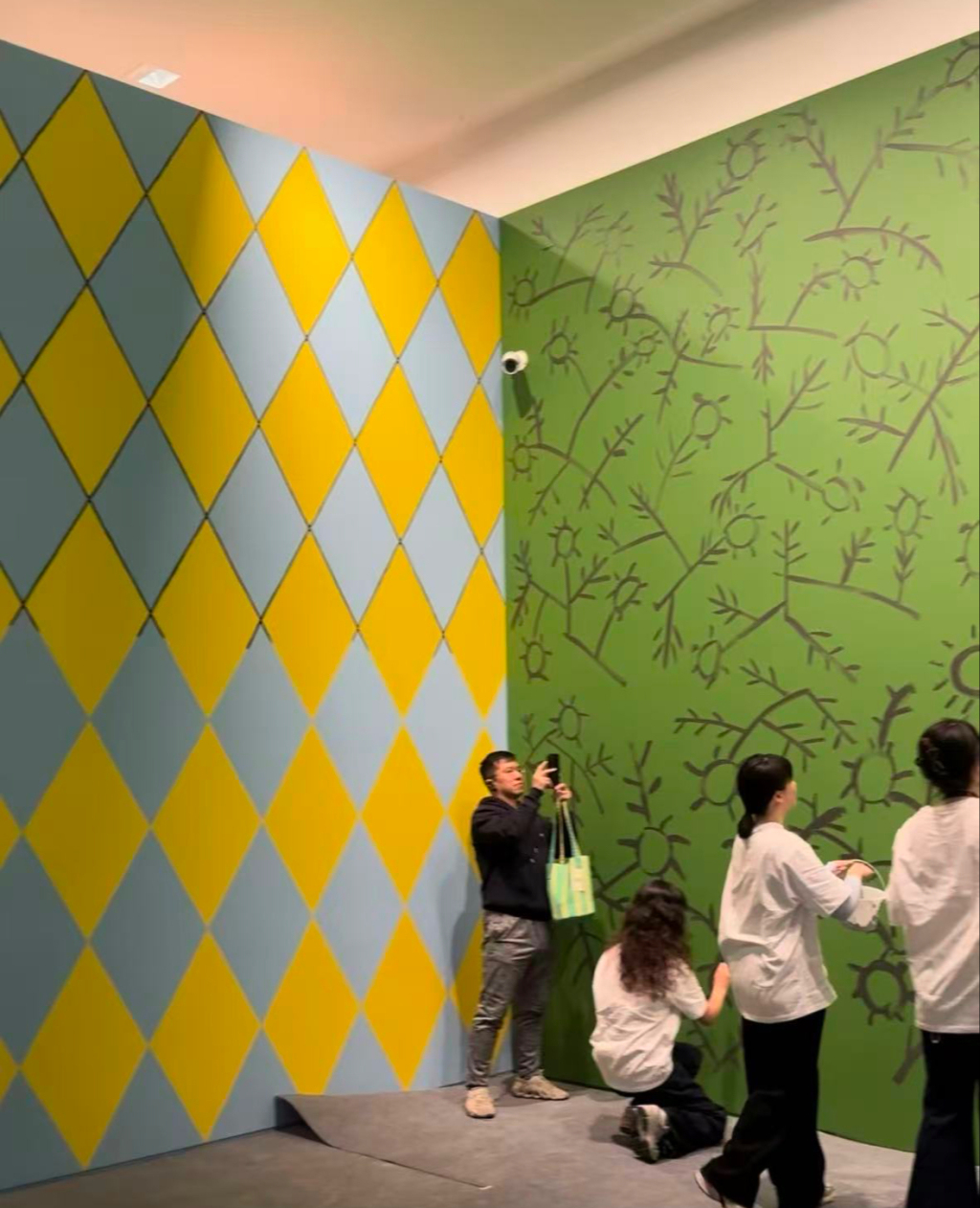
The “Extraordinary Picasso” exhibition wall draws on elements from several of Picasso’s works.
On the same day, the Pudong Art Museum also officially announced a new limited-edition cultural and creative series for the two exhibitions, presenting the richest collection of cultural derivative works this year with over 300 items. This series will extend the Louvre's exquisite and intricate pattern system and Picasso's bold and free visual language, transforming pattern aesthetics and avant-garde art into everyday objects with a modern feel.
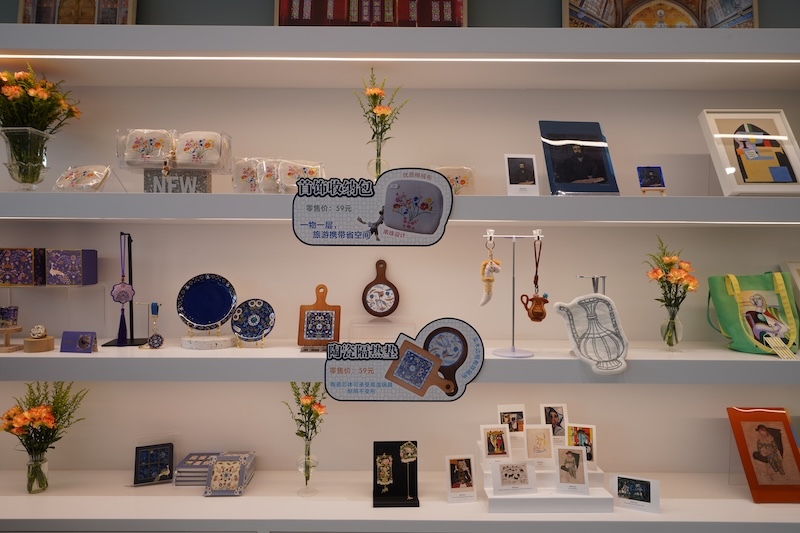
Pudong Art Museum's Double Exhibition Launches New Limited Edition Cultural and Creative Products Series
The product range includes metal rotating refrigerator magnets, square ceramic heat insulation pads, and a pocket mirror themed around "The Nightingale and the Rose," all from the Louvre exhibition series. From materials to patterns, they faithfully present the delicate beauty of the original works. The "Very Picasso" series offers bucket bags, small storage bags, and a variety of fun personal items, integrating the master's visual symbols into everyday life in a lighter and more dynamic way.
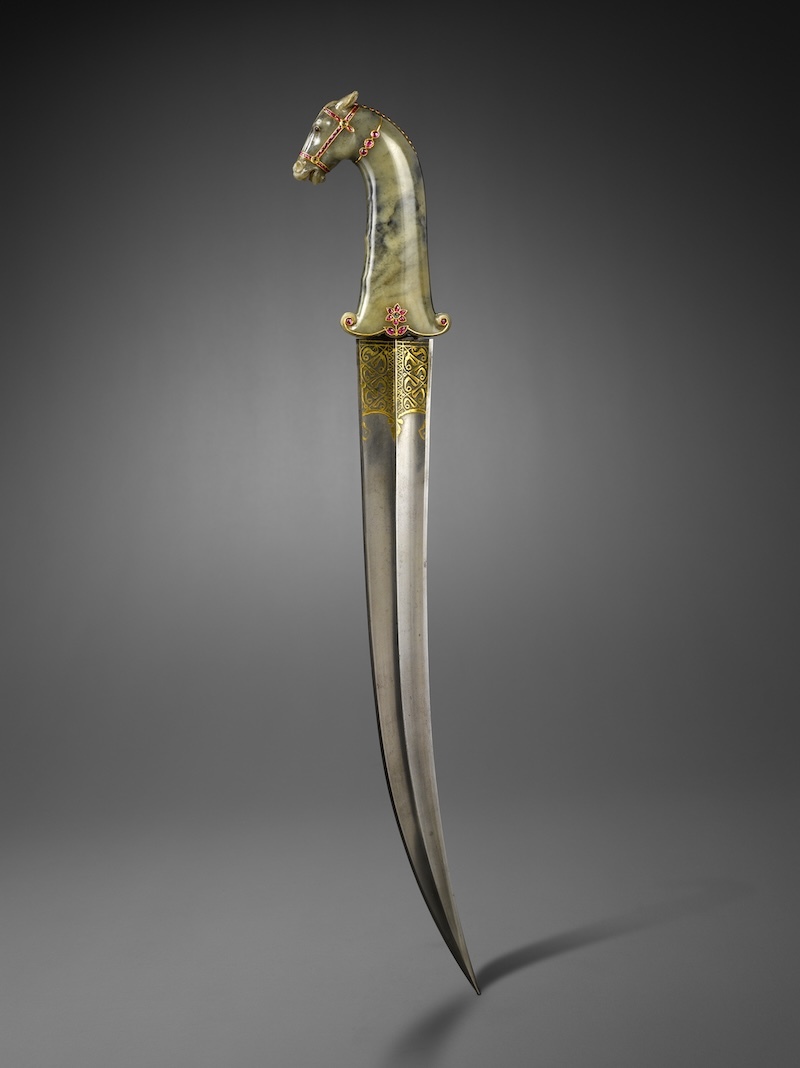
The Louvre exhibition features a dagger with a horse-head handle.